 By
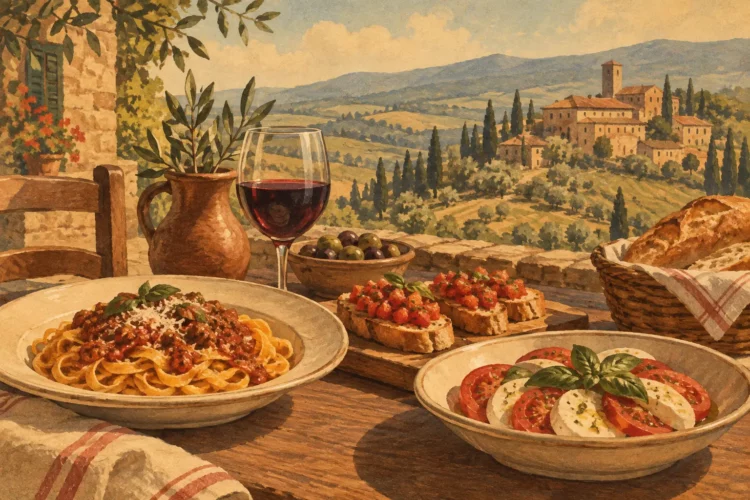
By A table set beneath a warm Tuscan sky invites a different rhythm to dinner at home. So, what time do Tuscan restaurants serve dinner? Most begin evening service between 7.00 pm and 7.30 pm, with locals often arriving from 8.00 pm onwards. In smaller towns and countryside settings, the pace is gentler still: dinner is not something to rush through before the next plan, but an occasion to give the evening its shape.
For visitors, knowing this small cultural detail can turn a good meal into a truly relaxed one. It means arriving when the kitchen is ready, allowing time for an aperitivo, and choosing a table with enough of the night ahead to enjoy each course properly.
What time do Tuscan restaurants serve dinner in practice?
Across Tuscany, dinner service commonly opens at 7.00 pm or 7.30 pm. The busiest seating is usually 8.00 pm to 9.30 pm, particularly on Fridays, Saturdays and throughout the warmer months. Many restaurants take their final orders around 10.00 pm or 10.30 pm, though this varies greatly with the restaurant, season and location.
In Florence, Siena, Lucca and other busy visitor centres, you may find kitchens serving earlier and later to accommodate travellers. In the countryside, around hill towns such as Volterra, restaurants often follow a more traditional timetable. A 7.30 pm reservation is wonderfully civilised, but an 8.30 pm table may feel closer to the local rhythm, especially in summer when the light lingers over the olive groves.
There is no single rule. A family-run trattoria may offer only one evening sitting, while a hotel restaurant or an all-day dining destination may have wider hours. The right approach is simple: check the restaurant’s current opening times and reserve the time that suits the kind of evening you want.
Why dinner begins later in Tuscany
The Tuscan day has long been organised around heat, work and shared meals. Lunch remains an important pause, particularly outside the largest cities, and the afternoon can be quiet. By evening, the sun is lower, the air is softer and people are ready to gather.
This does not mean every Tuscan dines at the same hour. Families with young children may eat earlier, while couples and groups of friends often linger later. But the underlying idea is consistent: dinner deserves time. A meal might start with a glass of local wine and a small appetiser, continue through pasta and a main course, then end with dessert, coffee or a digestivo. The pleasure lies as much in the conversation and the setting as in the food itself.
For British visitors accustomed to eating at 6.00 pm, the later schedule can initially feel unfamiliar. Yet it is one of the easiest pleasures to embrace. Take a late-afternoon walk through a stone village, rest by the pool, then dress for dinner as the day cools. By the time you sit down, the landscape has changed colour and the evening feels properly yours.
The best dinner reservation time for your plans
A 7.00 pm or 7.30 pm booking is often best for families, guests travelling with children, or anyone who prefers an earlier, unhurried meal. It can also be a sensible choice if you have driven a long way that day or want to be back at your accommodation before the roads become too dark and quiet.
Book for 8.00 pm to 8.30 pm if you would like the classic Tuscan dinner experience. This timing leaves room for an aperitivo and lets you settle into the evening without watching the clock. In high summer, it is particularly appealing, as many terraces become most comfortable after sunset.
A table from 9.00 pm onwards suits a slower, more sociable night, especially for adults enjoying a long meal with wine. Do bear in mind that smaller kitchens may stop accepting orders earlier than a city restaurant. If a particular dish matters to you, such as hand-made pasta or a seasonal special, the earlier part of service can offer the fullest choice.
If you are arriving late
Late flights, delayed trains and long drives are part of travelling, and rural Tuscany rewards a little planning. A restaurant may be open until late but have a kitchen that closes earlier, so do not assume that a 10.00 pm arrival will mean a full dinner menu.
If you expect to arrive after 9.30 pm, contact the restaurant before setting off. Asking whether the kitchen can welcome you is considerate and avoids disappointment. In a small independent restaurant, this courtesy makes a real difference: ingredients are prepared fresh, teams are compact, and the evening is planned around reservations rather than walk-in traffic alone.
Dinner hours change with the seasons
Summer is Tuscany at its most outward-facing. Terraces fill, children play nearby, and dinner naturally shifts later as guests wait for the strongest heat to pass. During July and August, an 8.30 pm reservation can feel entirely normal, and meals may continue well into the night.
Spring and autumn bring softer evenings and a slightly earlier rhythm. The tables may fill early on weekends, especially when seasonal ingredients are at their best: porcini mushrooms, truffles, wild game, new olive oil and grapes from the harvest. Booking ahead remains wise, but a 7.30 pm table can feel just as atmospheric as a later one.
Winter is quieter in many rural areas. Restaurants may close on selected days, offer fewer services or work with a shorter evening window. This is not a lesser experience. It can be the most intimate time to enjoy Tuscany, with a firelit dining room, a bowl of warming pasta and a bottle of red shared at an unhurried table. It simply requires checking times rather than relying on summer habits.
Reservations matter more than the clock
The question is not only when Tuscan restaurants serve dinner, but whether there will be a table when you arrive. The most memorable places tend to be small, personal and dependent on a limited number of covers. A beautiful terrace, a sought-after local menu or a weekend in a popular hill town can fill quickly.
Reserve in advance for Friday and Saturday evenings, public holidays, the summer season and any meal with a larger group. Let the restaurant know about dietary requirements when you book, rather than raising them only after being seated. Tuscan cooking is generous and seasonal, but the best response to an allergy or a vegetarian preference often needs notice.
It also helps to be realistic about travel time. Tuscan roads can be winding, and the final few kilometres to a countryside restaurant may take longer than a map suggests. Plan to arrive ten or fifteen minutes before your reservation, particularly if you would like a moment to take in the view or begin with a drink.
How to enjoy the evening like a guest, not a hurried visitor
There is no need to copy anyone’s habits perfectly. Tuscany is welcoming precisely because a good host makes space for different needs. Eat at 7.00 pm with children if that is comfortable. Order only two courses if lunch was generous. Ask for guidance on wine if the list is unfamiliar.
What matters is allowing the meal to unfold. Start with something light while you choose, perhaps a glass of Vermentino or a local red. Share antipasti if the table feels inclined, then enjoy pasta as its own course rather than a side dish. If you choose a main, leave room for the flavours that define the season: slow-cooked meats, vegetables from nearby gardens, olive oil, herbs and desserts made to finish the evening gently.
At Osteria Etrusca, dinner can be part of a longer pause in the Tuscan countryside, where the meal is framed by open air, landscape and the pleasure of being together. That is the real value of dining later here. The table is not the end of the day’s itinerary. It is where the best part of the day begins.
A final note before you book
Choose your reservation time according to the evening you want, not simply the earliest table available. An early dinner offers ease; a later one brings more of Tuscany’s nocturnal magic. Whichever you choose, arrive with appetite, leave room for another glass or a dessert, and let the evening take its time.