 By
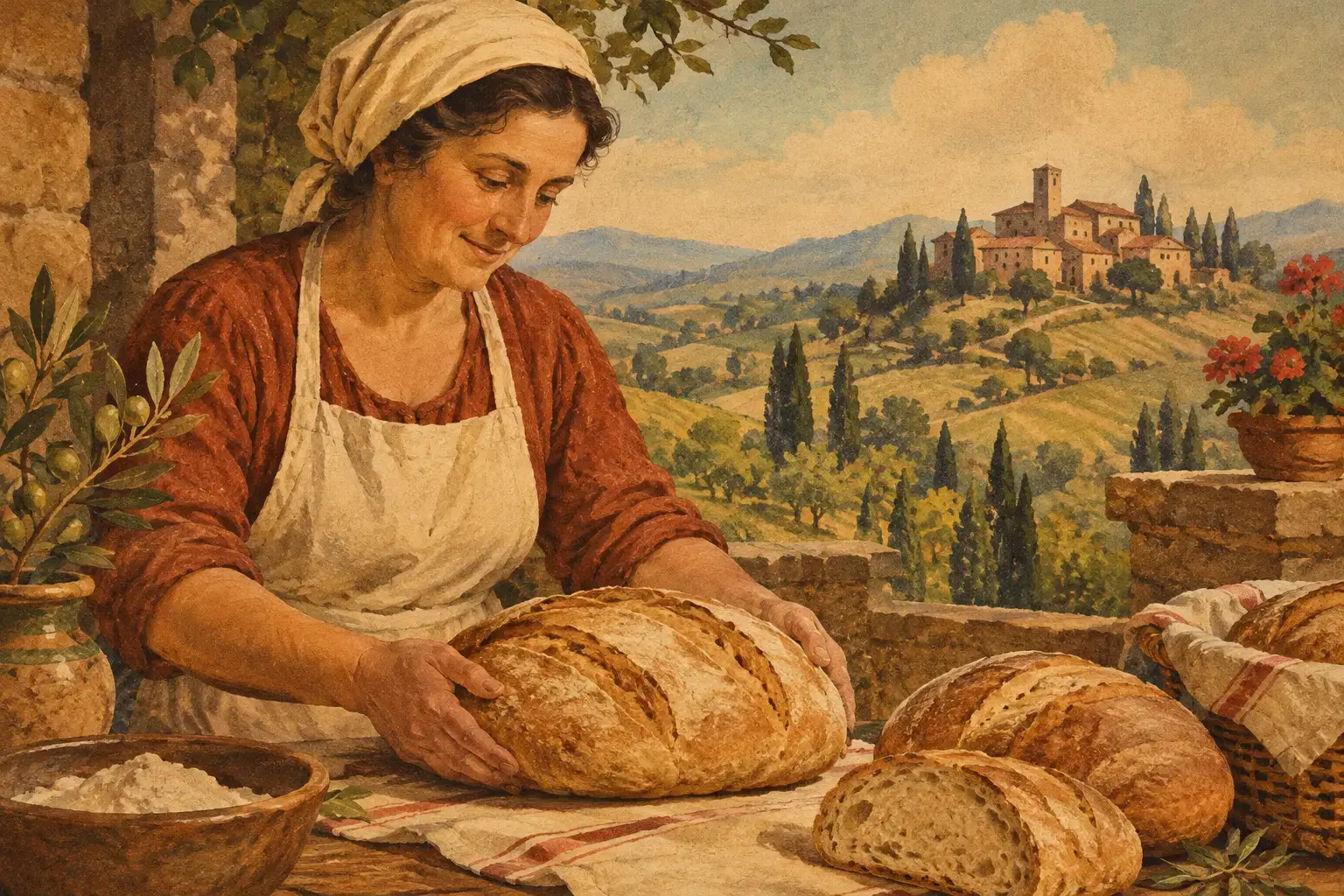
A slice of Tuscan bread can surprise first-time visitors. Its pale, crackling crust gives way to a soft, open crumb, yet there is no familiar hit of salt. So, why is Tuscan bread unsalted? The short answer is history, but the more satisfying answer lies at the table: this is bread made to carry the vivid flavours of Tuscany rather than compete with them.
Known locally as pane sciocco or pane sciapo, it is not a lesser version of bread. It is a deliberate regional tradition, shaped by centuries of practical cooking and still perfectly suited to a long lunch of olive oil, tomatoes, pecorino, salumi and wine.
Why is Tuscan bread unsalted?
Tuscan bread is traditionally made with flour, water and leavening, often a natural starter, but without added salt. The absence is striking because salt is such a fundamental ingredient in bread elsewhere in Italy and across Europe. It brings flavour, but it also moderates fermentation and strengthens dough. Leaving it out requires attention from the baker.
There is no single, universally proven explanation for the tradition. The best-known story reaches back to the rivalry between Pisa and Florence. According to local legend, Pisa restricted the flow of salt to inland Florence through its port, making the ingredient scarce and costly. Florentines adapted by baking without it, and the habit endured long after the dispute had faded.
It is a memorable story, and it may contain a thread of truth. Salt was expensive in medieval and Renaissance Italy, taxed in various territories and sometimes difficult to transport. But historians caution against treating the Pisan blockade as the sole origin. References to unsalted bread in central Italy appear across a wider area, and economic pressures may have mattered as much as political rivalry.
The more useful way to understand it is this: salt-free bread became customary because it worked. Once a community builds its cooking around a particular loaf, its meals, recipes and expectations begin to make sense with that loaf at the centre.
A bread designed for a generous table
Tuscan cooking is often confidently seasoned. Think of savoury prosciutto, fennel-spiced finocchiona, cured wild boar, anchovies, ripe pecorino and soups enriched with stock or beans. A salty loaf beside these ingredients can make a meal feel heavy. Tuscan bread offers balance.
Its mildness lets fruity extra-virgin olive oil show its peppery finish. It softens the intensity of mature cheese and gives cured meats space to shine. With a bowl of ribollita or pappa al pomodoro, the bread becomes part of the dish, absorbing broth and tomato without adding another layer of seasoning.
This is why calling Tuscan bread “bland” misses the point. Eaten alone, it can seem restrained, particularly to anyone used to a salted sourdough. Eaten as it is intended to be eaten, it behaves like a thoughtful companion. It receives flavour beautifully, and it makes each surrounding ingredient more distinct.
At a Tuscan table, that quality is deeply practical. A loaf may begin the day toasted with olive oil, appear at lunch beside charcuterie and cheese, then return at dinner in a soup or salad. Day-old bread is not an inconvenience to be discarded. It is the foundation of some of the region’s most comforting dishes.
The beauty of bread that does not rush to impress
There is a quiet confidence in pane sciocco. It asks for good flour, patient fermentation and proper baking because there is nowhere for poor ingredients to hide. The crust should be well baked, the interior tender and irregular, with a gentle wheaty aroma rather than a flat, floury taste.
Salt also affects the behaviour of yeast and gluten, so producing a good unsalted loaf is not simply a matter of leaving one ingredient out. Bakers adjust fermentation, hydration and timing to create structure and character. Different villages and bakeries have their own methods, which is part of the pleasure of travelling through Tuscany.
The bread also changes with time. Fresh from the oven, it is delicate and fragrant. Later, its firmer texture makes it ideal for soaking up juices, oil and dressing. That evolution is central to Tuscan thrift and culinary imagination: a humble loaf is given another life rather than wasted.
From stale bread to beloved dishes
Some of Tuscany’s most recognisable recipes would lose their balance with heavily salted bread. In panzanella, pieces of day-old bread take on the juices of ripe tomatoes, red onion, basil, vinegar and olive oil. In ribollita, bread thickens a hearty vegetable and bean soup, turning it into something spoonable, warming and substantial.
Then there is pappa al pomodoro, where bread dissolves into tomato, garlic, basil and olive oil to create a dish that is simple in ingredients but generous in feeling. Salt is added where and when it is needed – to the soup, the tomatoes or the final seasoning – rather than being fixed inside every piece of bread.
This approach gives the cook control. It also makes sense of the Tuscan preference for layered, ingredient-led flavour. The bread is not trying to be the loudest voice in the room.
Is all bread in Tuscany unsalted?
Not entirely. Tuscany has many local baking traditions, and modern bakeries may offer salted loaves alongside the classic style. Visitors will also find focaccia, schiacciata and other breads whose seasoning varies by recipe and place. The famous salt-free country loaf remains the emblematic bread of the region, especially around Florence, Siena, Arezzo and the surrounding countryside, but Italy is never as uniform as a postcard suggests.
The same is true of preference. Some people fall for Tuscan bread immediately, especially when it arrives warm with excellent olive oil. Others need a meal or two before its purpose becomes clear. If you taste it on its own and find it understated, try it with pecorino, a slice of salame, grilled vegetables or a bowl of soup. Context changes everything.
How to enjoy Tuscan bread like a local
Start simply: tear off a piece while it is fresh, drizzle it with local extra-virgin olive oil and add a small pinch of salt only if the oil calls for it. The contrast is the point. The bread provides warmth and texture; the oil brings grassiness, fruit and pepper.
At lunch, pair it with sliced cured meats, cheese and seasonal vegetables. For dinner, welcome it beside sauces, braised meats or beans. If the loaf is a day old, do not try to disguise that fact. Turn it into panzanella, let it enrich soup or toast it until its edges crisp and its centre stays slightly yielding.
In the hills near Volterra, where long tables, local wine and the changing light over the landscape encourage guests to linger, this kind of bread feels especially at home. It is a reminder that the best meals are not built from one spectacular element, but from small things that belong together.
Tuscan bread is unsalted because tradition made it so, but it has endured because the region’s food makes a compelling case for it. Give it good olive oil, a ripe tomato, a bowl of soup and unhurried company, and its apparent simplicity becomes one of the most eloquent tastes of Tuscany.