 By
By A Tuscan welcome rarely begins with a menu. It begins with a table in the shade, the scent of warm bread, a view that invites you to stay a little longer, and the feeling that nobody is waiting to rush you away. What makes Tuscan hospitality unique is not one grand gesture. It is the quiet, generous way food, landscape and time are allowed to belong together.
For travellers who have spent the morning on winding roads, explored a hill town or simply slowed into the rhythm of a holiday, this is a meaningful difference. The best meals here do more than satisfy hunger. They create a pause – a beautiful, deeply human space to share with the people at your table.
What Makes Tuscan Hospitality Unique?
Tuscan hospitality is grounded in an old idea: guests should feel cared for, not managed. There is warmth, but it is seldom showy. A good host notices whether you need another glass of water, knows when to suggest a local wine, and understands that lunch may turn into the gentlest part of your day.
This welcome is closely tied to place. Tuscany is not a backdrop added after the fact. The olive groves, cypress-lined roads, vineyards and open fields shape the appetite, the conversation and the pace of the table. When a meal is served outdoors with the countryside stretching beyond it, the setting changes how it feels to eat. Flavours seem clearer, time feels more spacious, and even a simple plate of pasta becomes an occasion.
That does not mean every Tuscan meal must be formal or lengthy. A well-made coffee and a fresh pastry in the morning can carry the same spirit as a leisurely dinner. What matters is attention: to ingredients, to the person being welcomed, and to the pleasure of the moment.
A Cuisine That Begins Nearby
In Tuscany, local cooking is often described as simple. That is true, but only if simple is understood as skilful restraint. The dishes do not need to hide behind elaborate techniques when the ingredients have character of their own.
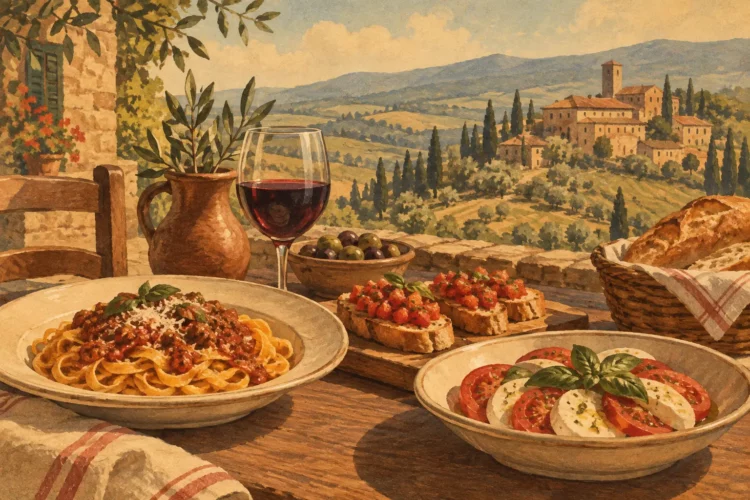
Ripe tomatoes, peppery olive oil, pecorino, seasonal vegetables, hand-shaped pasta, game from the surrounding countryside and bread made for gathering juices from a plate all have a natural place at the table. These ingredients are familiar because they have been grown, made or cooked here for generations. Their value lies in freshness, seasonality and the confidence not to overcomplicate them.
A menu shaped by this landscape changes throughout the year. Summer may call for tomatoes, herbs and chilled white wine; autumn brings mushrooms, richer sauces and game; cooler days make room for slow-cooked meat and warming desserts. For guests, this is part of the pleasure. You are not simply choosing from a standardised selection. You are tasting the season in the place where it belongs.
There is also room for personal preference. Not every visitor wants a long, rich lunch, particularly in the heat of July. A thoughtful Tuscan table can be generous without being heavy: a crisp salad, grilled vegetables, a plate of pasta shared between two, or a glass of local wine with a few well-chosen small dishes may be exactly right.
The pleasure of regional character
Regional cooking carries memory. A ragù made with wild boar, a rustic cake brought to the table after dinner, or bread served still warm from the oven tells a story more convincingly than a printed history ever could. The guest does not need to know every tradition to enjoy it. The experience is in the flavour, the aroma and the sense that this food could not have come from just anywhere.
This is why authenticity is more than a fashionable word. It means respecting recipes while cooking for the present table. It means buying well, preparing carefully and letting the food remain honest. A dish can be refined and beautifully presented without losing its roots.
Time Is Treated as an Ingredient
One of the most distinctive qualities of Tuscan hospitality is its relationship with time. Meals are not always quick because they are not meant to be merely functional. Lunch may begin with an aperitivo and end with coffee, dessert and a conversation that has wandered far from its first subject. Dinner can unfold at a pace that leaves room to notice the changing light and the first stars overhead.
For guests used to tightly scheduled days, this can feel like a small luxury. There is no need to fill every hour with another sight or reservation. A table can become the day’s destination.
Of course, slower does not have to mean uncertain or inattentive. Good hospitality respects a family travelling with children, guests with theatre plans, or anyone who would like a light meal between adventures. The Tuscan approach at its best is not about imposing a pace. It is about making room for the pace you want, while gently reminding you that leisure has value.
Conversation belongs at the table
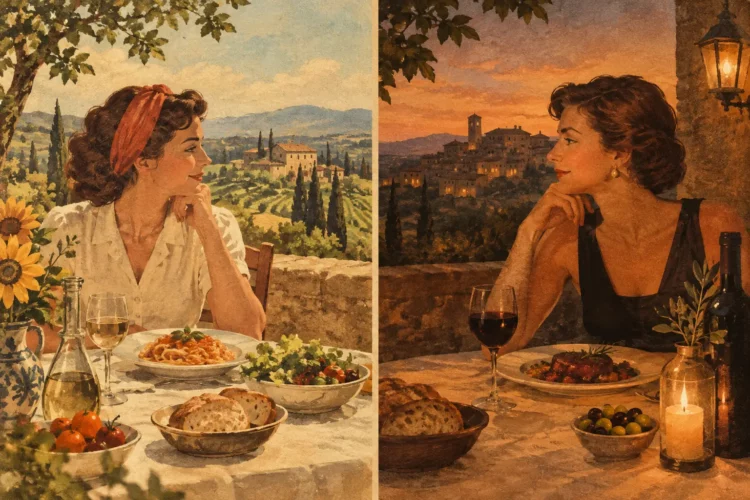
Food is central, but company gives it meaning. Tuscany’s generous table is made for shared plates, passing a bottle of wine, debating which pasta to order and lingering over something sweet. Couples find intimacy in this unhurried rhythm; families find room for everyone to settle in; friends rediscover the pleasure of a meal without checking the time every few minutes.
The atmosphere matters as much as service. Tables should feel welcoming rather than staged. Children should be able to be children. A guest dining alone should be just as comfortable over lunch as a large party celebrating a birthday. The best hosts create this ease through calm confidence, not ceremony.
The Landscape Is Part of the Welcome
In a city restaurant, the room may contain the entire experience. In the Tuscan countryside, the experience extends well beyond the table. The breeze moving through the trees, the warm stone, the changing colour of the hills and the generous silence between birdsong all contribute to the mood.
This is why an outdoor meal can stay with you long after the final course. It joins food to a particular afternoon, a particular view, a particular feeling of being far enough from daily demands to breathe properly. Near Volterra, the Etruscan landscape adds another layer: a sense of history that is present without needing to be announced at every turn.
At Osteria Etrusca, a wide patio and open Tuscan views make that connection tangible. Breakfast can begin slowly with Italian coffee and fresh baking; lunch can follow the sun and the appetite; dinner can settle into the cool of the evening with regional wine, handmade flavours and the people you came to Tuscany with.
There is a trade-off worth recognising. Countryside dining asks you to embrace the journey. It may not be the most convenient choice if you need a quick table in a busy town centre. Yet for many visitors, that small distance from the crowds is precisely the reward. You arrive somewhere quieter, and the meal has space to become more than a stop between plans.
Hospitality That Feels Personal, Not Performed
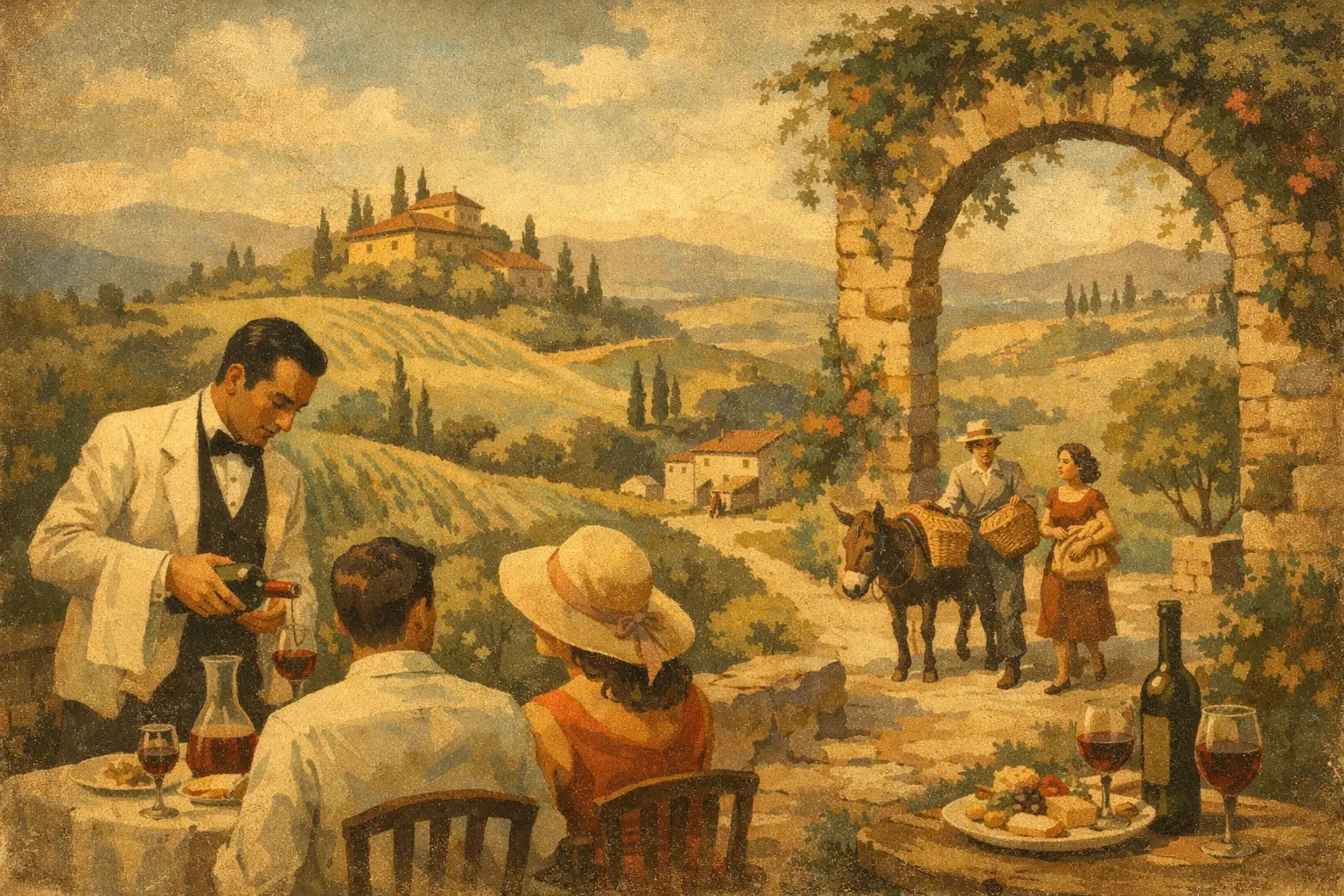
A memorable welcome is rarely about lavishness. It is about feeling seen. Perhaps it is a recommendation based on what is freshest that day, a wine chosen to suit your lunch rather than impress the table, or the simple assurance that you may stay and enjoy the view after you have eaten.
This personal quality is especially valuable for visitors who want to experience Tuscany beyond its postcard image. The region is beautiful, but beauty alone can remain distant. Hospitality brings it close. It lets you taste it, sit within it and carry a little of its calm into the rest of your journey.
For a couple, that may mean a late lunch that becomes an entire afternoon. For a family, it may mean a table where both adults and children feel welcome. For friends, it may be the shared bottle and the slow return of conversation. The details differ, but the principle remains: guests are invited to enjoy themselves fully, without being hurried into the next transaction.
How to Make the Most of a Tuscan Table
Choose a meal time that leaves room to linger, especially if you are dining in the countryside. Ask what is seasonal and local rather than searching only for familiar dishes. If wine is part of your plans, let the food lead the choice: a good local recommendation often reveals a pairing you would not have selected yourself.
Most of all, arrive with a little space in your day. Tuscan hospitality offers its richest pleasures to guests willing to slow down enough to receive them. Order something made nearby, look beyond the table, listen to the people with you, and let lunch or dinner become one of the places your holiday truly happens.
The next time you are deciding where to eat in Tuscany, choose not only by what is on the plate, but by how you hope to feel when you leave. The finest welcome may be the one that sends you back into the evening with a full table behind you and no wish to have hurried it.