 By
By A terrace meal in Tuscany is not simply dinner moved outdoors. It is the warm stone beneath your feet, the scent of rosemary carried on the evening air, a glass catching the last light and the sound of conversation slowing to the pace of the hills. This guide to Tuscan terrace dining is for travellers who want more than a good table: they want to feel, for a few generous hours, completely at home in the landscape.
Why a Tuscan Terrace Changes the Meal
The setting shapes every part of the experience. In a dining room, attention naturally falls on the menu and the company. On a terrace, the meal opens outwards. Vineyards, olive groves, cypress-lined roads or the soft folds of the countryside become part of the table, giving even a simple plate of pasta a stronger sense of place.
That is why the best terrace dining is rarely rushed. Tuscany rewards an unhurried approach: an aperitivo before ordering, a first course shared with stories from the day, and a dessert chosen because the sky has turned apricot and nobody is ready to leave.
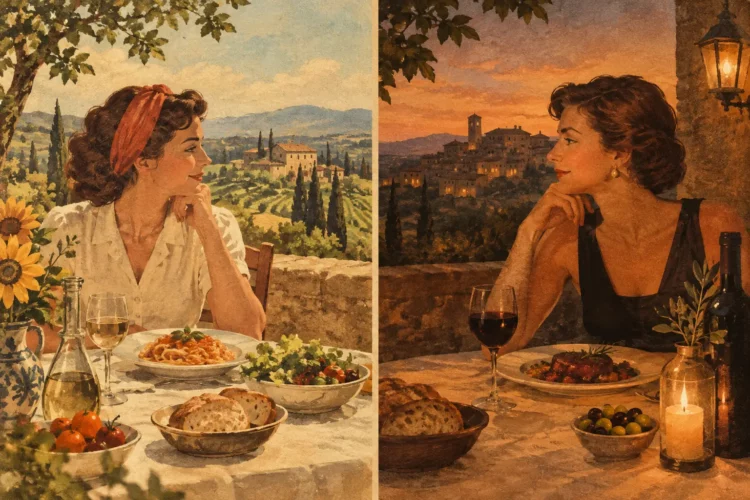
For couples, it can be a quietly romantic occasion without needing ceremony. For families, it offers space, fresh air and a gentler rhythm than a crowded town-centre restaurant. For friends travelling together, it is one of the rare moments when a holiday becomes less about seeing the next sight and more about being exactly where you are.
Choosing the Right Time for Terrace Dining
Light is part of the menu. Lunch on a Tuscan terrace has a clear, sunlit energy, especially in spring and early autumn, when the days are warm but comfortable. It suits a relaxed pause between exploring hill towns, with fresh salads, grilled vegetables, handmade pasta and a crisp local white wine.
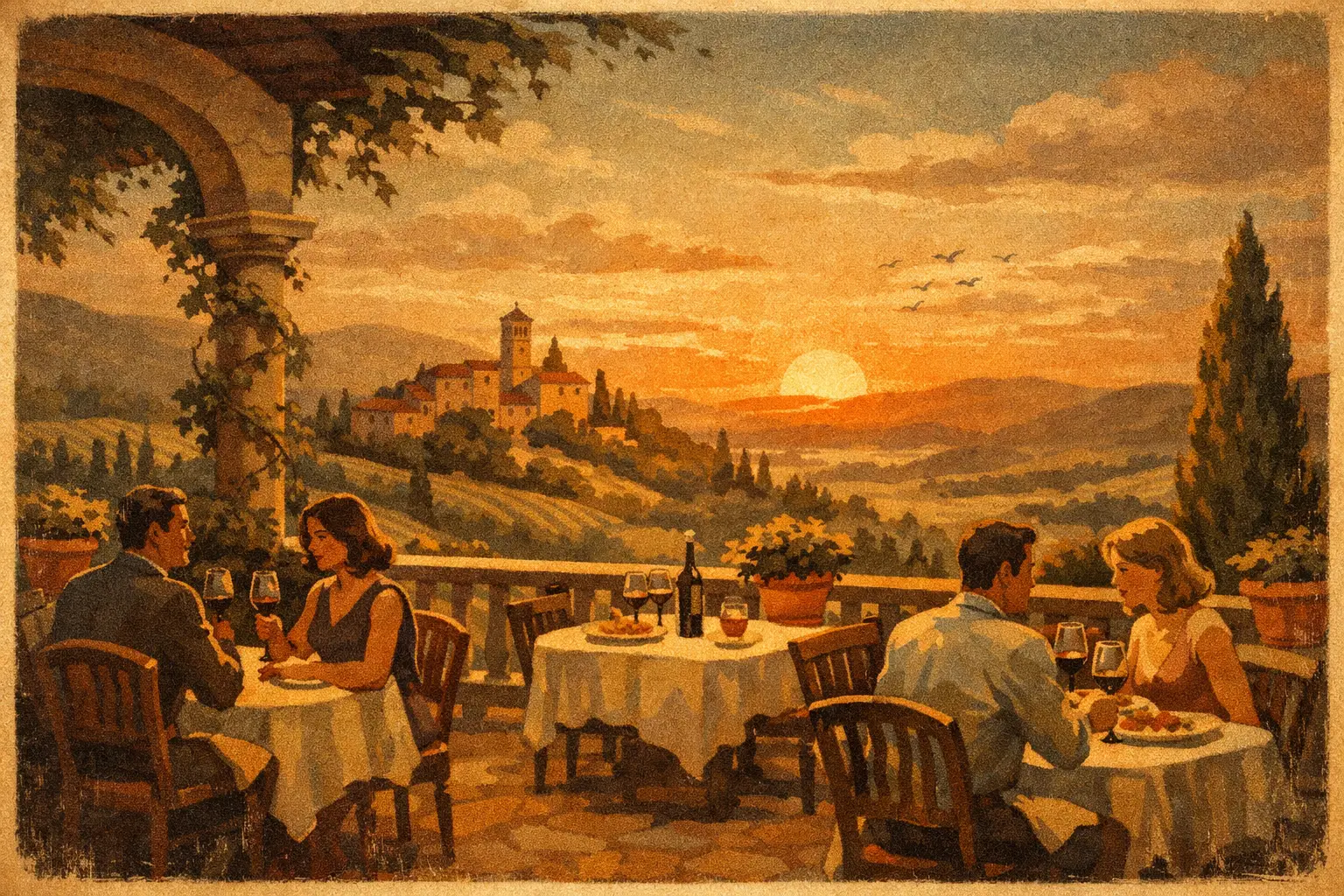
Dinner tells a different story. Book for the hour before sunset if you can. You will have time to settle in while the landscape is still visible, then watch the colours deepen as candles and table lights begin to glow. In high summer, this timing also avoids the hottest part of the day.
There is a trade-off. Sunset tables are often the most sought after, and the view may be worth reserving in advance rather than leaving to chance. If you prefer a quieter, more spacious atmosphere, a later evening table can be equally beautiful. The heat softens, the terrace grows calm, and the night sky takes its place above the table.
A note on seasons and weather
Tuscany is generous, but it is not always predictable. Spring evenings can turn cool after a bright day, while autumn brings an especially beautiful golden light alongside the possibility of rain. Bring a light layer, even in summer, particularly when dining in the hills.
A thoughtful restaurant will have a plan for changing weather, whether that means parasols at lunch, blankets after sunset or a welcoming indoor table when necessary. The point is not to chase perfection. A sudden breeze, the fragrance of rain on dry earth or a moody sky can make an evening feel even more memorable.
A Guide to Tuscan Terrace Dining Through the Menu
The most satisfying terrace meals begin with respect for the moment and the ingredients. Rather than choosing the most elaborate dish, look for a menu that lets the season speak clearly. Tuscan cooking has deep roots in simplicity, but simplicity demands excellent produce.
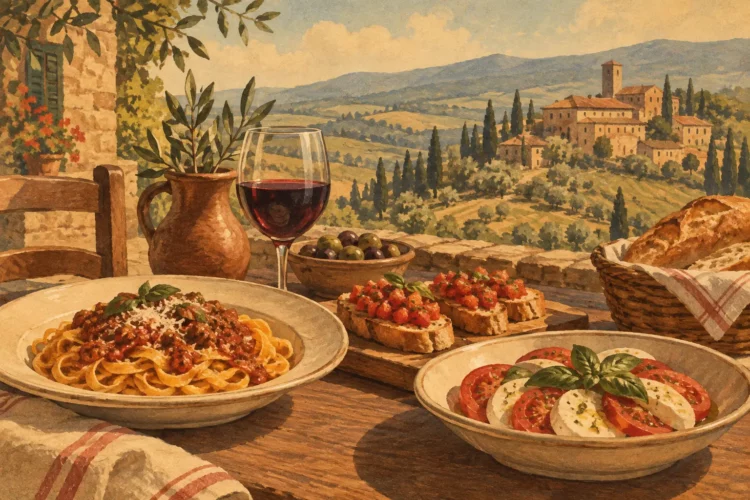
Start with an aperitivo if time allows. A glass of local sparkling wine, a light spritz or a chilled white gives the evening a beginning. Pair it with olives, pecorino, cured meats or crostini, and allow yourselves a little time to look around before deciding on the rest of the meal.
For the first course, pasta is often the heart of the table. Pappardelle with a slow-cooked wild boar ragù carries the depth of the Tuscan countryside, while a tomato sauce made with ripe seasonal fruit can be just as compelling in warmer months. A shared antipasto followed by individual pasta dishes is a lovely choice when you want to taste widely without making the meal too heavy.
Second courses are where appetite and weather matter most. Grilled meat can be magnificent on a cooler evening, especially beside a structured red wine. On a hot afternoon, it may be better to choose vegetables, a lighter fish dish where available, or a plate built around garden produce and good olive oil. There is no rule that says you must order the most traditional dish. The best choice is the one that makes you want to linger.
Save room for dessert when you can. A homemade tart, a spoonful of creamy semifreddo or a seasonal fruit dessert has a different charm on a warm terrace, particularly with coffee served after the plates have been cleared. Italians understand that dessert is not always about hunger. Sometimes it is an invitation to extend the conversation.
Let Local Wine Follow the Food
Tuscany has wines for long lunches, celebratory dinners and every pace between. The pleasure lies in matching the bottle to the table rather than treating wine as an afterthought.
A fresh Vermentino or other local white is a natural companion for an aperitivo, vegetables and lighter dishes. Rosé can be a lovely choice in the heat, especially when the table is sharing several plates. For ragù, grilled meats and more intense flavours, a local Sangiovese-based red brings cherry fruit, savoury notes and the structure to meet the food without overwhelming it.
If you are unsure, ask for guidance and mention what you intend to eat. A good recommendation should feel personal, not performative. You do not need expert vocabulary to enjoy Tuscan wine. Curiosity, a relaxed pace and a willingness to try something from nearby are more than enough.
The Small Choices That Make the Evening Better
A terrace meal feels effortless when a little thought happens beforehand. Reserve ahead during weekends, summer evenings and school holidays, particularly if you are travelling with children or hoping for a table with an open view. Tell the restaurant about dietary requirements when booking, rather than waiting until you arrive, so the kitchen has time to welcome you properly.
When you are seated, do not feel obliged to order everything at once. Ask about seasonal specials and what has arrived fresh that day. A restaurant rooted in its region will often have a dish that is not merely popular, but especially good at that particular moment.
For families, earlier dinner reservations usually make the experience easier and more relaxed. Children often enjoy the freedom of an outdoor setting, but an evening can still run long, so sharing starters and choosing familiar pasta dishes can keep everyone happy. For a special occasion, mention it quietly when you book. The most gracious hospitality is often found in thoughtful details, not grand gestures.
At Osteria Etrusca, the terrace is designed for this kind of lingering: a place where regional cooking, local wine and wide Tuscan views belong together rather than competing for attention.
Give the Table Time
The common mistake is trying to fit terrace dining between two plans. A meal outdoors deserves its own part of the day. Arrive with enough time to enjoy the transition from afternoon to evening, put the phone away for a while and resist the urge to make every course efficient.
Take a photograph if you wish, then return to the table. Notice the changing colour of the hills, the bread still warm from the kitchen, the quiet pause after a first sip of wine. These are small details, but they are often what remain after a holiday ends.
Choose a terrace that feels connected to its surroundings, order with the season, and leave a little room in the evening for nothing at all. Tuscany is at its most generous when there is nowhere else you need to be.