 By
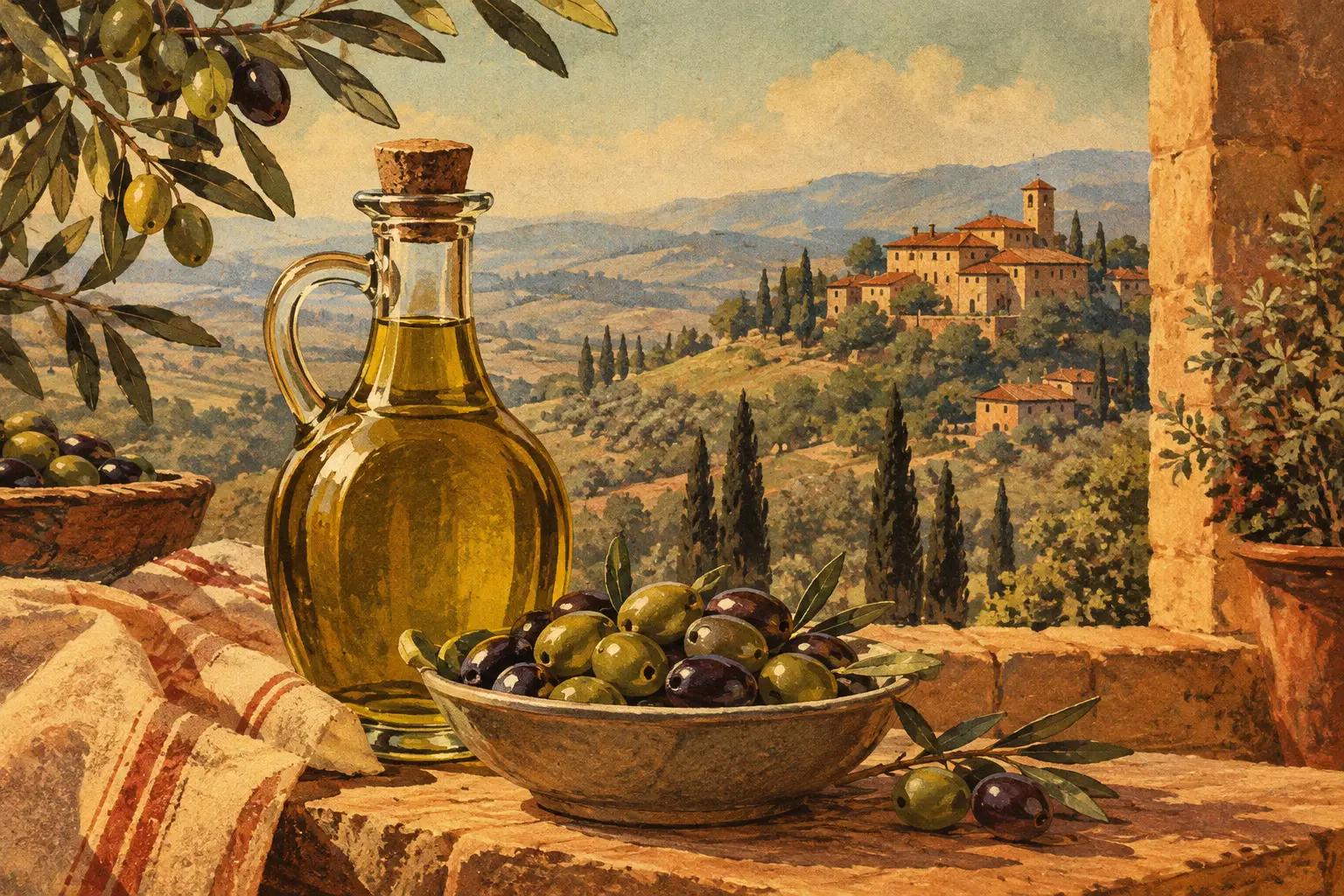
There is a moment in Tuscany, often before the first course has arrived, when a good meal begins with something wonderfully simple: warm bread, a small dish and a pour of vivid green extra virgin olive oil. This Tuscan olive oil guide is for travellers who want to recognise that moment, choose well and bring a little more of the region’s generosity to the table.
Olive oil here is not merely a cooking ingredient. It is the first expression of the harvest, the fragrance of the grove after rain and the lively finishing touch that can make beans, grilled vegetables or a bowl of pasta taste unmistakably Tuscan. The best bottle is not always the softest or the most expensive. It is the one that is fresh, well kept and suited to the food in front of you.
What makes Tuscan olive oil distinctive?
Tuscan extra virgin olive oil is often recognisable for its brightness. It can smell of freshly cut grass, artichoke, green tomato leaf, almond or wild herbs. On the palate, it may begin elegant and fruity, then reveal a pleasant bitterness and a peppery warmth in the throat.
That peppery finish surprises some first-time tasters, especially those used to milder oils. It is not a flaw. In a fresh, carefully made oil, bitterness and pungency are usually signs of naturally occurring olive compounds and a timely harvest. They give the oil character, and they bring energy to food that might otherwise feel rich or heavy.
Of course, Tuscany is not one single flavour. Groves near the coast, warmer valleys and higher inland hills can produce different expressions, while varieties such as Frantoio, Moraiolo and Leccino each contribute their own personality. Moraiolo is often intense and peppery; Frantoio can feel herbaceous and refined; Leccino is frequently gentler and rounder. Many of the most satisfying oils are blends, made to create balance rather than to showcase a single variety.
A Tuscan olive oil guide to buying with confidence
Start with the words “extra virgin olive oil”, but do not stop there. This category matters because it indicates oil obtained by mechanical means, without chemical refining, and meeting defined quality standards. Yet a label alone cannot tell you whether the oil is still lively when you open it.
Look for a harvest date. Olive oil is a fresh fruit juice, not a spirit made to improve over years. A bottling date is useful, but the harvest date tells you more directly when the olives were picked. In Tuscany, harvesting generally begins in autumn, and a bottle from the most recent harvest is usually the most exciting choice. If no date is shown, ask the producer or seller when it was made.
A protected designation can also offer reassurance. IGP Toscana and DOP oils identify oils connected to a defined origin and production rules. They can be excellent choices, particularly when you want a clear sense of place. Still, a designation is not a substitute for freshness, good storage or a producer’s care. A small local oil without a certification may be beautiful, while a prestigious label left in a hot shop window will not show its best side.
Choose dark glass or a tin rather than clear glass. Light is the quiet enemy of olive oil, and heat is not far behind. A bottle displayed in sunshine may look attractive, but it is an unnecessary risk. At home, keep your oil in a cool, dark cupboard, away from the hob, and close the cap properly after every use.
Price deserves a realistic view. Producing excellent oil requires healthy fruit, skilled milling and generous quantities of olives. Very cheap extra virgin olive oil is unlikely to offer the freshness and complexity that make a Tuscan bottle memorable. Equally, the highest price is not a guarantee of pleasure. Buy from a trusted producer, choose a size you can use within a few months, and let your own taste guide the next bottle.
How to taste it before the meal
You do not need a formal tasting room to understand good oil. Pour a little into a small glass, cup it in your hands for a minute and cover the top with your other hand. The gentle warmth releases its aroma. Swirl, uncover and breathe in slowly.
Then take a small sip. Let it travel across the tongue, drawing in a little air if that feels natural. Notice whether the flavours are green and clean, mellow and nutty, or perhaps ripe and almost sweet. Finally, swallow. A tickle at the back of the throat can be a welcome sign of a young, vibrant oil.
What you do not want is a stale impression: wax crayons, old nuts, damp cardboard, vinegar or a flat, greasy finish. These notes suggest oxidation, poor fruit or poor storage. Fresh oil should feel alive, even when its style is delicate.
When tasting at an estate or restaurant, resist the urge to judge an oil solely by its colour. Deep green may look promising, but colour varies with olive variety, ripeness and filtration. Aroma and flavour are more truthful companions.
Match the oil to the dish, not just the occasion
The greatest pleasure of Tuscan oil is how naturally it belongs at the table. A bold, peppery bottle is glorious over ribollita, chickpeas, farro soup or grilled steak. Its sharp green edge cuts through slow-cooked dishes and brings depth to earthy ingredients such as cavolo nero, mushrooms and game.
A softer, fruitier oil can be lovely with delicate fish, fresh ricotta, roasted squash or a simple salad of fennel and orange. On warm bread, almost any good Tuscan oil has its place, though salt and a few minutes of conversation improve the experience considerably.
For pasta, use oil with intention. It can form the base of a simple sauce with garlic and chilli, but the finest bottle is often best added at the end. A final pour over pappardelle with wild boar ragù, or over handmade pasta with seasonal greens, gives fragrance that long cooking would soften.
There is no rule against using excellent oil for cooking. It is more heat-stable than many people assume, and its flavour can enrich a soffritto or tray of roasted vegetables. The trade-off is simple: heat mutes delicate aromas. Keep a dependable everyday bottle for the pan and reserve your most expressive oil for finishing, dipping and dishes where it can be tasted clearly.
The season behind the bottle
Olive oil tastes of work as much as landscape. Harvest is a brief, intense period when timing matters. Olives picked earlier tend to yield less oil but often deliver greener, more peppery flavours. Later-picked fruit may produce a mellower, rounder style. Neither approach is automatically better; it depends on the producer’s aim and the dishes you love to cook.
After picking, olives should reach the mill quickly. Delays can diminish freshness, while careful milling and clean storage preserve the oil’s natural perfume. This is why local provenance means more than a picturesque label. It can reflect a close relationship between grove, mill and table.
Around Volterra, the landscape makes this connection easy to feel. Stone, cypress, woodland and olive trees share the same horizon, while the changing light gives even a late lunch a sense of occasion. At Osteria Etrusca, a generous pour of local oil is part of that wider pleasure: food made slowly enough to respect its ingredients, enjoyed with the people who chose to linger.
Bring the ritual home
If you take a bottle home from Tuscany, do not save it for a mythical perfect dinner. Open it while it is fresh. Pour it over tomatoes at their peak, white beans with sage, roasted carrots, grilled bread or a bowl of soup on a cold evening. Use it where its fragrance has room to speak.
The most rewarding Tuscan olive oil is not kept as a souvenir. It is shared, passed across the table and remembered in the small pause after the first taste, when a simple meal feels suddenly more generous.