 By
A rustic lunch Tuscany visitors truly remember rarely begins with a menu alone. It begins with warm light across the hills, the scent of bread arriving from the kitchen, and a table where nobody feels the need to watch the clock. This is lunch as Tuscany understands it: generous, seasonal and made for sharing with the people beside you.
For travellers who have spent the morning following quiet roads, visiting Volterra or simply enjoying the countryside, lunch is the natural pause in the day. It is a chance to settle into the landscape rather than rush through it, with honest food, local wine and room for one more story before dessert.
What makes a rustic lunch in Tuscany feel authentic?
Rustic does not mean careless. In Tuscany, the simplest plates often depend on the finest ingredients and careful timing. A ripe tomato needs little more than good olive oil and salt. Fresh pasta carries a sauce best when it has been made with patience. Meat cooked over heat asks for confidence, not unnecessary decoration.
The character of a rustic table comes from this restraint. It is shaped by recipes that belong to the countryside, produce chosen close to home and flavours that make sense in the season. In spring, that may mean tender greens, herbs and pecorino. Summer invites tomatoes, courgettes and sun-warmed fruit. Autumn brings mushrooms, chestnuts and game, while winter calls for slow-cooked sauces, rich soups and deeper reds in the glass.
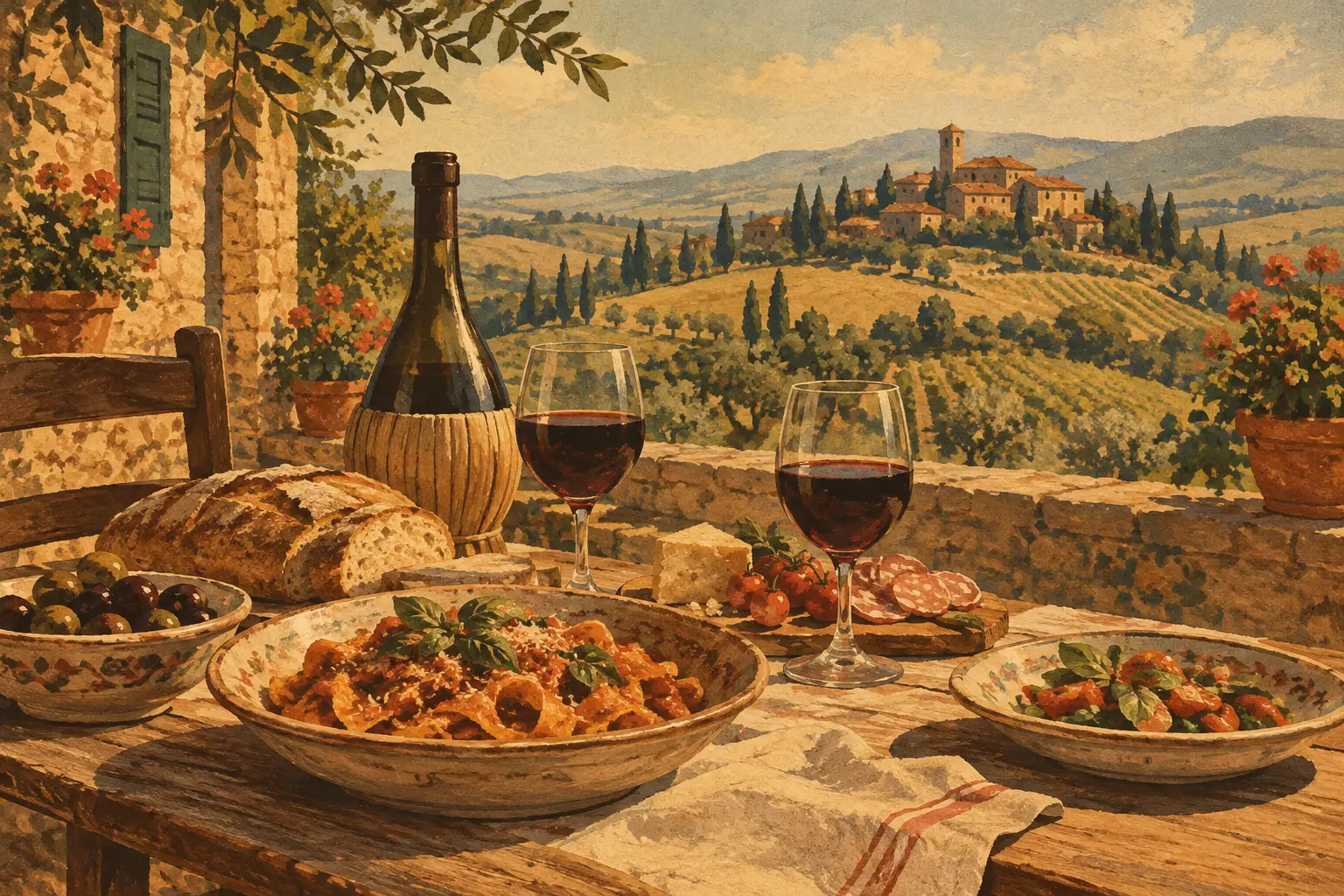
A proper Tuscan lunch should feel abundant without becoming heavy. There may be a basket of fresh bread to begin, followed by a plate of cured meats and cheese, then handmade pasta or a generous meat dish. Yet the best meals leave space for the afternoon ahead: a stroll, a slow drive through the hills, or the pleasure of remaining at the table a little longer.
The pleasure of local ingredients
Tuscany is not one flavour. Its coast, hills, vineyards and wooded inland areas each bring something distinct to the kitchen. Near Volterra, the landscape offers a particularly rich pantry, from olive oil and seasonal vegetables to cheeses, wild herbs and game prepared in the traditional way.
That is why a lunch rooted in place should not feel identical in every month. A fixed idea of what tourists expect can be less satisfying than a kitchen that responds to what is at its best. The menu may change, but the feeling remains constant: food made with respect for the land and served with uncomplicated warmth.
Local wine belongs naturally at this table. A crisp white can lift antipasti and vegetable dishes, while a Tuscan red is a lovely companion to ragù, grilled meats or wild boar pasta. The right choice depends on the plate, of course, but also on the day. On a bright, hot afternoon, a lighter pour and a slower pace may be exactly what is wanted.
The rhythm of lunch, not a stop between plans
Many holidays are planned with admirable ambition. There are museums to see, villages to reach and views to photograph before the light changes. But Tuscany rewards a different kind of itinerary too, one that leaves room for a long lunch.
The value of a rustic lunch is not measured only by what arrives on the plate. It is in the moment when coffee follows dessert and nobody stands up immediately. It is in a child finding something familiar in a bowl of pasta, while the adults share another glass of wine. It is in a couple choosing a table with a view and letting the day become less scheduled.
For families, a relaxed restaurant in a natural setting can make the whole day easier. Children have space to breathe, parents are not hurried, and a meal becomes part of the holiday rather than a practical interruption. For couples, the same setting offers something quieter: a beautiful table, the soft sounds of the countryside and a sense of being far from the crowded centre of town.
There is a trade-off, naturally. A meal prepared from fresh ingredients, served at an unhurried pace, is not designed for a twenty-minute turnaround. It suits guests who want to enjoy the occasion. If your day has a strict timetable, choose a simpler lunch. If you have time to spare, give it to the table.
What to order for a memorable Tuscan table
The most satisfying approach is usually to order with the season and share where possible. Start with antipasti that bring together the region’s straightforward pleasures: local cheeses, cured meats, vegetables preserved or grilled with care, and bread ready for olive oil.
Pasta is often the heart of the meal. Pappardelle with a slow-cooked game ragù has a depth that belongs to the Tuscan hills, while a simpler fresh pasta can be perfect when the sauce is built around vegetables, tomato or a fragrant herb. The pleasure lies in the contrast between the pasta’s softness and the direct, confident flavour of the sauce.
For a second course, grilled or roasted meat may suit the occasion, particularly on cooler days or when the lunch has become a leisurely gathering. This is not always the right choice for everyone. A lighter plate of vegetables, a salad with cheese, or a seasonal pasta can be just as expressive of the region, especially in summer.
Do not treat dessert as an afterthought. A homemade pudding, cake or fruit-based sweet brings a gentle close to the meal, particularly with an espresso. In Italy, coffee is not a signal to hurry away. It is the final small ritual before deciding whether the afternoon needs another plan at all.
A table with a view changes the meal
A beautiful setting cannot replace good cooking, but it can deepen the experience of it. The sight of olive trees, open sky and the changing colours of the Tuscan countryside gives lunch a sense of occasion without making it formal.
At Osteria Etrusca, an expansive patio and far-reaching views create precisely that feeling: the pleasure of regional cooking with the landscape close at hand. It is a setting made for long conversations, family celebrations and the simple luxury of eating outside when the weather allows.
Outdoor dining does depend on the season. In high summer, a shaded table and an earlier lunch can be more comfortable than the brightest part of the afternoon. In spring and autumn, sunshine can make a terrace especially inviting, though a light layer is wise as the day cools. The best table is not always the one nearest the view, but the one where you feel able to stay.
How to plan a lunch you can enjoy properly
A little planning keeps the experience relaxed. If you are travelling during weekends, school holidays or the busiest summer months, reserving ahead is sensible, especially for a larger family group or a table outdoors. Mentioning dietary needs when booking also gives the kitchen the best chance to prepare something thoughtful rather than merely acceptable.
Allow more time than you think you need. A rustic lunch can be a gentle two-hour occasion, and longer if you are celebrating or enjoying several courses. This is not indulgence for its own sake. It is an opportunity to experience a part of Italian life that is easy to miss when every hour is assigned to a destination.
Consider the shape of the rest of your day. A hearty meal may be best followed by a quiet afternoon, a nearby walk or a return to your accommodation for a rest. If you plan to drive through unfamiliar country roads, enjoy wine with awareness and choose the pace that keeps everyone comfortable.
The finest lunches are not performances. They are simple in the most generous sense: bread broken at the table, ingredients with a story, a view that asks nothing of you, and the welcome to stay for one more coffee. Leave enough space in your Tuscan day for that kind of meal, and it may become the part of the journey you carry home most clearly.