 By
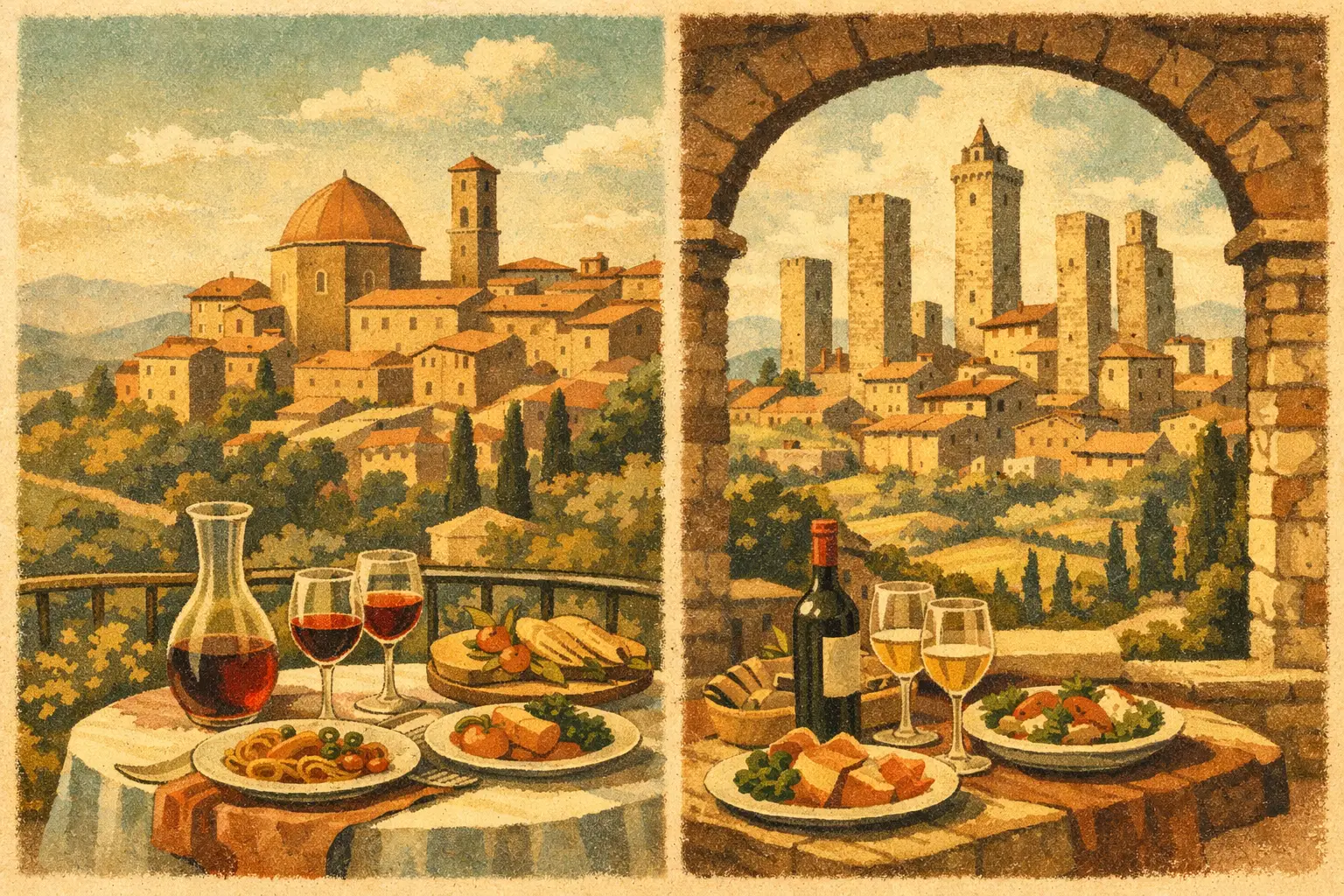
By A table in Tuscany can change the shape of an entire day. In the choice of Volterra dining vs San Gimignano, the question is not simply where the pasta is better. It is whether you want your meal woven into a quieter landscape of hills and Etruscan history, or into the lively rhythm of a celebrated hill town, where medieval towers rise above busy lanes.
Both places offer memorable food, local wine and the generous hospitality for which Tuscany is loved. Yet they feel distinctly different at the table. The right choice depends on the pace you want, the people you are travelling with and whether the meal is a pause between sights or the experience around which the day is built.
Volterra dining vs San Gimignano: the essential difference
San Gimignano is often an immediate delight. Its towers, stone streets and far-reaching views make it one of Tuscany’s most recognisable stops. Restaurants and wine bars sit close to the main sights, which can be ideal when you have a limited itinerary and want to combine a walk through the historic centre with lunch or an aperitivo. There is energy in the streets, especially from late morning onwards, and the choice of dining rooms is broad.
Volterra asks for a little more time. Its ancient walls, alabaster workshops and Etruscan roots lend the town a deeper, more contemplative character. Beyond its centre, the countryside opens quickly into olive groves, fields and long views. Dining here can feel less like a necessary stop and more like an invitation to settle in: to begin with a glass of local wine, share antipasti slowly and allow lunch to stretch towards the afternoon.
Neither atmosphere is automatically better. San Gimignano suits visitors who enjoy being at the heart of the action. Volterra is especially rewarding for those who value space, a less hurried table and the sense that the landscape is part of the meal.
Dining in San Gimignano: lively, central and scenic
A meal in San Gimignano has an undeniable sense of occasion. You may step from a gallery, church or tower straight into a restaurant tucked beneath old stone vaults. The town is well prepared for visitors, so it is easy to find everything from a quick plate of pasta to a more formal dinner, alongside the area’s well-known Vernaccia wine.
For a first visit to Tuscany, that convenience has real appeal. Couples on a short break can enjoy the town at golden hour, and families can build food into a day of sightseeing without needing to travel elsewhere. If your priority is medieval architecture, a central table and the buzz of people enjoying the same famous view, San Gimignano delivers beautifully.
The trade-off is timing. During peak season and at popular meal hours, the historic centre can be busy. A meal may feel more scheduled, with reservations and service shaped by the flow of day visitors. The most visible terraces can also be more about the setting than a long, unhurried discovery of local ingredients. This does not mean a good meal is difficult to find. It simply means it pays to choose carefully and to reserve ahead when you have a particular restaurant in mind.
What to order in San Gimignano
The area is a natural place to try Vernaccia di San Gimignano, a dry white wine that works well before lunch or alongside lighter dishes. Seasonal vegetables, pecorino, cured meats and handmade pasta all belong on the table. In autumn and winter, mushrooms and game may bring a richer note to menus.
Still, San Gimignano’s food experience is often defined by its setting: a stop amid the towers, a glass of wine in the centre, a memorable view framed by stone. For many travellers, that is precisely the point.
Volterra: a slower table with a stronger sense of place
Volterra has the history to match almost any Tuscan town, but it carries it with a quieter confidence. Here, meals can be shaped by the seasons rather than the rush of a landmark itinerary. The surrounding land has a natural presence, inviting ingredients that feel generous and grounded: olive oil, local cheeses, garden vegetables, slow-cooked meats and pasta with wild boar ragù.
For guests staying nearby, Volterra also makes room for a fuller day of eating. Breakfast need not be hurried, lunch can be a proper pause rather than a sandwich on the move, and dinner can arrive after a late walk through the countryside. This is Tuscany for people who want to hear the conversation at their table, notice the evening light and order dessert because there is nowhere else they need to be.
At Osteria Etrusca, that spirit is central to the experience. A meal can begin with fresh baking and Italian coffee, continue with regional dishes and local wines, then linger over a homemade dessert as the countryside takes on its softer evening colours. The setting is not an accessory to the cooking. It is part of what makes the table feel complete.
What to order around Volterra
Volterra is a particularly satisfying choice for diners drawn to the more savoury side of Tuscan cooking. Look for pappardelle or other pasta with game sauces, including wild boar, as well as grilled meats and seasonal side dishes. A good antipasto might bring together local charcuterie, cheese, vegetables and bread, encouraging the table to share rather than rush towards a single main course.
This is also a lovely place to follow your appetite across the day. A relaxed breakfast before exploring, an early lunch in the shade or a long dinner beneath an open sky each create a different version of the same pleasure: honest food, carefully prepared, in a place that encourages you to stay awhile.
Which destination suits your plans?
Choose San Gimignano if it is your first time in the area and you want to combine a meal with famous sights in one compact visit. It works brilliantly for a lively lunch, a glass of Vernaccia after sightseeing or a dinner in the historic centre when the town begins to empty of day visitors. It is also a practical choice if you prefer having many restaurants within a short walk.
Choose Volterra if you are looking for a more spacious Tuscan rhythm. It suits food-focused travellers, families who would rather avoid the densest crowds and couples seeking an evening that feels personal rather than performative. It can be especially appealing if your idea of a good meal includes time before and after it: a drive through the hills, a table with a view and no urge to check the clock.
For a longer holiday, there is no need to treat the decision as a competition. San Gimignano can offer its theatrical first impression, while Volterra brings depth and calm. Visit the towers when you want movement and spectacle; reserve time near Volterra when you want Tuscany to unfold more slowly.
Make the meal fit the day, not the other way round
The most satisfying Tuscan meals usually begin with a little planning. In San Gimignano, reserve for dinner or a sought-after terrace, particularly between spring and early autumn. Arriving for an early lunch can also make the centre feel more relaxed. In the Volterra area, allow enough time to enjoy the drive and avoid treating a countryside meal as a brief stop between appointments.
When travelling with children, a more open setting and flexible all-day offering can make a considerable difference. When celebrating something special, think beyond the menu: do you want candlelight among ancient streets, or a wide horizon and the ease of lingering at the table? Both are romantic, but in different ways.
Leave one unplanned hour in your Tuscan day. It may become the moment when coffee turns into lunch, lunch turns into another glass of wine, and the place you chose begins to feel less like a stop on a map and more like part of your holiday.