 By
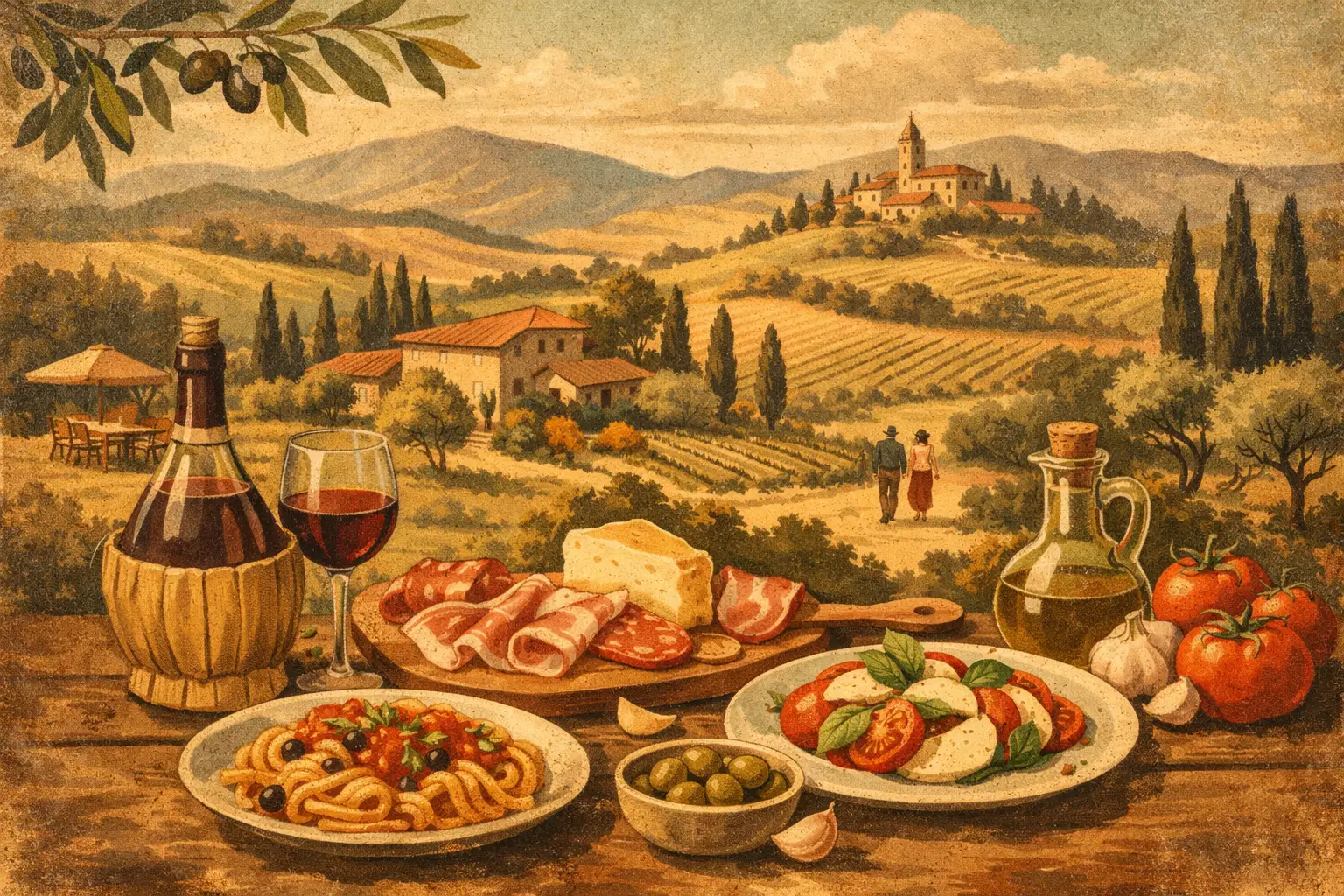
By The first bite should tell you where you are. A locally sourced Italian menu does more than list familiar dishes: it carries the character of the Tuscan countryside into every course, from warm breakfast pastries to a plate of pasta served as the afternoon light softens over the hills. It is food shaped by nearby fields, trusted producers, changing weather and the simple pleasure of sitting down with time to spare.
For guests travelling through Tuscany, this is often the difference between a pleasant meal and one that stays with them. The ingredient may be humble, but when it has travelled only a short distance and is prepared with care, it arrives with a clarity that needs little embellishment.
What makes a locally sourced Italian menu different?
Local sourcing is not a decorative phrase placed beside a menu. At its best, it is a way of cooking and hosting. It means choosing ingredients for their season, their provenance and their flavour rather than forcing the same dishes onto the table all year round.
In Tuscany, that might mean ripe tomatoes and fragrant basil in summer, mushrooms and game when the air turns cooler, tender artichokes in spring, or chestnuts and slow-cooked sauces as autumn settles in. Olive oil, cheese, flour, honey and wine each bring their own sense of place. The result is recognisably Italian, yet rooted in the particular landscape around Volterra rather than designed to taste the same everywhere.
There is also a quieter benefit for the guest. A menu with a local rhythm tends to feel more relaxed and more truthful. You are not being asked to choose from an endless catalogue. You are invited to enjoy what is at its best now.
Seasonality is part of the pleasure
Seasonal cooking asks for a little flexibility, and that is precisely its charm. A favourite dish may rest for a few months while another takes its place. Fresh pasta might be paired with a rich wild boar ragù in one season and a lighter vegetable sauce in another. A dessert may change according to the orchard, the bakery and the day’s inspiration.
This can be different from the certainty of a standardised restaurant menu, particularly for families planning around familiar preferences. A thoughtful all-day Italian kitchen balances both needs: it preserves beloved classics while allowing the kitchen to follow the season. Children can find comforting flavours, while curious diners have a reason to return and taste something new.
From breakfast to supper, Tuscany has its own pace
A regional menu should suit the whole day, not only the evening table. Morning begins gently, with freshly baked treats, good Italian coffee and the kind of breakfast that encourages guests to linger before setting off to explore. The pleasure is in the detail: a crisp pastry, a soft cake, a local preserve, the aroma of coffee carried through the open air.
At lunch, the table becomes a welcome pause between a walk, a drive through the countryside or an afternoon by the pool. This is the right moment for a generous pasta, a seasonal antipasto or a simple plate built around excellent produce. Italian lunch is not always elaborate, but it should never feel hurried.
Dinner naturally invites a longer gathering. Plates of handmade pasta, carefully prepared meats, dishes featuring local game and vegetables with real flavour make room for conversation. A bottle from a nearby vineyard belongs here not as an afterthought, but as part of the meal’s story. Local wine can echo the brightness, structure or warmth of the food in a way that is difficult to recreate with a list chosen only for recognisable labels.
At Osteria Etrusca, this all-day approach allows the experience to move with the guest’s day. Come for coffee and a slow morning, return after exploring the area, or settle in for dinner as the landscape becomes part of the evening.
The ingredients deserve a simple approach
Italian cooking is often misunderstood as complicated because the best versions taste so complete. In reality, a locally led kitchen usually relies on restraint. When tomatoes are sweet, olive oil is peppery and cheese has depth, there is no need to bury them beneath too many competing flavours.
That does not mean every dish must be minimal. Tuscan cuisine has a deep affection for patient cooking: sauces that simmer slowly, ragù enriched over time, beans softened with herbs, and meat cooked until it yields easily to the fork. The simplicity lies in the intention. Each ingredient has a reason to be on the plate.
This is especially true of game, an important part of the regional table. Wild boar, when prepared with respect and balanced with aromatic herbs, can be rich without becoming heavy. It suits pasta beautifully and offers visitors a flavour that feels genuinely connected to the countryside around them. For diners who prefer lighter choices, seasonal vegetables, salads, cheeses and pasta dishes offer equally satisfying routes through the menu.
Local does not mean limiting
A locally sourced menu should feel generous, not worthy. Its purpose is pleasure, not a lesson. The best kitchens are honest about what the area produces brilliantly and practical about what guests expect.
Coffee is an easy example. Tuscany does not grow coffee, yet an excellent Italian coffee is central to the rhythm of the day. The same is true of certain spices, citrus or ingredients that belong to wider Italian culinary traditions. Local sourcing is not about pretending that every element comes from a few kilometres away. It is about placing nearby, seasonal produce at the heart of the menu and selecting everything else with the same discernment.
For travellers, this honesty matters. It creates trust and leaves space for genuine hospitality. A good host can recommend a local wine beside a hearty dish, suggest a lighter lunch in warm weather, or help a family find a table that suits both a long meal and younger appetites.
A meal is better when the setting has a voice
Food tastes different when the place around it is given room to matter. The sound of conversation on a terrace, the scent of warm earth after the sun, the sight of Tuscan hills extending beyond the table: these are not extras. They change the way a meal is remembered.
That is why a destination restaurant offers something a city-centre lunch cannot always provide. There is space to arrive, breathe and let the day slow down. On a large patio, a shared antipasto becomes an occasion. A late dessert becomes an excuse to watch the sky change colour. Even a coffee can feel like a small holiday ritual when there is nowhere else you need to be immediately.
Of course, the setting cannot compensate for indifferent cooking. Beautiful views and poor ingredients soon reveal themselves. But when a kitchen and its surroundings speak the same language, the experience feels whole: regional food served with warmth in a landscape that explains where those flavours began.
Choosing well when you visit Tuscany
When looking for an authentic Italian meal, ask a few simple questions. Does the menu change with the seasons? Are regional specialities treated as living dishes rather than tourist souvenirs? Is there a thoughtful choice of local wine? And perhaps most revealingly, does the place invite you to stay at the table rather than rush through it?
You do not need to order the most elaborate dish to taste Tuscany. Share a few antipasti, choose a pasta that reflects the season, and leave room for a homemade dessert. Let the staff guide you if you are unsure. Their recommendation may lead you to the dish that is especially good that day, which is often the point of choosing local in the first place.
The finest locally sourced Italian menu is not trying to impress through excess. It offers something more lasting: the pleasure of food that belongs to its landscape, enjoyed slowly with people you are glad to be with. Save time for that final coffee, look out across the hills, and allow the table to be the best part of the day.