 By
By A glass of wine can change the rhythm of a Tuscan meal. Vernaccia versus Chianti wine is not simply a choice between white and red: it is a choice between two distinct expressions of the landscape, each with its own place at the table, its own aromas and its own ideal moment.
Choose Vernaccia when the afternoon is warm, the light is soft and the menu leans towards vegetables, fish or delicate cheese. Choose Chianti when a long lunch becomes dinner, when pasta arrives dressed in ragù, or when grilled meat calls for something with depth. Both belong to Tuscany. They simply tell different parts of its story.
Vernaccia versus Chianti wine: the essential difference
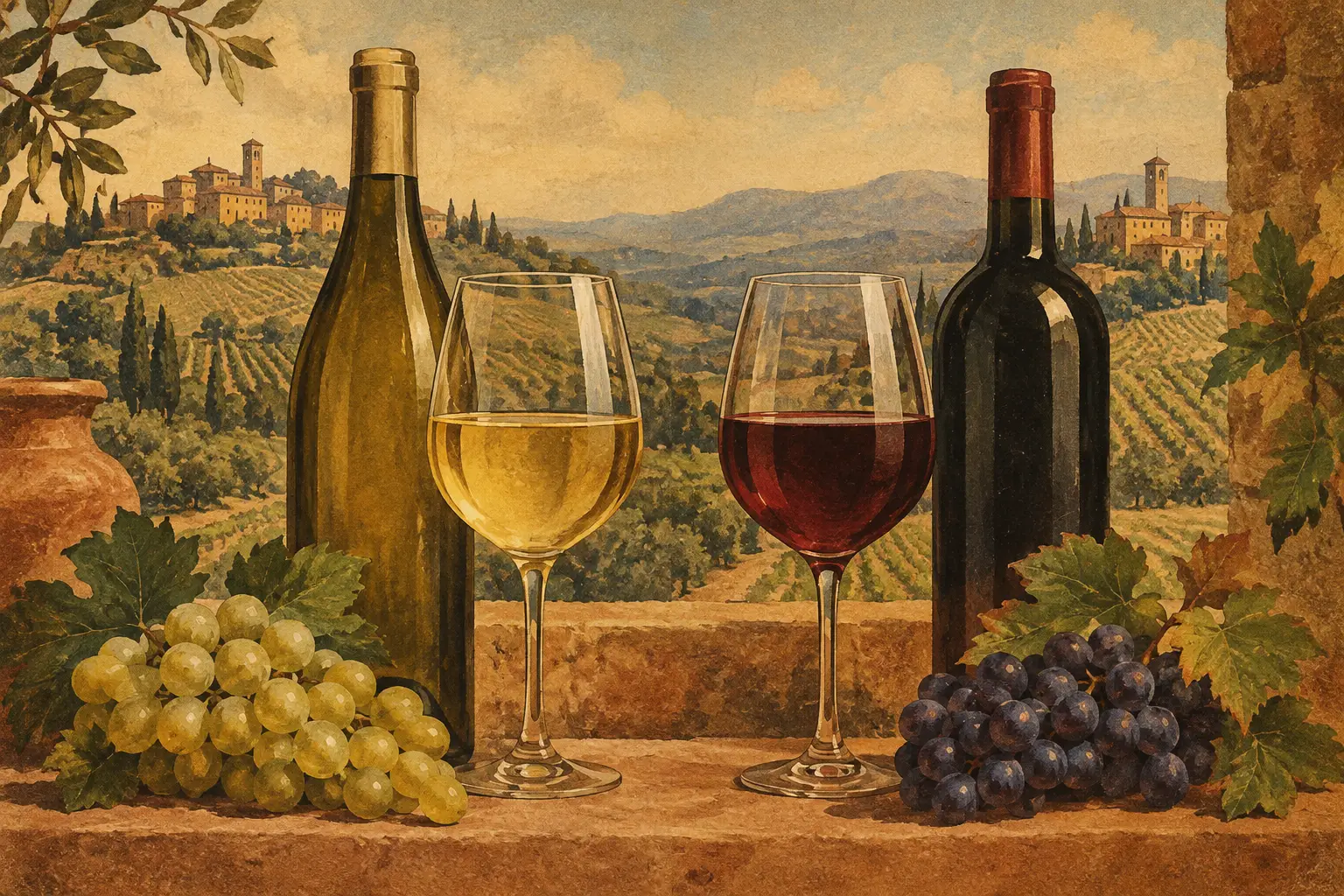
The clearest distinction is colour and grape variety. Vernaccia di San Gimignano is a dry Tuscan white wine, made primarily from the Vernaccia grape around the hill town of San Gimignano. Chianti is a red wine from a much broader area of central Tuscany, built mainly around Sangiovese.
That difference shapes almost everything in the glass. Vernaccia tends to be bright, savoury and refreshing, with citrus, white peach, almond and sometimes a faint mineral or saline note. Chianti is typically fuller in body and more structured, bringing sour cherry, red plum, violet, dried herbs and earth, with the gentle grip of tannins.
Neither is automatically better. The more useful question is what you are eating, what the weather is doing and how you want the meal to feel. A bottle chosen with care should support the table rather than dominate it.
What makes Vernaccia di San Gimignano distinctive?
Vernaccia di San Gimignano has a special place in Italian wine history. It was the first Italian wine to receive DOC status in 1966, and today it is recognised as a DOCG. Yet its appeal remains wonderfully straightforward: this is a white wine with freshness, character and enough texture to sit comfortably beside proper food.
At its most lively, Vernaccia has notes of lemon zest, green apple and spring flowers. With more ripeness or a little bottle age, it can become rounder and more complex, showing pear, chamomile, beeswax and the appealing bitterness of almond on the finish. Some producers use oak with restraint, creating a broader, creamier style, but the most memorable examples retain their clean, stony energy.
That savoury edge is what makes Vernaccia especially useful at the table. It is more serious than a simple aperitif wine, although it is delightful as one. It has the acidity to refresh the palate after olive oil, cheese or fried food, while its texture gives it enough presence for a plate of pasta.
Serve it lightly chilled, rather than ice-cold, ideally around 8 to 10°C. If it is too cold, its perfume and subtle mineral character disappear. Let the bottle rest in the shade, pour generously, and allow a few minutes for the wine to open.
The foods that welcome Vernaccia
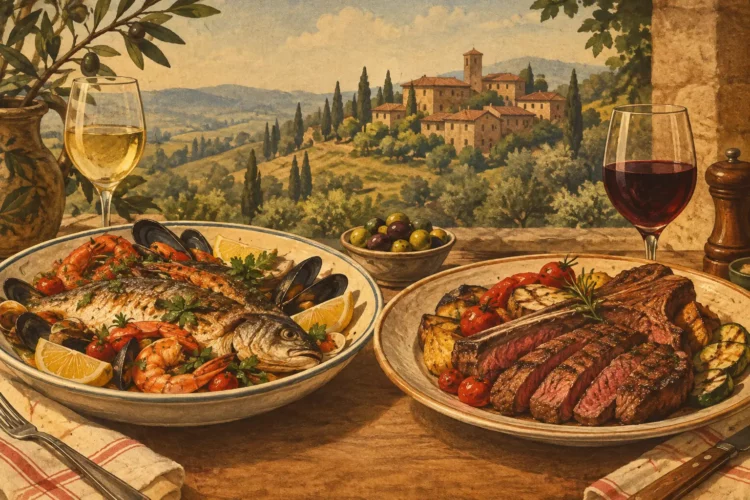
Vernaccia shines with Tuscan ingredients that are fresh, herbal and gently savoury. Think of crostini with seasonal vegetables, pecorino with honey, grilled prawns, roast chicken with lemon and rosemary, or handmade pasta with a delicate sauce. It is particularly rewarding beside artichokes, a notoriously difficult ingredient for wine, because its slight almond bitterness meets the vegetable beautifully.
For a leisurely lunch, it also suits dishes that might feel too light for a red: panzanella, ricotta-filled ravioli, grilled courgettes, white fish and salads enriched with good olive oil. It keeps the meal lifted and leaves space for the landscape, conversation and a second course.
Why Chianti tastes so different
Chianti is driven by Sangiovese, Tuscany’s great red grape. It brings lively acidity, red-fruit perfume and tannin, creating wines that feel energetic rather than heavy. Depending on the zone, producer and ageing, a Chianti may be immediate and juicy or more layered, with leather, tobacco, woodland herbs and spice appearing over time.
The name covers several styles. A standard Chianti can be charming, fruit-forward and ideal for a relaxed weekday meal. Chianti Classico comes from the historic heartland between Florence and Siena and often offers more structure and complexity. Chianti Classico Riserva and Gran Selezione generally spend longer developing before release, so they can be richer, more savoury and better suited to substantial dishes or a lingering evening at the table.
This is where a little flexibility matters. Not every Chianti is powerful, and not every bottle needs a steak. A youthful, lighter Chianti can be excellent with pizza, tomato-based pasta or a generous board of cured meats. A mature Classico Riserva deserves slower pacing and food with real depth.
The foods that call for Chianti
Chianti’s acidity makes it a natural partner for tomato, while its tannins feel softer alongside protein and fat. This is why it belongs so naturally with tagliatelle al ragù, pappardelle with wild boar sauce, grilled pork, roast lamb and Florentine-style beef. It also finds a lovely balance with aged pecorino, mushrooms and dishes scented with sage, juniper or wild fennel.
When the table is filled with bold flavours, Chianti has the confidence to hold its place. Its red cherry brightness cuts through rich sauces, while its earthier notes echo the herbs and roasted edges of Tuscan cooking. Serve most Chianti just below room temperature, around 16 to 18°C. In a hot Tuscan afternoon, a brief spell in a cool place before pouring can make all the difference.
How to choose between Vernaccia and Chianti
Begin with the occasion, not the label. Vernaccia is often the more natural choice for an aperitivo, a sunny lunch, seafood or vegetable-led dishes. It brings clarity and freshness. Chianti usually suits red meat, game, mature cheese and slow-cooked sauces, offering warmth and structure without losing the lift that keeps a meal enjoyable.
Season matters, too. On a bright day, a chilled Vernaccia can make a simple meal feel complete. As the evening air cools and the menu grows richer, Chianti becomes more tempting. But there are no strict rules. If you prefer white wine with roast chicken and potatoes, Vernaccia can be wonderful. If a glass of bright, young Chianti makes your pizza lunch happier, that is reason enough.
The amount of time you have is another useful guide. Vernaccia is generous from the first pour and asks very little of the drinker. Chianti, especially a more serious bottle, often rewards a little air in the glass. Order it early, let it settle beside the table and notice how its fruit, herbs and spice change as the meal unfolds.
Two wines, one Tuscan table
The beauty of choosing locally is that wine and food have grown up together. Vernaccia reflects the pale stone, open sky and herb-scented hills around San Gimignano. Chianti carries the darker tones of Sangiovese, oak, earth and long family meals. One feels luminous and precise; the other feels generous and grounded.
For guests travelling through Tuscany, tasting both offers a more complete sense of the region than ordering the same familiar style every day. Start with Vernaccia alongside antipasti or lunch in the open air. Later, let Chianti accompany a plate of pasta with wild game or a fire-grilled main course. At Osteria Etrusca, this simple progression feels especially natural when the view invites you to stay a little longer.
A memorable bottle is rarely the most complicated one. It is the wine that meets the food, the people and the moment with ease. Let Vernaccia bring brightness to the beginning of the day, and let Chianti carry the table gently into the evening.