 By
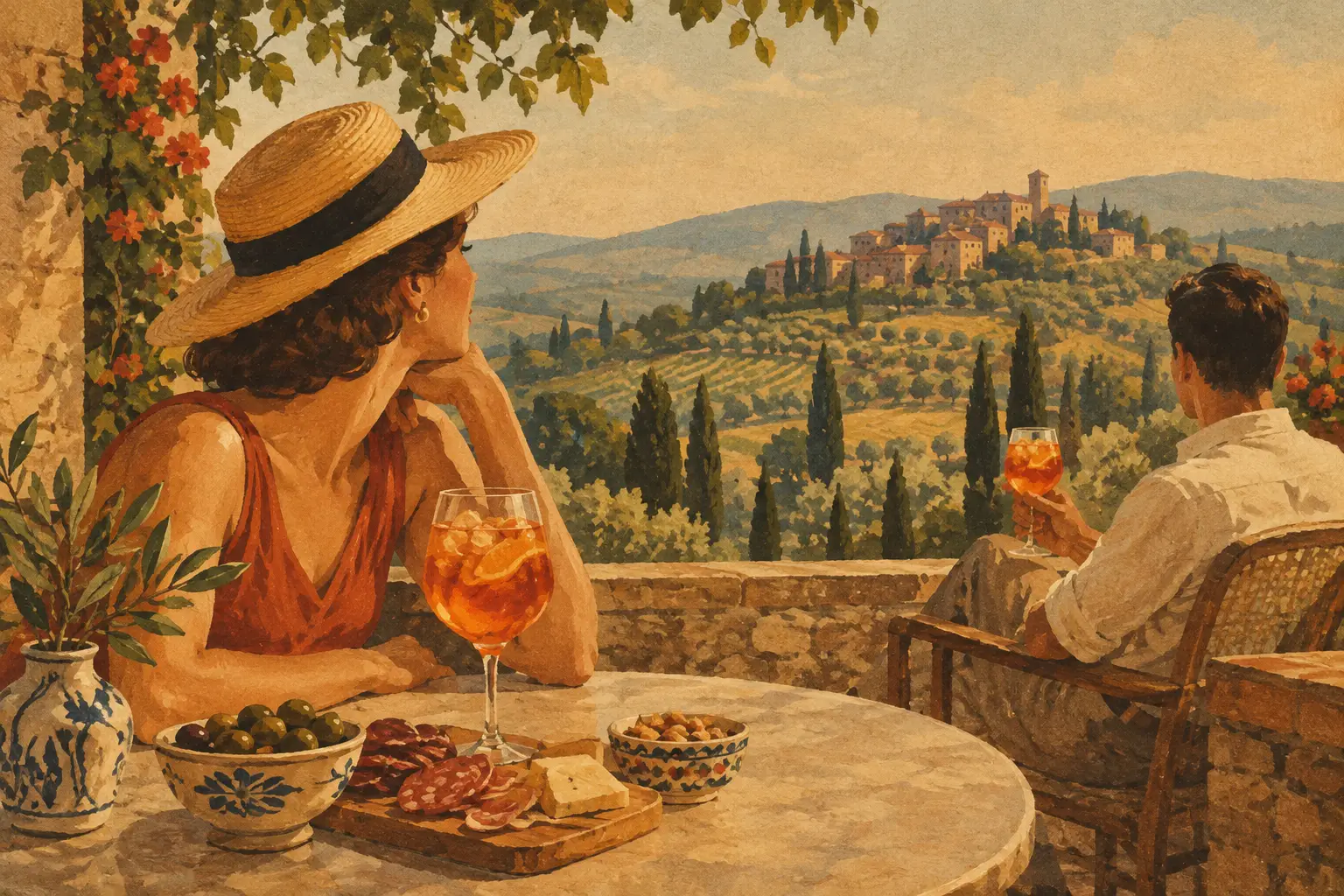
By The late afternoon light has softened over the Tuscan hills, the day’s heat is beginning to lift, and nobody is quite ready for dinner. This is the hour of the Italian aperitivo: a small, civilised pause where a cool glass, something savoury and good company make the day feel longer in the best possible way.
It is easy to mistake aperitivo for simply having a pre-dinner drink. In Italy, it is more generous than that. It is a ritual of arrival, conversation and appetite – a chance to sit down without rushing, take in the view and let a few carefully chosen flavours set the tone for the evening.
What an Italian aperitivo really means
The word aperitivo comes from the idea of opening the appetite. Yet its real purpose is also to open the evening. Friends meet after work, families gather before supper, and holidaymakers settle into the unhurried rhythm they came to Tuscany to find.
An Italian aperitivo usually combines a light alcoholic or non-alcoholic drink with small savoury bites. It might be a chilled glass of Vermentino, a bitter-sweet spritz or a sparkling water dressed with citrus, served alongside olives, crisp focaccia, aged cheese or slices of local salumi. The food is not meant to replace dinner, although a generous table can certainly make you reconsider later plans.
What matters most is proportion. Aperitivo should awaken your appetite rather than overwhelm it. One beautiful drink and a few ingredients at their best often say more than a crowded platter prepared without care.
Why aperitivo belongs in Tuscany
Tuscany has no need to manufacture a sense of occasion. It is already present in the scent of rosemary after a warm day, in the last sun on old stone, and in the slow movement of conversation around an outdoor table. Aperitivo gives those details a place in the day.
The regional pantry makes this ritual especially rewarding. Tuscan bread, often made without salt, is a natural partner for richly seasoned toppings. Local olive oil brings peppery depth to a simple crostino. Pecorino, cured meats, marinated vegetables and ripe tomatoes all have enough character to stand beside wine without demanding too much attention.
Near Volterra, the pleasure lies as much in the setting as in the glass. A wide terrace and open views invite guests to linger, particularly when the landscape turns from gold to blue. At Osteria Etrusca, aperitivo can become the gentle bridge between an afternoon spent exploring and a dinner worth staying for.
A drink with the right character
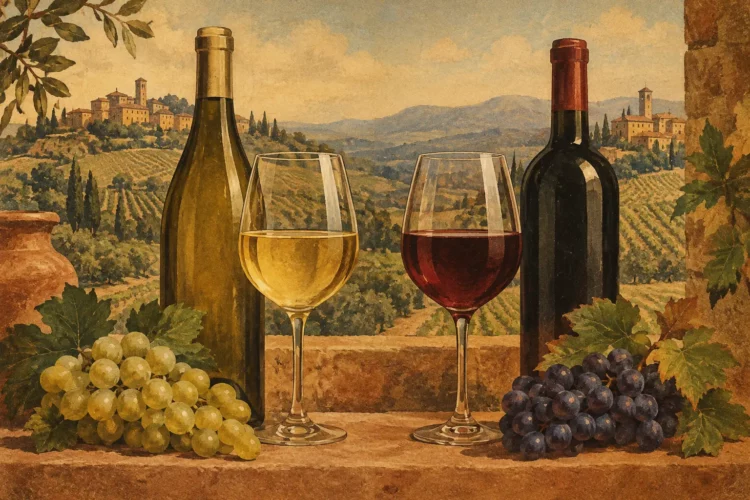
There is no single correct aperitivo drink. The right choice depends on the weather, the food and your own taste. On a bright, warm afternoon, a spritz with its light bitterness and sparkle feels particularly at home. If you prefer something drier, a crisp Tuscan white wine can be a more subtle choice, especially alongside seafood-inspired bites, soft cheeses or fresh vegetables.
For cooler evenings, a vermouth served over ice with orange peel has a quiet, old-world elegance. Those avoiding alcohol should not be handed an afterthought. Sparkling water with citrus, a bitter orange soda, or a house-made fruit cordial can carry the same sense of ceremony when served in a proper glass with a generous garnish.
The key is freshness. Aperitivo drinks should feel bright and balanced, never heavy or overly sweet. They are there to sharpen the palate and encourage another story, not to end the conversation early.
Small plates, made for sharing
The finest aperitivo food is recognisable at first glance and memorable at the first bite. Think warm focaccia with local olive oil, a bowl of well-seasoned olives, crostini topped with chicken liver pâté, pecorino with honey, or thinly sliced finocchiona with good bread. Each has a clear role on the table: salt, richness, crunch, acidity and softness.
Seasonality should lead. In summer, grilled courgettes, tomato bruschetta and melon with cured ham bring colour and freshness. Autumn invites mushrooms, chestnuts and deeper cheeses. In winter, a little warm dish can make aperitivo feel wonderfully comforting – perhaps a small bowl of beans with sage, or a freshly baked savoury pastry.
For families, the table can be adapted easily. Children may enjoy focaccia, mild cheese, fruit and a soft drink served with the same care as the adults’ aperitivo. The ritual is not about alcohol. It is about being together before the meal begins.
How to enjoy Italian aperitivo without rushing it
Timing makes a difference. In Italy, aperitivo often begins between 5.30pm and 7.30pm, though countryside days tend to follow the sun and the season more than the clock. After a hot summer afternoon, a later table may be ideal. In spring or autumn, arriving earlier lets you enjoy the changing light before evening cools.
Choose a seat where you can settle in. There is no prize for ordering quickly. Start with drinks, let the first small plates arrive, and leave space for the table to find its own rhythm. If you have dinner booked afterwards, tell your host. They can help guide the choice of snacks so that you still arrive at dinner pleasantly hungry.
Aperitivo is also a lovely alternative when a full evening meal feels too formal or too late. For travellers with young children, or for couples returning from a long day of walking through hill towns, a relaxed spread of drinks and several small dishes may be exactly enough. It depends on the day, the appetite and whether the table still has room for dessert.
Aperitivo, apericena and dinner: know the difference
You may hear the word apericena, a blend of aperitivo and cena, the Italian word for dinner. It describes a more substantial offering, often with enough food to form a casual evening meal. The distinction is useful, because expectations matter.
A classic Italian aperitivo is restrained and intentional. There may be a few snacks included with the drink, or a small menu of dishes designed to share. Apericena is broader and more filling, sometimes built around a buffet in city bars. A proper dinner, meanwhile, unfolds at its own pace through courses and more substantial plates.
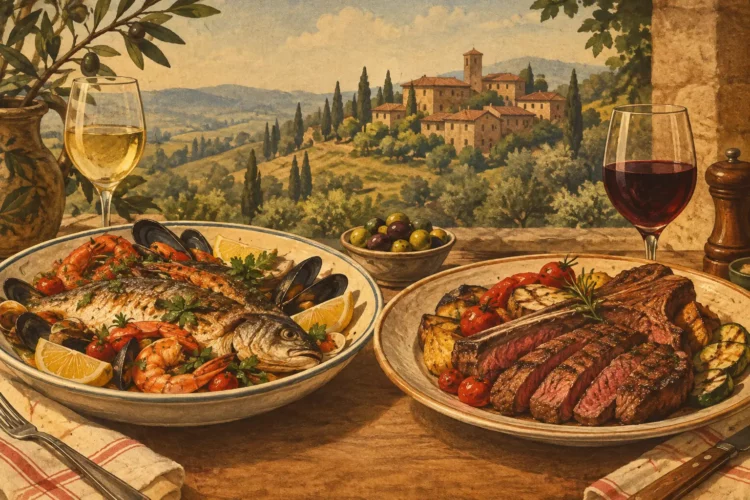
None is better in every situation. Choose aperitivo when you want to preserve the anticipation of dinner. Choose apericena when you want a sociable, informal supper. Choose a full dinner when the evening calls for pasta, slow-cooked meat, a local wine and time at the table.
The quiet etiquette of a Tuscan aperitivo
There are few rules, but they make the experience more enjoyable. Dress comfortably but thoughtfully, particularly if you are meeting friends or dining at a place where the surroundings deserve a little occasion. Put the mobile phone aside when you can. Photograph the view if you wish, then return to the people in front of you.
Order with curiosity, not pressure. If a drink or ingredient is unfamiliar, ask about it. Regional hospitality is often at its warmest when there is room for a recommendation. And do not worry about copying what others are having. A glass of white wine, a spritz, an orange juice or sparkling water can all belong on the same table.
Most of all, resist treating aperitivo as a task before the next task. It is not a queue for dinner. It is one of the day’s pleasures in its own right, made of little things: cold glass against a warm hand, the first salty olive, the scent of bread, laughter carrying into the evening air.
When you find yourself in Tuscany at that golden hour, leave a little space in your plans. Order something bright, share something local, and let the landscape remind you that a memorable meal often begins before the first course arrives.