 By
The first warm tomatoes of summer, the perfume of wild fennel after rain, chestnuts in the autumn air: seasonal menus begin long before a plate reaches the table. They begin in the fields, woods and gardens around us, and in the quiet knowledge that ingredients are at their most generous when nature decides it is time.
In Tuscany, eating with the seasons is not a passing idea or a decorative line on a menu. It is a way of giving each meal a clearer sense of place. A lunch under an open sky tastes different when the vegetables were grown nearby and picked at their peak. A slow dinner feels more complete when a rich ragù belongs to the cool evening beyond the terrace.
Why seasonal menus taste more memorable
An ingredient at the right moment needs less intervention. Sun-ripened courgettes, sweet peas, fragrant peaches or earthy porcini arrive with colour, texture and flavour already intact. The cook’s role is to respect that character: a little excellent olive oil, fresh herbs, careful seasoning and the confidence not to overcomplicate what is already delicious.
This is where seasonal cooking becomes more than a preference. It creates meals with a natural rhythm. Spring brings freshness after the weight of winter, with tender greens, artichokes and young lamb. Summer invites long lunches, ripe fruit and plates made for sharing. Autumn deepens the table with mushrooms, grapes, game and new olive oil. In winter, beans, slow-cooked meats and comforting pasta make a simple pleasure of staying a little longer.
For guests, that rhythm means there is always a reason to return. The table may look familiar, but it never stands still. A favourite pasta can take on a new character with the arrival of a different herb, a local cheese or a sauce shaped by the season’s produce.
Seasonal menus are a promise of place
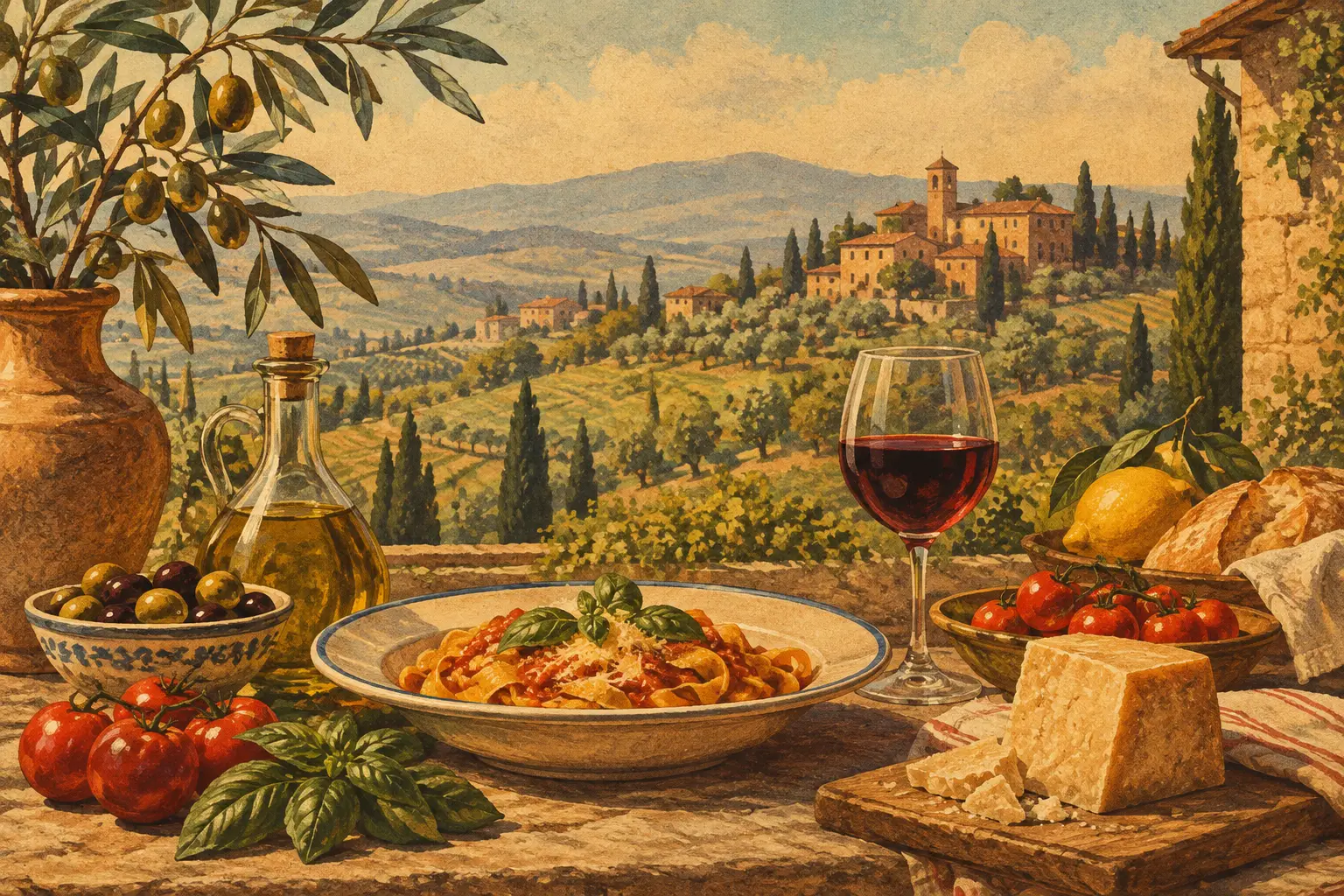
Many restaurants can serve Italian food. A seasonal menu tells you where that food comes from and why it belongs there. It connects a glass of Tuscan wine with the vineyard landscape beyond the table, and a bowl of pasta with the farms, forests and small producers that make its ingredients possible.
That connection matters especially when travelling. The most lasting meals are rarely the ones that could have been eaten anywhere. They are the ones that make a particular afternoon, view or conversation feel inseparable from the food. Perhaps it is a plate of handmade pasta after a morning exploring Volterra, or a dessert of late-summer fruit while the light softens over the hills. The ingredients become part of the memory.
At Osteria Etrusca, this relationship between kitchen and landscape is central to the experience. The generous patio and wide Tuscan views are not simply a backdrop. They encourage a slower pace, where a breakfast coffee, an unhurried lunch or an evening meal can follow the mood of the day rather than the clock.
What changes through the Tuscan year
Spring brings brightness and new beginnings
Spring cooking has an unmistakable lift. Artichokes, asparagus, broad beans, peas and leafy greens bring a welcome freshness after cooler months. This is a season for delicate sauces, soft eggs, pecorino and herbs that carry a bright, grassy perfume.
It is also a wonderful time for lunch outdoors. The air is gentle, the countryside is green, and dishes can feel lighter without ever feeling slight. A crisp white wine or a chilled rosato often suits the table beautifully, particularly when the menu leans towards vegetables, fresh pasta and local cheeses.
Summer belongs to the table outdoors
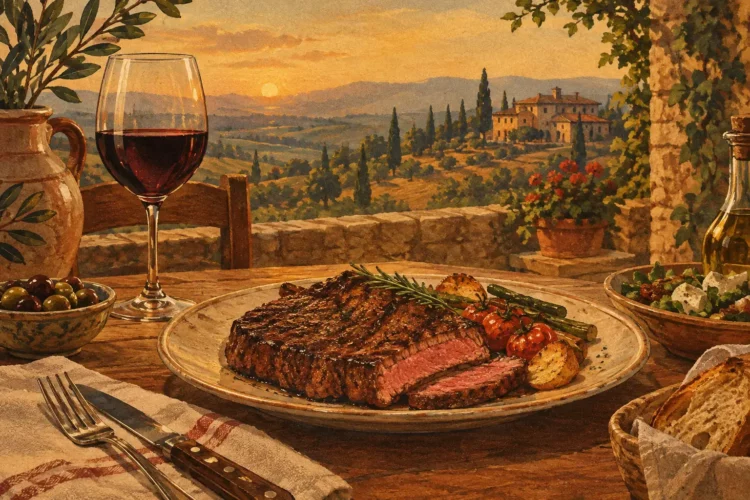
Tuscany in summer asks for simplicity done well. Tomatoes, aubergines, courgettes, peppers, basil and stone fruit need little persuasion. A ripe tomato dressed with good olive oil can be a small masterpiece; grilled vegetables become generous when they arrive warm from the fire; fruit makes desserts feel bright rather than heavy.
There is a trade-off, of course. Summer’s popularity can make diners expect an endless choice of familiar dishes, even when those ingredients are not at their best locally. A thoughtful seasonal menu may be more selective. That is its strength. Fewer ingredients, chosen well, leave room for flavour to speak clearly.
Long summer evenings also invite a different style of dining. Begin with an aperitivo, share a few plates, allow the conversation to wander, then choose a pasta or a grilled main as the sky changes colour. For families, this relaxed approach works particularly well: children can enjoy familiar, honest food while adults take time over wine and the view.
Autumn is rich, fragrant and generous
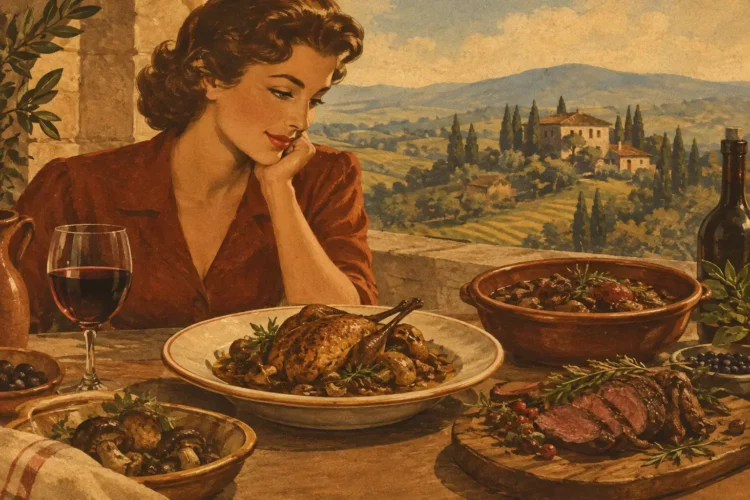
Autumn is one of Tuscany’s great food seasons. The grape harvest, olive picking and cooler nights bring depth to the kitchen. Mushrooms, chestnuts, pumpkin, game and slow-cooked sauces return to the table, alongside the first press of peppery extra-virgin olive oil.
This is when regional dishes show their most comforting side. Pasta with wild boar ragù, a properly roasted meat or a dessert enriched with pears, nuts and warm spices feels entirely right. These are dishes made for the season, not because they are heavy for the sake of it, but because they answer the weather and the landscape with generosity.
For wine lovers, autumn offers a particular pleasure. Fuller-bodied Tuscan reds find their natural place beside game and roasted meats, while local wines with bright acidity can balance richer sauces and aged cheeses. The best pairing is not a performance. It is the simple satisfaction of food and wine making each other taste more complete.
Winter makes room for slow pleasures
Winter menus are often mistaken for limited menus. In reality, they reveal another kind of abundance: dried beans, brassicas, citrus, root vegetables, preserved tomatoes, aged cheese and cuts of meat transformed by time and patience.
A bowl of soup, a baked pasta or a slowly braised dish can feel especially rewarding after a walk in the crisp countryside. Winter is the season for lingering over lunch, ordering a second coffee and giving dessert the attention it deserves. It also reminds us that seasonality is not only about what is newly harvested. It is about the wisdom of storing, preserving and cooking well with what the land offers.
How to choose well from a seasonal menu
A good seasonal menu should offer enough choice to suit the table without trying to be everything at once. Rather than searching for the longest list of dishes, look for a menu with a point of view. Ask what is particularly good now, whether there is a daily special, and which pasta or dessert best reflects the moment.
If you are dining as a couple, share an antipasto and let the rest of the meal unfold slowly. If you are travelling as a family, combine a few familiar choices with one or two regional dishes so everyone can discover something new without making the meal feel like a challenge. Groups often enjoy ordering across the menu, especially when seasonal vegetables, cured meats and desserts can be passed around the table.
Dietary needs deserve the same care. Seasonal cooking can offer wonderful vegetarian choices when vegetables are treated as the centre of the plate, not an afterthought. Yet availability changes, so it is always sensible to share requirements when reserving. A kitchen that cooks close to the season is likely to adapt according to what is freshest that day.
The pleasure of returning at another time of year
The beauty of a seasonal menu is that it gives a place a living character. A return visit in October should not feel like a repeat of June, and a winter meal should hold a different kind of warmth from a sunlit August lunch. The setting may be recognisable, the welcome just as generous, but the table has moved with the year.
When planning your visit, leave a little space for surprise. Choose the dish that could only be made now, pour the wine that suits the weather, and allow the meal to take the time it deserves. Tuscany is at its most generous when you meet it in season.