

 By
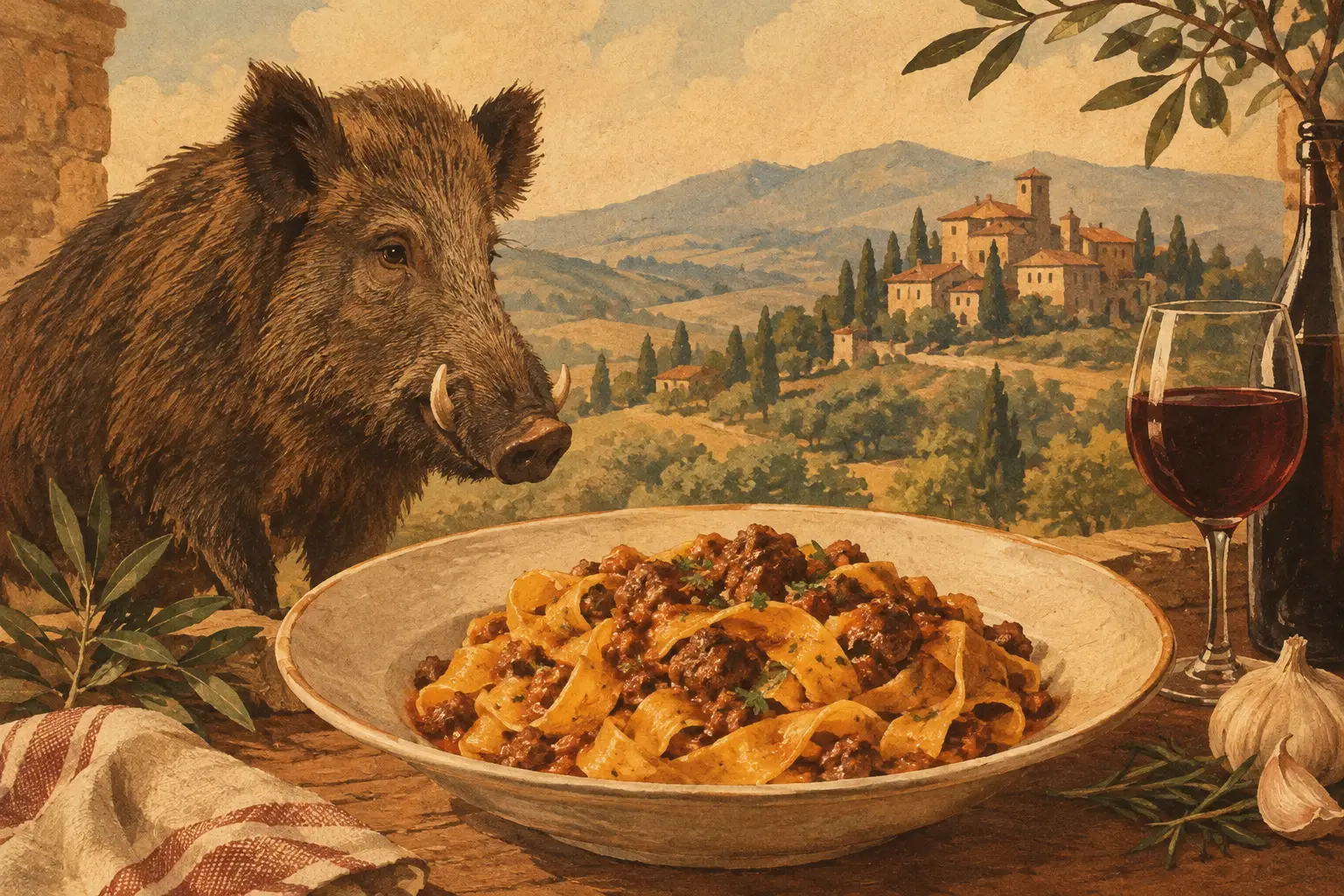
A bowl of wide, silky pasta coated in a slow-cooked wild boar ragù is one of those Tuscan meals that makes lunch linger naturally into the afternoon. But is wild boar pasta traditional in Tuscany? Yes – especially across the wooded hills and countryside of central and southern Tuscany, where cinghiale has long belonged to the local table.
It is not a dish invented for visitors, nor is it found in precisely the same form in every town. Wild boar ragù comes from a practical, deeply rural food culture: game from the surrounding landscape, wine from nearby vineyards, tomatoes and herbs from the kitchen garden, and pasta made to carry a substantial sauce. In the countryside around Volterra, it feels particularly at home.
Why wild boar belongs on a Tuscan table
Tuscany is often imagined through olive groves, Chianti and Florentine steak. Those are real parts of its culinary identity, but they are not the whole story. Much of the region is made up of woodland, rolling farmland and old hunting country. Wild boar have lived in these landscapes for centuries, and cooking them well became a necessary regional skill.
Historically, game offered an important source of meat in rural communities. A wild boar is flavourful but leaner and more muscular than farmed pork, so it rewards patience rather than haste. Cooks learned to marinate the meat, cook it slowly and soften its intensity with wine, aromatic vegetables and time. The result is a ragù with depth, warmth and a character that feels inseparable from the Tuscan hills.
There is also a matter of place. Recipes vary between the Maremma, the Chianti hills, the Casentino and the areas around Siena, Pisa and Volterra. One kitchen may add juniper berries, another a little clove or cinnamon; one ragù may be rich with tomato, while another is darker and less tomato-led. This variation is not a contradiction of tradition. It is tradition doing what it has always done: responding to the pantry, the season and the cook.
Pappardelle al cinghiale: the classic pairing
The best-known expression is pappardelle al cinghiale – broad ribbons of egg pasta with wild boar ragù. The generous width of pappardelle is purposeful. It catches the small, tender pieces of meat and holds the sauce without becoming heavy or slippery.
Fresh egg pasta has a soft, delicate richness that balances the game. The ragù, meanwhile, brings savoury depth and a faint woodland note. When made well, it should not taste aggressively wild or overly sweet with tomato. It should taste rounded: wine, herbs, slow-cooked soffritto and meat in harmony.
Tagliatelle, tagliolini and handmade pasta shapes may also appear with cinghiale, depending on the restaurant and village. In some households, wild boar is served as a stew with polenta, beans or roasted potatoes rather than pasta. So, while pasta with wild boar is undeniably traditional, pappardelle is a beloved classic rather than the only authentic answer.
What goes into a proper wild boar ragù?
A traditional-minded ragù usually begins with a soffritto of onion, carrot and celery, gently cooked in olive oil. The minced or finely chopped wild boar is then browned and often deglazed with red wine. Tomato, stock, herbs and seasoning follow, before the sauce cooks slowly until the meat is tender and the flavours have settled together.
The precise herb profile matters. Bay, rosemary and juniper are common companions, as are black pepper and a little garlic. Some cooks marinate the meat first in wine with aromatics, especially if the boar is mature and strongly flavoured. There is no need for a long list of ingredients. What matters is judgement: enough acidity to lift the sauce, enough time to tenderise the meat, and enough restraint to let the cinghiale remain recognisable.
A heavy hand can flatten the dish. Too much tomato turns it into a generic meat sauce; too much rosemary can make it taste medicinal. The finest bowls carry a deep, clean flavour and leave room for the pasta itself.
Is every wild boar pasta in Tuscany traditional?
Not automatically. A menu can call any sauce “wild boar ragù”, but the quality and connection to place can differ greatly. In highly tourist-focused areas, you may encounter versions that are sweeter, more tomato-heavy or made with a blend of meats to create a milder, more familiar result. That does not necessarily make them unpleasant. It simply may not deliver the distinct character that makes cinghiale memorable.
Tradition is also not frozen in time. Tuscan cooks have always adapted recipes to what is available, whether that means the cut of meat, the family wine or the pasta made that morning. A thoughtful modern version can still be faithful to the dish if it respects its essential logic: local game, patient cooking and a balance of earthy, bright and savoury flavours.
For guests who have never tried it, wild boar pasta is usually more approachable than it sounds. Expect something richer and more aromatic than a standard beef ragù, but not an intimidatingly gamey plate. The texture should be tender, the sauce comforting and the finish lively enough to invite another forkful.
When to order it in Tuscany
Cinghiale is especially suited to the cooler months, when a slow-cooked ragù and a glass of red wine feel entirely right after a walk through the countryside. Yet it is enjoyed throughout the year in many Tuscan trattorie and osterie. On a warm evening, the pleasure lies in portion and setting: a plate of pappardelle shared at a shaded table, followed by something lighter and a quiet look across the hills.
If you see pappardelle al cinghiale on a menu, it is worth asking how the ragù is prepared. Is the pasta made fresh? Is the sauce cooked slowly? Does the kitchen use local wild boar when available? These are simple questions, and a proud kitchen will usually be happy to answer.
It is also wise to order according to appetite. Wild boar ragù is satisfying, particularly when followed by a second course of grilled meat. For a long Tuscan lunch, pasta can be the centrepiece, followed by seasonal vegetables, a local cheese or a homemade dessert. There is no rush to turn the meal into a checklist.
A dish shaped by the landscape
What makes wild boar pasta traditional is more than the age of a recipe. It is the relationship between a landscape and the people who cook from it. The forests provide the game; the farms provide wine, olive oil and vegetables; the local habit of gathering around a table turns these ingredients into something generous.
At Osteria Etrusca, this is the kind of dish that speaks naturally of the countryside around it. A plate of pasta with cinghiale does not need elaborate presentation to feel special. Its pleasure comes from the scent of herbs rising from the bowl, the texture of fresh pasta, the unhurried conversation and the wide Tuscan view beyond the table.
If you are choosing one regional dish to order away from the crowded city centres, make it pappardelle al cinghiale. Take your time with it, notice the balance of the ragù, and let the meal be part of the landscape rather than a pause from it.


