 By
By The best answer to what to order at a Tuscan osteria is rarely the dish you already know. It is the bowl of pasta carrying a slow-cooked ragù, the plate of vegetables gathered from nearby fields, the bottle opened at the table because it was made just a few hills away. In Tuscany, a memorable meal begins with appetite, but it is made complete by curiosity.
An osteria is not a place to rush through a checklist of Italian classics. It is where the season, the local landscape and the kitchen’s own rhythm should guide your choices. A menu may be short, handwritten or different from one week to the next. That is usually a very good sign.
What to order at a Tuscan osteria for a true local meal
Start by reading the menu as a story of the countryside. Tuscany is generous but never showy: excellent olive oil, beans, game, pecorino, hand-rolled pasta, grilled meats and fruit at its ripest all have their place. Rather than ordering the heaviest option in every course, choose a meal with contrast – something crisp, something slow-cooked, something fresh from the garden and, if the moment calls for it, a dessert worth lingering over.
Begin with an antipasto that tastes of the land
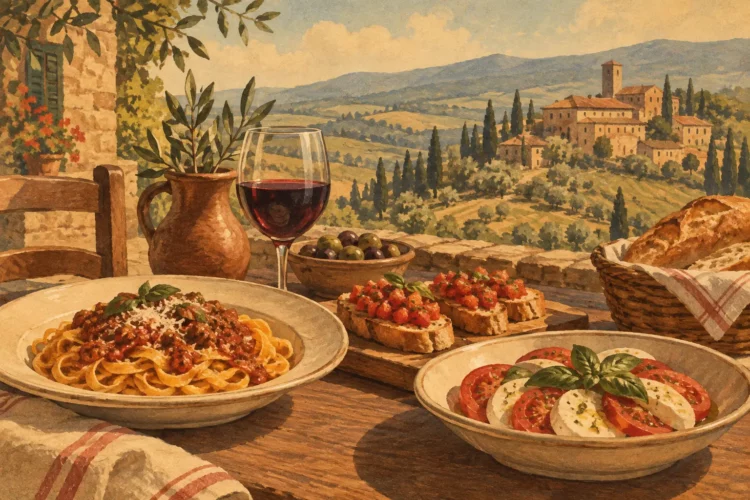
A good Tuscan antipasto is an invitation to slow down. Crostini Toscani are a classic first choice: warm toast topped with a savoury chicken liver pâté, often balanced with capers or anchovy. It is rich, deeply traditional and particularly lovely alongside a glass of chilled white wine or a light red.
If you prefer something gentler, look for local pecorino served with honey, pear, jam or walnuts. Pecorino from this part of Italy can range from delicate and milky to firm, nutty and mature, so ask your host which version is on the board that day. Cured meats, marinated vegetables and toasted bread with new-season olive oil are also simple pleasures when the ingredients have been chosen well.
In warmer months, an antipasto of ripe tomatoes, grilled courgettes, aubergines or tender greens can be as satisfying as a platter of charcuterie. This is one of the quiet joys of eating in Tuscany: the most modest plate can be full of character when it has travelled only a short distance to the kitchen.
Choose pasta with ragù, mushrooms or simple sauce
For many guests, pasta is the heart of the meal. Pappardelle al cinghiale, wide ribbons of pasta with wild boar ragù, is one of Tuscany’s most recognisable dishes. The sauce should be slow-cooked and fragrant, with tomato, red wine and herbs supporting the game rather than covering it. It is a wonderful choice on a cool evening, especially with a structured local red.
You may also find tagliatelle with hare, duck or pork ragù, depending on the kitchen and the season. Game is part of the region’s culinary language, particularly in the countryside around Volterra, but it is not compulsory. If you do not usually eat it, choose a pasta with seasonal mushrooms, artichokes, tomato or a light vegetable sauce instead. The point is not to prove how adventurous you are. It is to order what will make you happy at the table.
Handmade pasta deserves a little patience. It is often served in a sensible portion, intended as one course in a longer meal rather than an enormous bowl. If you are planning to share antipasti and have a main course afterwards, a pasta each may be perfect. If lunch is your main event, one pasta followed by a generous dessert can feel just right.
Order a main course when you want a slower evening
The secondi section is where Tuscan cooking shows its love of fire, time and excellent produce. Grilled beef, roast pork, rabbit, chicken and lamb may all appear, often served with little more than herbs, olive oil, salt and a seasonal side dish. This apparent simplicity leaves no place for poor ingredients, which is why a well-run osteria takes such care over sourcing.
Bistecca alla Fiorentina is deservedly famous, but it is not always the best choice for every table. It is traditionally a large, thick-cut steak, often sold by weight and suited to sharing between two or more people. Order it when you have the appetite, the company and the time to enjoy it properly. If you are dining as a couple after a long day of travelling, a smaller grilled meat or a slow-cooked dish may allow more room for the rest of the menu.
Wild boar stew, braised beef or a dish of roasted game can be especially rewarding in autumn and winter. In spring and summer, grilled meat with rosemary potatoes, beans or bitter greens may feel more in tune with the day. Let the temperature outside influence the table. A meal eaten beneath a warm Tuscan sky asks for a different rhythm from one enjoyed beside a fire on a misty evening.
Let the season decide what to order at a Tuscan osteria
The most reliable way to eat well is to ask what is especially good today. A kitchen that changes with the market may offer porcini mushrooms after rain, artichokes in spring, courgette flowers in early summer, fresh tomatoes in high summer, chestnuts in autumn or citrus and greens in the cooler months.
Beans deserve particular attention. Tuscan beans, often cooked slowly with sage, tomato or olive oil, are not merely a side dish. They can be silky, comforting and astonishingly flavourful. Ribollita, the famous bread and vegetable soup, is another expression of this practical, generous cooking. It is warming and substantial, but on a hot day it may be wiser to choose a lighter plate and save ribollita for a cooler visit.
This is also why the day’s specials matter. They often reflect what has arrived fresh, what has been prepared in small quantities or what the cook feels is at its best. A special is not automatically superior to the main menu, but it is always worth hearing about before deciding.
Drink local, but choose for the food and the hour
Tuscany has celebrated reds, and a bottle from the surrounding hills can be a beautiful companion to wild boar, grilled meat or mature pecorino. A Sangiovese-based wine is often a natural place to begin, bringing cherry fruit, savoury herbs and the freshness needed for rich food.
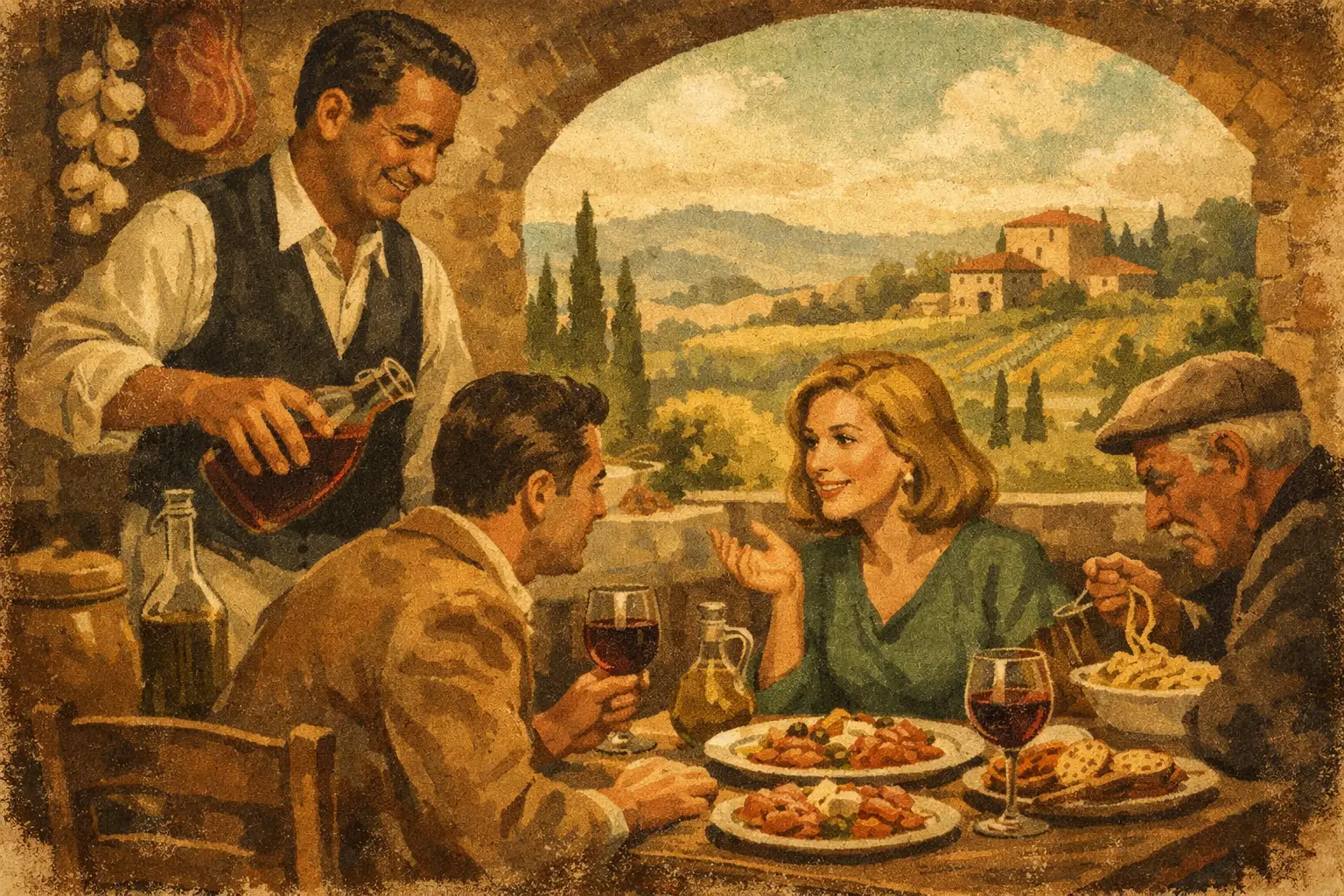
Yet red is not the only answer. A crisp Tuscan white can suit antipasti, vegetables and lighter pasta beautifully, while a chilled rosé makes perfect sense at a long summer lunch. If you are sharing several courses, ask for a recommendation by the glass or choose one versatile bottle for the table. The best pairing is not the most expensive name. It is the wine that lets conversation continue and leaves space for the food.
Water, bread and olive oil also belong to the experience. Taste the olive oil with the bread before adding anything else. Good Tuscan oil can be peppery, grassy and vivid, especially when it is young. It deserves the same attention as the wine.
Leave room for dolce and coffee
A Tuscan meal can finish with cantucci and vin santo: crisp almond biscuits dipped into a small glass of sweet wine. It is a classic ending, comforting without being fussy. Homemade cakes, fruit tarts, panna cotta and semifreddo are equally tempting when made with a light hand.
If you have chosen rich antipasti, pasta and meat, share a dessert. If you have kept lunch simple, make dessert your final course and take your time over it. Then order an espresso, not because you must follow a rule, but because the small, dark cup is a fitting pause before returning to the view, the evening air or the road ahead.
At Osteria Etrusca, the pleasure lies in allowing the table to unfold at its own pace: fresh bread, a thoughtful glass of wine, dishes shaped by the Tuscan landscape and the people beside you. Choose what is in season, ask what the kitchen is proud of, and leave enough unplanned space for the course that calls to you most.