 By
By A Tuscan dinner can turn forgettable the moment the wine feels too heavy, too sharp or simply out of step with the food. If you are wondering how to pair Tuscan wine dinner courses beautifully, the answer starts with restraint. In Tuscany, the most memorable pairings are rarely showy. They feel natural, local and quietly generous, with each glass making the next mouthful taste more vivid.
That matters because Tuscan cooking is built on balance rather than decoration. Olive oil, herbs, grilled meats, slow-cooked ragù, beans, pecorino, wild game and simple desserts all bring strong character, but they are not meant to compete with the wine. A good pairing should support the table, the pace of the evening and the pleasure of sharing it.
How to pair Tuscan wine dinner courses
The easiest way to approach a Tuscan table is course by course. Rather than choosing one bottle and asking it to do everything, think about how the meal moves. A bright opening wine can wake the palate, while a deeper red belongs later, when the food becomes richer and more savoury.
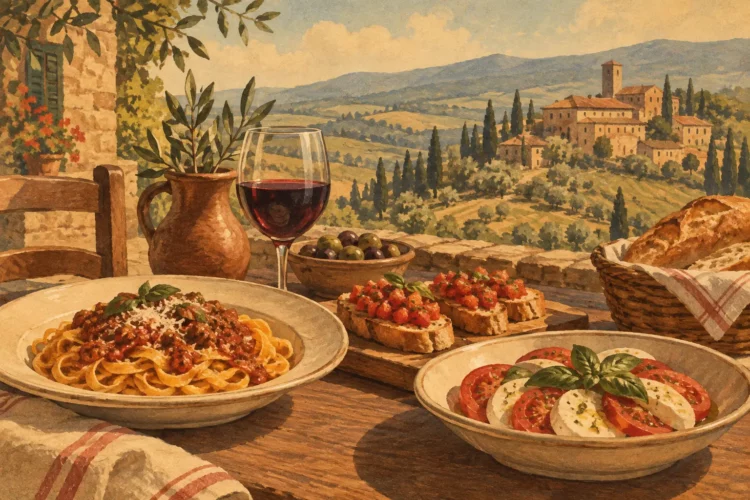
If the dinner begins with crostini, charcuterie, marinated vegetables or a pecorino board, start with something fresh and not too tannic. Vernaccia di San Gimignano is often a lovely choice. It has enough texture for cheese and olive oil, but enough lift for vegetables and lighter starters. A young rosé can also work well, especially in warmer months when the meal begins outdoors and the mood is relaxed.
With tomato-based dishes, acidity matters more than power. Pappa al pomodoro, pici with a simple tomato sauce or aubergine dishes tend to pair well with reds that are lively rather than dense. This is where Chianti shines. Its bright cherry fruit and natural freshness sit comfortably beside tomato, herbs and olive oil. If the wine is too oaky or too concentrated, the pairing can feel tiring quite quickly.
Pasta with meat ragù, especially wild boar or slow-cooked beef, invites more structure. A Chianti Classico, Rosso di Montalcino or a well-balanced Vino Nobile di Montepulciano can be a natural fit. These wines have enough grip and savoury depth to meet the richness of the sauce, but they still keep that Tuscan sense of brightness. You want depth, yes, but not a wine so dominant that the dish disappears behind it.
For grilled meats, bistecca or roasted game, step further into the cellar. Brunello di Montalcino is the obvious name, and for good reason, but it is not the only answer. A mature Chianti Riserva can be superb, particularly if you want elegance over sheer weight. With game, including venison or wild boar, a wine with earthy notes and firmer tannin often feels more complete than one that leads only with fruit.
Dessert is where many otherwise thoughtful dinners lose their rhythm. Dry red wine with pudding usually does neither favour. If the table ends with cantucci, vin santo is the classic answer because it was made for that ritual. With fruit tarts or lighter desserts, a sweet wine should still have freshness. Too much sugar at the end of the evening can feel clumsy.
The key styles of Tuscan wine at dinner
To understand how to pair Tuscan wine dinner menus with confidence, it helps to know the broad personalities of the region’s wines. You do not need to speak like a sommelier. You only need to recognise what each style tends to bring to the table.
Chianti and Chianti Classico are often the most versatile. Based largely on Sangiovese, they usually offer sour cherry, dried herbs, a touch of earth and lively acidity. That makes them especially good with tomato sauces, cured meats, roast poultry and many pasta dishes. They are the kind of wines that feel at home with food.
Brunello di Montalcino is also Sangiovese, but typically more layered, more structured and more suited to dishes with real depth. It can be exquisite with roasted meats and longer, slower dinners, but it may overwhelm a simple first course. Not every special bottle needs to be opened at the beginning.
Vino Nobile di Montepulciano often sits in a comfortable middle ground. It has polish and warmth, but when well chosen it still keeps enough freshness to remain elegant at table. If you are serving a menu that moves from salumi to pasta to roast meat, this can be a wise and flexible choice.
Tuscan whites deserve more attention than they often receive. Vernaccia di San Gimignano is the best-known example, and with antipasti, seafood, vegetables and fresh cheeses it can be a joy. It is particularly welcome at lunch or on warm evenings when a heavy red would feel too much.
Then there are the so-called Super Tuscan wines. These can be magnificent, but they are not automatically the best partner for a traditional dinner. Blends with Cabernet Sauvignon or Merlot often bring darker fruit, more oak and a broader frame. With grilled steak they can work beautifully. With delicate starters or rustic vegetable dishes, they can feel a little overdressed.
Match weight, acidity and texture before labels
People often focus on famous names, but the better approach is to match the structure of the wine to the structure of the food. This sounds technical, yet at the table it is quite intuitive.
If a dish is rich and silky, such as pappardelle with wild boar ragù, the wine needs either acidity to refresh the palate or tannin to cut through the richness. Sangiovese does this naturally, which is why Tuscany’s classic pairings feel so satisfying. The wine does not simply echo the dish. It resets the palate for another bite.
If a dish is delicate, avoid overwhelming it. Grilled vegetables, young pecorino, white beans or simple baked fish rarely want the biggest red on the list. A lighter red, a rosé or a structured white may create more harmony.
Salt also changes everything. Prosciutto, salami and aged cheese can soften tannin, making a firmer red seem rounder and more generous. Tomato, meanwhile, pushes acidity to the front, so wines without enough freshness can taste flat beside it.
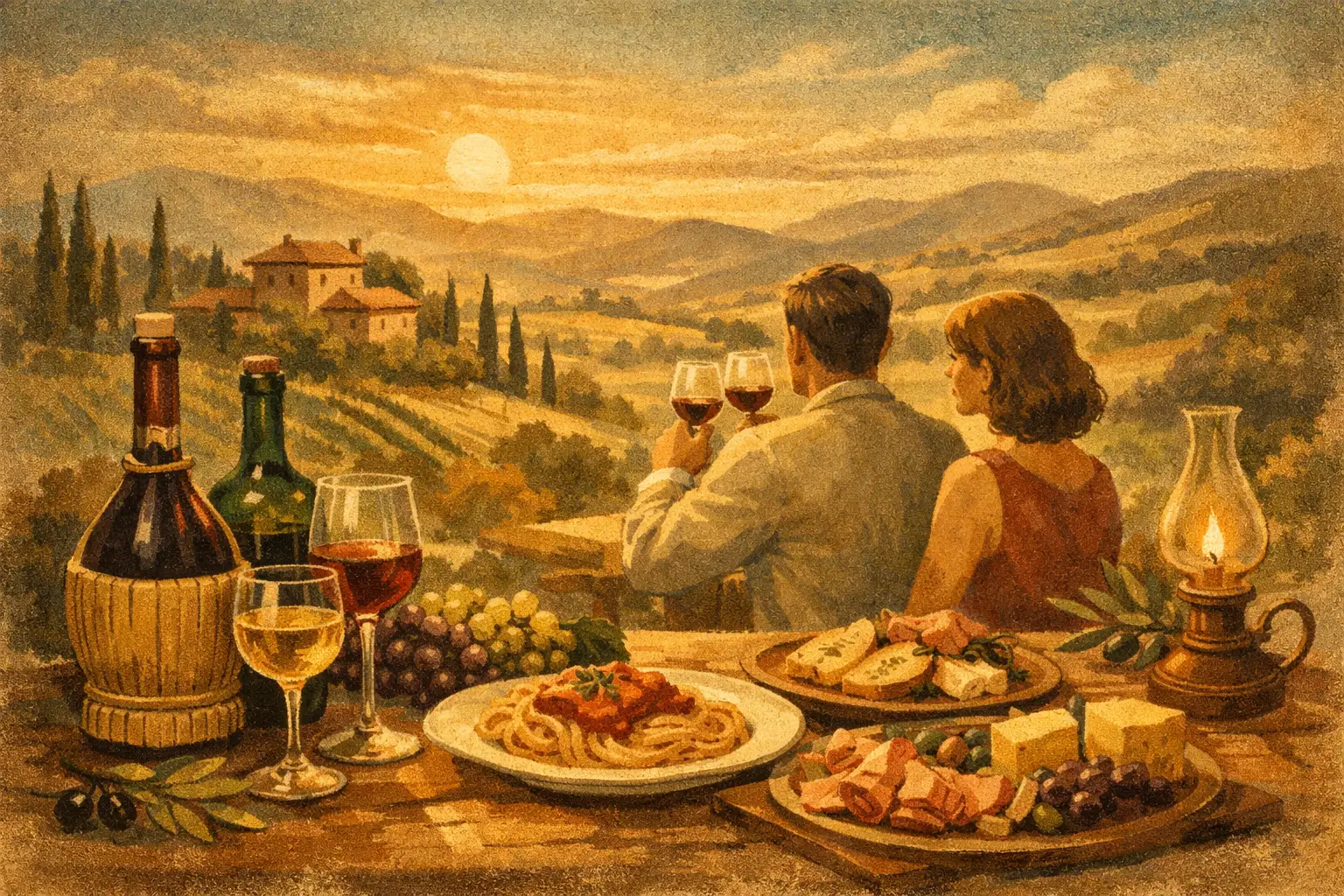
This is why there is no single answer to every Tuscan dinner. It depends on the menu, the season, the hour and even the pace of the meal. A long dinner under open sky may invite two or three different wines in smaller pours rather than one ambitious bottle from start to finish.
When one bottle must cover the whole meal
Sometimes simplicity is part of the pleasure. If you are choosing one wine for an entire dinner, reach for balance rather than extremes. A good Chianti Classico is often the safest and most rewarding option. It usually has enough freshness for starters, enough character for pasta and enough structure for many meat dishes without becoming tiring.
If the meal leans lighter, particularly with vegetables, chicken or mixed antipasti, Vernaccia or a refined rosé can carry the evening more gracefully than a heavy red. If the table is centred on grilled beef or game, a fuller red makes sense, but even then, freshness matters.
At Osteria Etrusca, where the pleasure of the table is inseparable from the landscape around it, the best pairings tend to feel unforced. The wine should belong to the moment as much as to the dish.
Common mistakes when pairing Tuscan wine
The most common mistake is choosing by prestige alone. Expensive wine can be wonderful, but not every course needs the grandest bottle. A celebrated Brunello poured with a simple tomato starter may impress on paper and disappoint in the glass.
Another mistake is serving reds too warm. In a British home, room temperature can be much warmer than what suits a Tuscan red. Slightly cooler service often brings more freshness and precision, especially with Sangiovese.
It is also easy to forget progression. If you begin with the heaviest wine, everything after can feel flatter. Let the dinner build naturally. Start brighter, then deepen.
And finally, do not neglect sweet wine at the end. A thoughtful finish leaves a more lasting impression than forcing the last of the red through dessert.
The nicest Tuscan wine pairings are not about showing how much you know. They are about making the table feel generous, calm and complete. Choose wines that let the food breathe, that suit the mood of the evening and that invite one more glass, not because they are loud, but because they belong there.