 By
By There is a moment, usually just after the first forkful, when wild boar pasta Tuscany becomes more than a menu choice. The sauce is dark and slow-cooked, the aroma carries juniper, wine and herbs, and the pasta holds everything with comforting weight. It tastes of woodland, patience and the kind of meal that asks you to stay a little longer at the table.
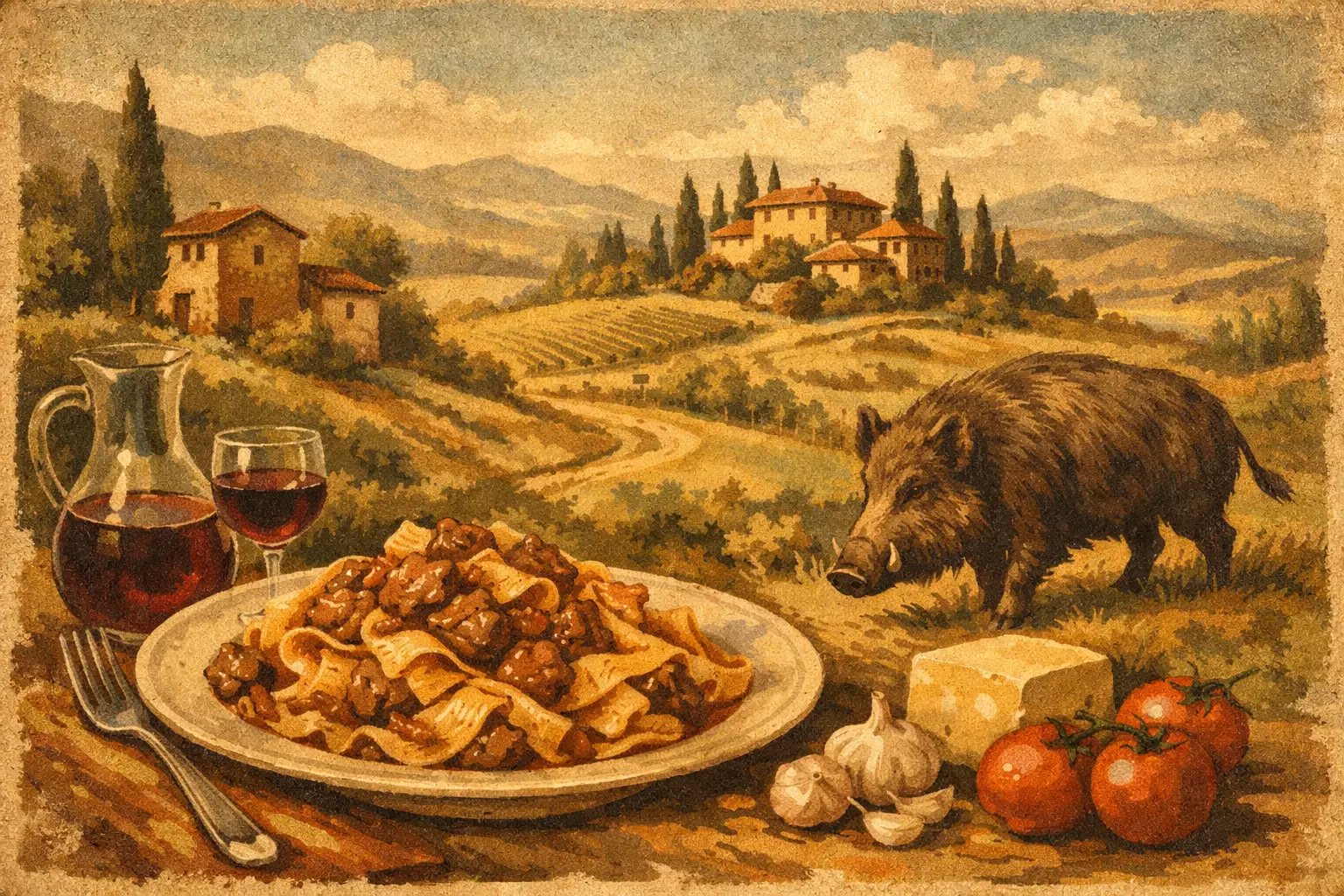
In Tuscany, wild boar is not a novelty. It belongs to the landscape. The wooded hills, the fields edged with cypress, the quiet roads that wind through the countryside – this is the natural home of cinghiale, and that closeness to place is exactly why the dish feels so rooted. When visitors look for food that truly reflects the region, wild boar ragù with pasta is one of the clearest answers.
Why wild boar pasta Tuscany is known for feels so distinctive
Many Italian pasta dishes rely on simplicity, but wild boar ragù asks for time. That is where much of its character comes from. The meat is naturally leaner and more intense than beef, with a flavour that sits somewhere between rustic and refined. It needs careful treatment: marinating, slow simmering, and enough attention to soften its stronger edges without losing its identity.
This is why a good wild boar pasta never tastes hurried. The best versions have depth rather than heaviness. Tomato may be present, but it should not dominate. Red wine often brings structure. Herbs such as rosemary, bay and thyme add warmth. In some kitchens, a little juniper or black pepper sharpens the whole dish. What matters most is balance. If the sauce is too aggressive, you taste only game. If it is too softened, the wild boar disappears into something generic.
That balance is part of what makes the dish so unmistakably Tuscan. The region has always favoured cooking that respects the ingredient and the land it comes from. There is generosity in it, but not excess. Even a rich ragù should feel grounded rather than showy.
The pasta shape matters more than many people expect
Not every pasta suits wild boar equally well. A delicate strand can be overwhelmed, while the right shape catches the sauce and gives the dish rhythm. In Tuscany, pappardelle is perhaps the most iconic choice. Its broad ribbons are strong enough for a thick ragù and wide enough to carry strands of tender meat in every bite.
Tagliatelle can work beautifully too, especially if the sauce is slightly finer and silkier. Fresh pasta tends to be the preferred partner because it absorbs the ragù more naturally and brings softness against the deeper flavour of the meat. That said, there is no rigid rule. In smaller countryside kitchens, what appears on the plate may simply follow house tradition, and that is often when the meal feels most authentic.
A truly satisfying plate depends on proportion. Too much pasta and the ragù feels like an afterthought. Too much sauce and the dish becomes heavy before you are halfway through. The best versions find an easy harmony – generous, but never clumsy.
What makes a great wild boar ragù
The secret is rarely a secret at all. It is time, restraint and ingredients with character.
Wild boar benefits from a marinade, often with red wine, aromatic vegetables and herbs, which helps both tenderness and flavour. After that, the sauce is built slowly. Onion, carrot and celery create sweetness at the base. The meat is browned carefully. Wine is reduced. Tomatoes are added with discretion. Then comes the long simmer that transforms everything from separate elements into one rounded, deeply savoury ragù.
Texture matters just as much as flavour. Some ragù is finely chopped and almost spoonable, while some keeps more visible pieces of meat. Neither approach is wrong. It depends on the style of the kitchen and the experience they want to create. A finer sauce can feel elegant and polished. A rougher one feels more rustic and close to the farmhouse table. Both can be excellent if the meat is tender and the seasoning is thoughtful.
This is also a dish where shortcuts are obvious. If the sauce has not had enough time, it tastes sharp or flat. If too much tomato is used, it loses its woodland character. If the meat is dry, no amount of Parmesan can rescue it. Wild boar rewards patience, and it exposes impatience.
Wild boar pasta Tuscany travellers should look for off the tourist trail
It is easy to find pasta in Tuscany. It is not always easy to find the kind you remember long after the journey home. Wild boar ragù is one of those dishes that reveals the difference between a place serving a regional speciality and a place living it.
In the busiest tourist spots, the dish can sometimes become simplified for speed or broad appeal. There is nothing wrong with accessibility, but a truly memorable plate usually comes from kitchens that are still cooking with a sense of place. Countryside restaurants often have an advantage here. They are closer to local rhythms, local suppliers and the slower pace this dish deserves.
That setting changes the experience as well. Wild boar pasta is not only about flavour. It belongs to long lunches, to dinners that begin in golden light and continue into the evening, to conversations that stretch comfortably between courses. In a beautiful rural setting, the dish feels complete in a way that is difficult to recreate elsewhere. Near Volterra, where the landscape opens and the air carries that unmistakable Tuscan stillness, it becomes easier to understand why certain meals seem inseparable from where they are eaten.
What to drink with it
A dish with this much depth calls for a wine with enough structure to meet it. Red is the natural choice, but not every red works equally well. You want something with freshness as well as body, so the pairing lifts rather than dulls the palate.
Tuscan reds are often the happiest companions. Sangiovese-based wines have the acidity to cut through the richness and the savoury notes to echo the ragù. If the sauce is especially intense, a fuller-bodied option can be lovely. If it is more refined and herb-led, something brighter and more elegant may suit better.
It depends, too, on the time of year and the hour of the meal. At lunch, many guests prefer a wine with more freshness and less weight. In the evening, especially when the air cools and the table settles into a slower mood, a deeper red can feel exactly right.
Why this dish stays with people
Some dishes impress in the moment. Wild boar pasta tends to do something gentler and more lasting. It settles into memory because it carries atmosphere with it. You remember the scent before the plate arrived, the warmth of the ragù, the first taste of wine and herbs, the view beyond the table, the sense that nothing needed rushing.
That emotional part matters. Regional food at its best does not feel manufactured for visitors. It gives you access to the place itself. Wild boar ragù speaks of the Tuscan countryside in a direct, honest way. It is rich, certainly, but not elaborate for the sake of appearance. It is comforting without being ordinary. It has depth, but it still feels welcoming.
For many travellers, that is the version of Tuscany they are really hoping to find – not just a pretty image, but a lived-in beauty made of flavour, landscape and time well spent. A plate of pappardelle with wild boar ragù can offer exactly that.
At Osteria Etrusca, this spirit is part of the pleasure of the table: food that feels deeply local, enjoyed in the calm of the countryside, with room to savour both the meal and the moment.
If you are choosing one dish to understand the heart of the region, choose the one that tastes of the hills, the herbs and the long, patient kitchen. Wild boar pasta rarely asks for attention loudly. It simply earns it, one slow, generous forkful at a time.