 By
By A long lunch in Tuscany tells you more than any guidebook can. Bread arrives without salt, olive oil tastes green and alive, pasta is dressed with sauces that respect the ingredient rather than hide it, and a simple bowl of soup can feel as memorable as a grand dinner. That is the charm behind any true guide to Tuscan regional dishes: this cuisine is not built on excess, but on confidence, seasonality and a deep trust in the land.
For visitors, that matters. Tuscan food is famous, but it is also often simplified into a few familiar names. In reality, the region’s cooking changes from coast to countryside, from hill towns to cities, and from one family table to the next. If you know what to look for, you eat better, order with more confidence, and understand why certain dishes belong so naturally to this landscape.
What makes Tuscan cooking distinct
Tuscan cuisine is often described as rustic, which is true, but not in a rough or careless sense. It is a cooking tradition shaped by restraint and quality. Good beans, proper olive oil, vegetables picked at the right moment, excellent flour, wild herbs, pecorino, game and carefully reared meat all do much of the work.
Bread is central here, including its famous lack of salt. To newcomers, that can be surprising. On the table, though, it starts to make sense. Unsalted bread works beautifully with strong cured meats, savoury soups and richly seasoned dishes. It balances rather than competes.
Another hallmark is the cucina povera tradition – food born from thrift, skill and respect. Many of Tuscany’s most loved dishes were created to use stale bread, leftover vegetables or cuts of meat that needed patience rather than luxury. Today they are cherished not because they are humble, but because they are deeply satisfying.
A guide to Tuscan regional dishes you should know
If you want to read a menu like someone who has spent real time in the region, start with the dishes below. They are not the whole story, but they form the heart of it.
Ribollita
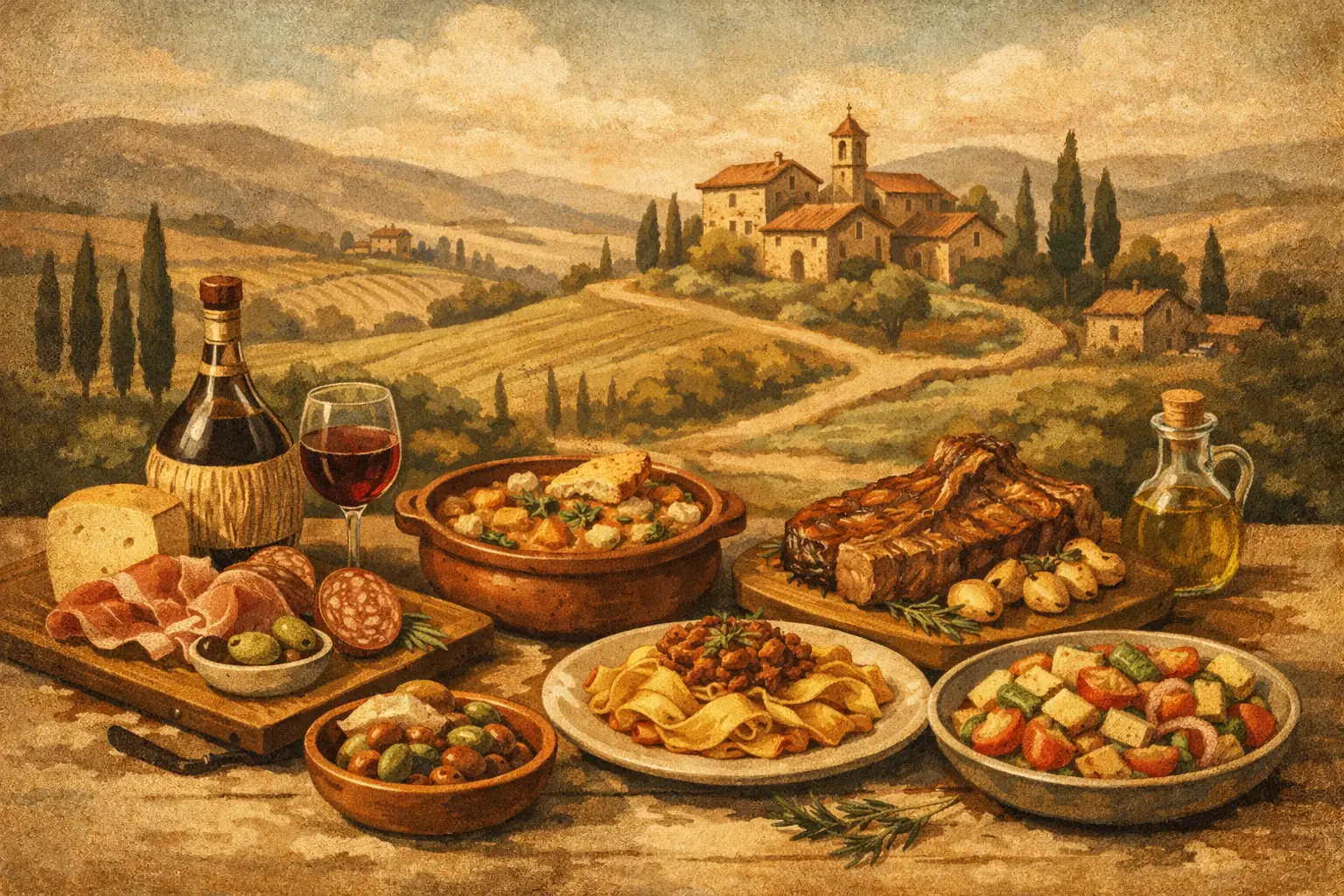
Ribollita is one of Tuscany’s great comfort dishes. This thick soup, traditionally made with bread, beans and black cabbage, is the kind of food that seems simple until you taste a very good version. Then you understand how much flavour can come from slow cooking and balance.
Its name suggests reheating, and that is part of its character. Like many peasant dishes, it improves with time. The texture should be generous and soft rather than thin or brothy. On a cooler day, there are few better introductions to the region.
Pappa al pomodoro
Pappa al pomodoro turns ripe tomatoes, stale bread, garlic, olive oil and basil into something velvety and rich. It is not a soup in the delicate sense, nor a sauce. It sits somewhere in between, and that is exactly its appeal.
The quality of the tomatoes matters enormously. In summer, when they are sweet and fragrant, the dish can taste almost luminous. Outside the season, it depends much more on careful preparation. If you see it on a menu, it often signals a kitchen that takes traditional foundations seriously.
Panzanella
Panzanella is often misunderstood abroad as just another bread salad. In Tuscany, when made well, it is much more specific than that. The bread must have character, the tomatoes must be worth eating, and the dressing should wake everything up without drowning it.
It is a dish of heat and sunlight, best ordered when the produce is at its peak. Some versions include cucumber, onion and basil; others stay simpler. The trade-off is freshness versus intensity. The best panzanella tastes like a summer afternoon that has been given a plate.
Crostini toscani
These small toasts topped with chicken liver pâté appear frequently as an antipasto, especially in traditional settings. They are rich, savoury and unmistakably Tuscan. For guests who usually avoid liver, this can be the dish that changes their mind.
Not every version is equally delicate. Some are smoother and more balanced, while others lean into a stronger, more mineral flavour. If you enjoy bold starters with a glass of red wine, they are worth ordering.
Pici
Pici is one of Tuscany’s most distinctive pastas, especially in the southern part of the region. Thick, hand-rolled strands with a pleasantly irregular shape, it has a lovely chew and a homespun elegance that machine-made pasta cannot imitate.
You may find it served with aglione, a garlic and tomato sauce with real depth, or with ragù, including wild boar. Because pici is substantial, the sauce does not need to be fussy. In fact, simpler pairings often suit it best.
Wild boar ragù
Game has a strong place in Tuscan cooking, especially in the inland countryside, and wild boar ragù is among the most memorable expressions of that tradition. Slow-cooked until rich and tender, it brings a darker, more woodland flavour than a standard meat sauce.
This is where place becomes very clear on the plate. You can taste the landscape in it – herbs, earth, long cooking, autumn air. It is usually served with pappardelle or pici, and it rewards anyone who prefers deeper, more savoury dishes.
Bistecca alla Fiorentina
Few dishes are more famous, or more frequently mishandled, than bistecca alla Fiorentina. At its best, it is magnificent: a thick T-bone steak from Chianina or another high-quality breed, grilled over very high heat, charred outside and very rare within.
This is not the dish to order if you like your beef well done. The entire point is the quality of the meat and the honesty of the cooking. It needs little more than salt, olive oil and perhaps lemon. Ordered for the table, it often becomes a shared event rather than simply a main course.
Peposo
Peposo is a slow-cooked beef stew known for black pepper, red wine and patient cooking. It is deeply warming and less internationally famous than it deserves to be. The pepper gives it character, but the dish should still feel rounded rather than aggressive.
It suits cooler months especially well. If you are travelling outside peak summer and want something rooted in tradition, this is one to seek out.
Tuscan cheeses, cured meats and small plates
A proper guide to Tuscan regional dishes would be incomplete without the foods that often begin a meal. Pecorino is central, especially in different stages of ageing. Young pecorino can be milky and gentle; older versions become firmer, saltier and more complex. Both have their place.
Cured meats vary, but the principle stays the same: simplicity, quality and balance. Salumi boards are not there merely to fill the table before the real meal begins. They are part of the meal’s rhythm, particularly when paired with local wine and a little unhurried conversation.
You may also find dishes built around tripe, lampredotto or other offal, especially in more traditional settings. These are not for every diner, and that is perfectly fine. But they speak to the old Tuscan habit of using the whole animal with skill and without waste.
How seasons shape the table
The best way to eat in Tuscany is to let the season guide you. In summer, tomato dishes, panzanella, lighter antipasti and simple grilled foods often feel exactly right. In autumn, mushrooms, game, richer ragùs and new olive oil begin to take centre stage. Winter invites soups, beans, braised meats and dishes that ask you to slow down.
Spring can be more delicate, with greens, fresh pecorino and a lighter touch after the heavier months. This matters because Tuscan cooking is at its best when it is not forced to be everything all year round. A restaurant that honours the season usually honours the region as well.
What to order if you want an authentic experience
If you are only in Tuscany for a short stay, resist the urge to chase famous dishes one after another just because you recognise the names. A better approach is to build a meal with contrast. Start with crostini toscani or local salumi, follow with pici or a soup such as ribollita, then choose a main based on the time of year – perhaps wild boar, peposo or bistecca to share.
It also helps to read the room. A countryside lunch calls for something different from a formal city dinner. In a setting surrounded by hills, cypress trees and that long, quiet light unique to the Tuscan afternoon, food tends to feel best when it stays close to its origins. This is where places such as Osteria Etrusca feel especially natural – not because they imitate tradition, but because the landscape and the cooking still belong to one another.
A few expectations worth adjusting
Tuscan food is not always lavishly sauced, heavily seasoned or designed for instant drama. Some guests expect stronger salt, more decoration or a broader range of ingredients on every plate. Often, the pleasure here is subtler.
That can take a meal or two to appreciate. Then suddenly the logic becomes irresistible: a bean dish with excellent olive oil, grilled meat with almost no interference, bread used with purpose, pasta that tastes of flour and handwork rather than novelty. The region asks for attention, but rewards it generously.
The loveliest way to approach Tuscan cuisine is with appetite and patience. Let lunch stretch, let the wine match the mood, and let a few traditional dishes speak plainly for themselves. Very often, that is when Tuscany tastes most like Tuscany.