 By
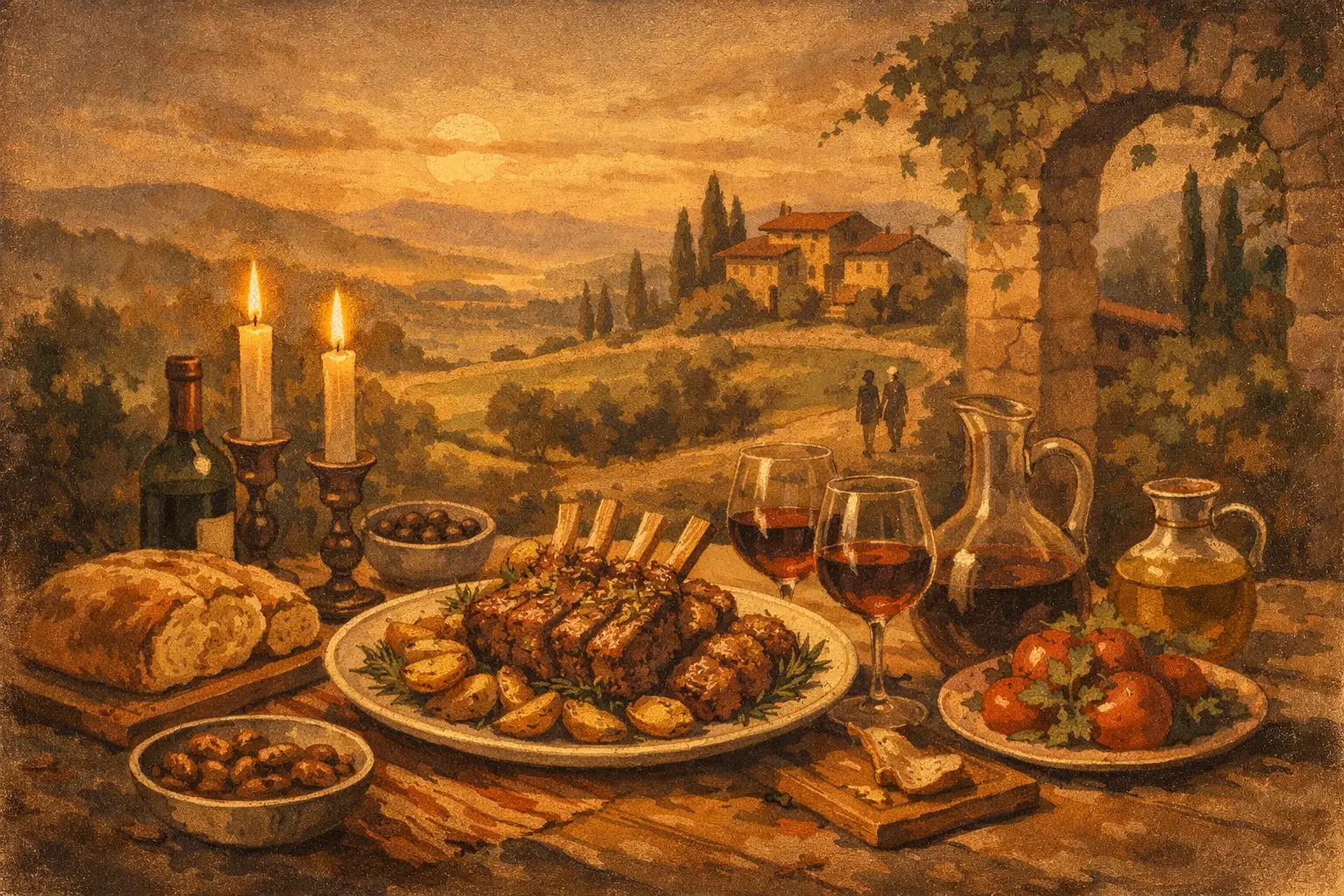
By A truly memorable lamb supper asks for more than a beautifully cooked cut of meat. It asks for time, good company and a table that lets the landscape become part of the meal. This Tuscan lamb dinner guide is an invitation to savour all three – from the first glass of wine to the last spoonful of dessert, with the hills around Volterra settling into their evening light.
Lamb has a natural place in the cooking of inland Tuscany. Its flavour is honest and generous, shaped by the herbs, olive groves and open pasture that define this part of Italy. When it is prepared with care, it does not need elaborate treatment. A little rosemary, garlic, olive oil and heat are often enough to let the ingredient speak clearly.
A Tuscan lamb dinner guide begins with the land
In Tuscany, a lamb dinner is rarely about haste. It belongs to the long table, the unhurried conversation and the pleasure of choosing one more shared plate. The best version reflects the season and the setting: young spring lamb may be delicate and bright, while a slower-braised shoulder feels especially right on a cooler evening.
At Osteria Etrusca, the experience is as important as the recipe. A dinner becomes richer when it begins on the patio with space to breathe, the scent of the countryside in the air and a view that makes guests linger before opening the menu. This is not a meal to fit between plans. It is a reason to let the evening unfold.
The choice of cut matters, although there is no single correct answer. Chops are ideal for a shorter, more informal supper, especially when grilled until caramelised at the edges and still tender within. A rack of lamb brings a little ceremony to the table. Shoulder, meanwhile, rewards patience, becoming soft and deeply flavoured after a slow cook with wine, stock and aromatics.
The flavours that belong beside lamb
Rosemary is the familiar companion, and for good reason. Its resinous perfume cuts through the richness of lamb without masking it. Garlic, lemon zest and a good local extra-virgin olive oil create a simple foundation, while fennel seeds offer a softer aniseed note for those who prefer something warmer and more rounded.
The restraint is part of the pleasure. Too many spices can pull the dish away from its Tuscan character, particularly when the lamb is excellent. A seasoned grill, a branch of rosemary and a squeeze of lemon at the right moment can say more than a complicated sauce.
That said, the side dishes deserve real attention. Lamb is at its best when the plate holds contrast: something green, something crisp or creamy, and something that can catch the juices. In spring, think of tender peas, broad beans and artichokes dressed simply with olive oil. In late summer, grilled courgettes and tomatoes bring sweetness and colour. During the cooler months, roasted potatoes, cannellini beans or bitter greens make the meal more comforting.
A small bowl of salsa verde can also be welcome. Parsley, capers, lemon and olive oil bring freshness to richer cuts, while leaving the lamb as the centre of the plate. It is particularly good with slow-cooked shoulder or lamb that has rested long enough for its juices to settle.
Choosing a starter without stealing the evening
Before lamb, begin lightly. The aim is to awaken the appetite, not to make the main course feel like a task. A plate of seasonal vegetables, a little pecorino with honey, or a few slices of cured meat can set the right pace. If the evening is warm, a tomato salad with basil and olive oil is often all that is needed.
Pasta can work before lamb, but portion and sauce matter. A small serving of pappardelle with a delicate vegetable sauce is more suitable than a rich ragù if lamb is still to come. For a celebratory dinner, it depends on the appetite of the table and the rhythm you want to create. There is no need to follow a formal sequence when sharing a relaxed evening with family or friends.
Wine for a Tuscan lamb dinner
A well-chosen red makes lamb feel even more at home in Tuscany. Sangiovese is a natural starting point, bringing cherry fruit, savoury notes and refreshing acidity that keeps each bite lively. A younger wine can be excellent with grilled chops, where the flavour is bright and smoky. A more mature bottle suits slow-cooked lamb, especially when the dish includes wine, herbs and a deeper pan sauce.
For guests who prefer white wine, do not feel bound by convention. A structured, textural Tuscan white can work with lamb prepared simply, particularly in warmer weather and alongside lemon, herbs and vegetables. The pleasure of the table matters more than a rule.
Water, bread and timing deserve their place too. Fresh bread is there to share and to gather the olive oil or cooking juices left on the plate. It should support the dinner rather than arrive as an unnecessary distraction. Give the wine a moment in the glass, let the lamb rest before serving, and allow the conversation to slow at the same pace.
How to create the right rhythm for dinner
The difference between eating lamb and remembering a lamb dinner is often found in the pauses. Arrive before sunset if you can. Begin with an aperitivo, look out across the Tuscan countryside, and let the light change before the main course arrives. The largest patio in Toscana offers the kind of generous space where a dinner can feel private even when the table is full of laughter.
For couples, lamb can make an intimate centrepiece to a long evening. Choose a dish to share, a bottle selected without rushing and a dessert that encourages one more conversation. For families, the same ingredients can feel more relaxed: grilled lamb, roasted potatoes, vegetables from the season and dishes placed in the middle of the table. Children need not be excluded from the ritual of a proper dinner when the food is straightforward, generous and made for sharing.
If you are planning a special occasion, speak about the meal when booking. A birthday, anniversary or gathering with friends may call for a slower table, a considered wine choice or a menu shaped around what is best from the kitchen that day. The most memorable celebrations rarely feel over-arranged. They feel personal.
A note on timing and seasonality
Lamb is especially associated with spring, but a Tuscan lamb dinner can be beautiful throughout much of the year. Spring invites lighter accompaniments and a clearer, more herb-led preparation. Autumn welcomes roasted roots, beans and fuller reds. On a hot summer evening, grilled lamb can still be perfect, provided the meal stays fresh and the table has time to enjoy the cooler hours after the sun has dropped.
Seasonality is not a limitation. It is the reason the same dinner can feel different each time you return. The vegetables change, the wine changes, the evening weather changes, and the landscape quietly changes with it.
Leave room for a gentle finish
After lamb, dessert should feel like a soft landing. A homemade tart, a spoonful of creamy dessert, fruit at its best or a small biscotto with coffee can bring the evening to a close without making it heavy. Those who wish to linger may choose an after-dinner digestif, but there is equal pleasure in simply taking a final coffee while the table settles.
The finest Tuscan lamb dinner is not defined by a strict list of courses or a perfect pairing. It is defined by attention: to the quality of the lamb, to the season, to the people across the table and to the beautiful quiet that arrives once nobody is in a hurry to leave.