 By
By A long Italian lunch is not a test of appetite. It is an invitation to slow down, notice what is on the table and let the conversation take its time. This Italian meal courses guide helps you understand the traditional order of a meal, while leaving room for the most Italian rule of all: choose what feels right for the moment.
In Tuscany, a meal often follows the rhythm of the landscape. It begins gently, with something to share, builds through pasta or rice, settles around a simply prepared main course and finishes with sweetness, coffee and perhaps one more unhurried conversation. Yet tradition is not a rigid script. A couple may share antipasti and pasta at lunch; a family may choose a fuller supper after a day outdoors. The pleasure lies in choosing well, not ordering everything.
Italian meal courses: the order at a glance
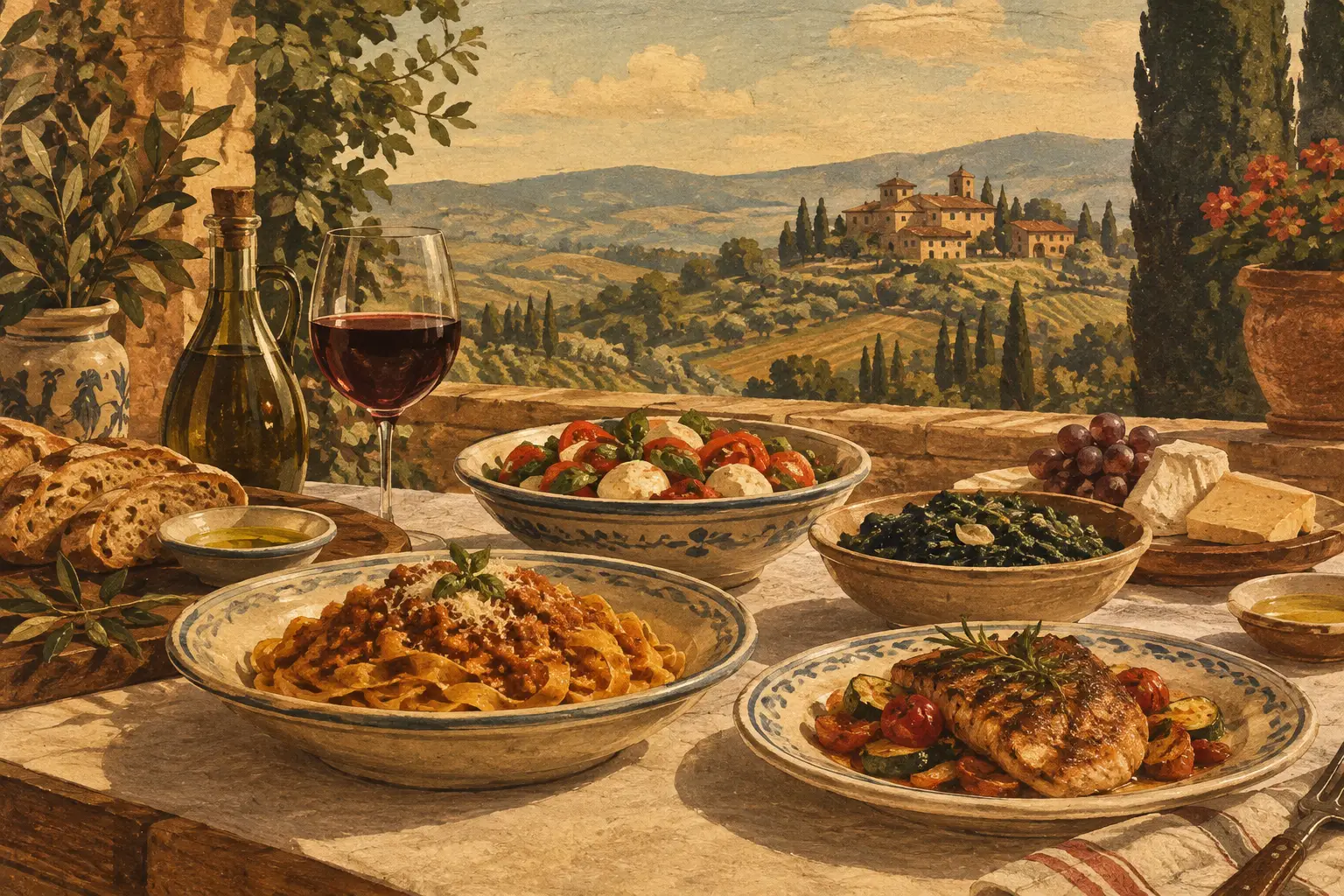
A classic Italian menu is arranged in courses rather than around a single plated main. The usual sequence is aperitivo, antipasto, primo, secondo, contorno, dolce, then coffee and digestivo. You may also see a cheese course, although it is less fixed than the others and often appears as part of antipasti or dessert.
Not every meal includes every stage. At an osteria, it is perfectly natural to order one or two courses per person, then add shared dishes according to the table’s appetite. Italians value balance and seasonality more than ceremony. A warm afternoon calls for restraint; a cool evening, a bottle of local red and a leisurely meal may invite a little more.
Aperitivo: opening the appetite
The aperitivo comes before the meal and sets the tone. Think of a chilled glass of sparkling wine, a light cocktail or a vermouth, perhaps accompanied by olives, crisps or small bites. It is not designed to fill you up. Its purpose is to mark the shift from the day into the evening, especially when the light softens over the Tuscan hills.
If you have a dinner reservation, arriving a little early for an aperitivo can make the occasion feel calmer from the first sip. Choose something bright and modest in alcohol if you plan to enjoy wine with your food later.
Antipasto: the shared beginning
Antipasto literally means “before the meal”, but it is far more than a warm-up. It introduces the ingredients and character of the kitchen: cured meats, local cheeses, marinated vegetables, crostini, seasonal soups or a salad dressed with excellent olive oil.
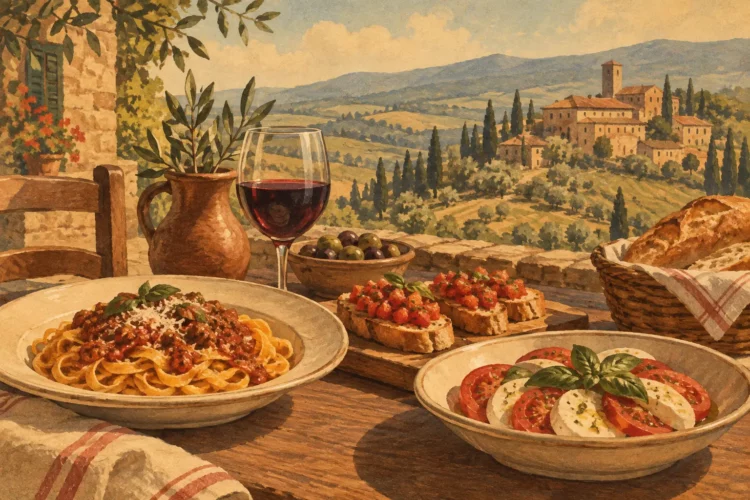
In Tuscany, antipasti often celebrate simplicity. A slice of toasted bread may carry chicken liver pâté, tomatoes in season or beans seasoned with sage and oil. The magic is not in complication, but in the quality and freshness of what has been gathered, baked, cured or prepared that day.
For two people, sharing an antipasto is often the most generous way to begin. It leaves room for a primo without turning lunch into a race against fullness. For a larger table, choose a selection that offers contrast: something crisp, something creamy, something savoury and something vegetable-led.
Primo: pasta, rice and the heart of the table
The primo is the first substantial course. It is usually pasta, risotto, gnocchi, polenta or a regional soup. For many visitors, this is the course they have travelled to Italy dreaming about, and rightly so.
A primo is not a side dish before a huge main. It is a complete course with its own weight, texture and flavour. Fresh pappardelle with wild boar ragù, handmade ravioli with ricotta and herbs, or a bowl of ribollita made with beans, greens and bread can be deeply satisfying on its own.
This is where knowing your appetite matters. If the pasta is rich, such as a slow-cooked game sauce or butter-filled ravioli, consider sharing antipasti and following it with a lighter secondo, or stopping after the primo and going straight to dessert. If you want to enjoy both pasta and meat, choose smaller, simpler dishes and let the table set the pace.
A practical Italian meal courses guide for ordering well
The menu’s order is helpful, but it does not require every guest to make the same choices. One person may take a primo while another prefers a secondo. This is normal. Courses are served in sequence for those who order them, yet Italian hospitality is flexible enough to accommodate a table with different appetites.
A good approach is to begin by asking what is seasonal and local. Then decide whether the occasion calls for a lighter meal or a longer evening. At lunch, shared antipasti followed by a primo each may be perfect. At dinner, you might share antipasti, enjoy a pasta course and choose a secondo to share if the restaurant permits it.
Four details make ordering feel easy rather than formal:
- Consider the size and richness of the dishes, not just the number of courses.
- Share at the beginning, then order individual dishes when everyone wants a different flavour.
- Leave space for contorni, which bring freshness and balance to meat or fish.
- Tell your host about dietary needs early, especially if you would like vegetarian, gluten-free or child-friendly options.
There is no need to rush a decision. A thoughtful menu reflects what is best at that moment, whether it is porcini after rain, artichokes in spring, tomatoes at their sweetest or game prepared slowly for autumn.
Secondo: the main ingredient takes centre stage
The secondo is traditionally the meat or fish course. It may be grilled, roasted, braised or cooked with very little intervention so that the ingredient speaks clearly. In inland Tuscany, you may find beef, pork, poultry or wild game, while coastal areas naturally bring more fish and shellfish to the menu.
A secondo usually arrives without vegetables or potatoes. This can surprise British diners accustomed to a complete plate, but it gives you more freedom. You choose a contorno separately, perhaps rosemary potatoes, bitter greens, beans, grilled vegetables or a simple salad.
This separation is one of the quiet pleasures of Italian dining. A table can shape its own meal: rich meat with sharp greens, delicate fish with seasonal vegetables, or a hearty roast softened by beans dressed in peppery olive oil. Ask for guidance if you are unsure. A good host will know which combinations let each dish shine.
Contorno: the side dish with a real purpose
Contorni are side dishes, but they should never be treated as an afterthought. They bring colour, seasonality and relief from richer flavours. Roasted vegetables, sautéed spinach, cannellini beans, salad and potatoes all have their place, depending on the season and the main course.
If you have ordered a substantial primo and a secondo, one or two contorni to share is often enough for the table. If your meal is centred on grilled meat, vegetables and beans add the kind of balance that makes a long meal feel pleasurable rather than heavy.
Dolce, coffee and the gentle finish
Dessert is the moment to linger, not necessarily to overindulge. A homemade tart, panna cotta, tiramisù, gelato or a cake made with local fruit can provide a soft landing after savoury courses. In Tuscany, simple desserts often feel especially right: a spoonful of cream, a slice of cake, biscuits served with vin santo or fruit at the height of its season.
Sharing a dessert is welcome, particularly after a generous meal. If you prefer something less sweet, coffee may be enough. An espresso is typically small, strong and taken after food, while a cappuccino is more commonly enjoyed in the morning. Of course, hospitality should never become a rulebook. Order what you will enjoy.
A digestivo, such as amaro, grappa or vin santo, may follow coffee. It is a final, slow sip rather than another course. On a warm evening, it can be the perfect reason to remain at the table a little longer.
What a Tuscan meal should feel like
The finest Italian meal is not defined by how many courses you order. It is defined by attention: bread broken and passed around, a wine chosen to suit the food, children welcomed at the table, and enough time to notice the scent of herbs on the evening air.
At Osteria Etrusca, that rhythm belongs naturally to a meal enjoyed close to the Tuscan countryside. Choose the courses that suit your day, trust the season and allow the table to become part of the journey. The best final course is often simply the time you do not feel compelled to hurry away.