 By
By The first surprise for many visitors is how quickly coffee happens in Tuscany. You step up to the bar, order in a few words, take one sip – perhaps two – and the moment is already complete. Yet that small cup can say a great deal about where you are. Italian coffee in Tuscany is not only about caffeine. It is about rhythm, appetite, company and the quiet pleasure of doing something well.
For travellers who come here for beauty, food and a slower kind of luxury, coffee often becomes part of the day’s shape. It opens the morning, punctuates a long lunch, and draws a gentle line under dinner. Understanding how it works does not require expertise. It simply helps you feel more at ease, and enjoy the experience as locals do.
What Italian coffee in Tuscany really feels like
Coffee in Tuscany is rarely treated as a theatrical performance. It is woven into daily life with confidence and ease. The focus is on balance – a well-pulled espresso, milk used with care, and a sense that coffee should suit the time of day rather than overpower it.
That matters because many visitors arrive expecting endless customisation. In most traditional settings, coffee is more straightforward than that. You choose the drink, trust the method and enjoy it at its best. For many people, that simplicity feels refreshing almost at once.
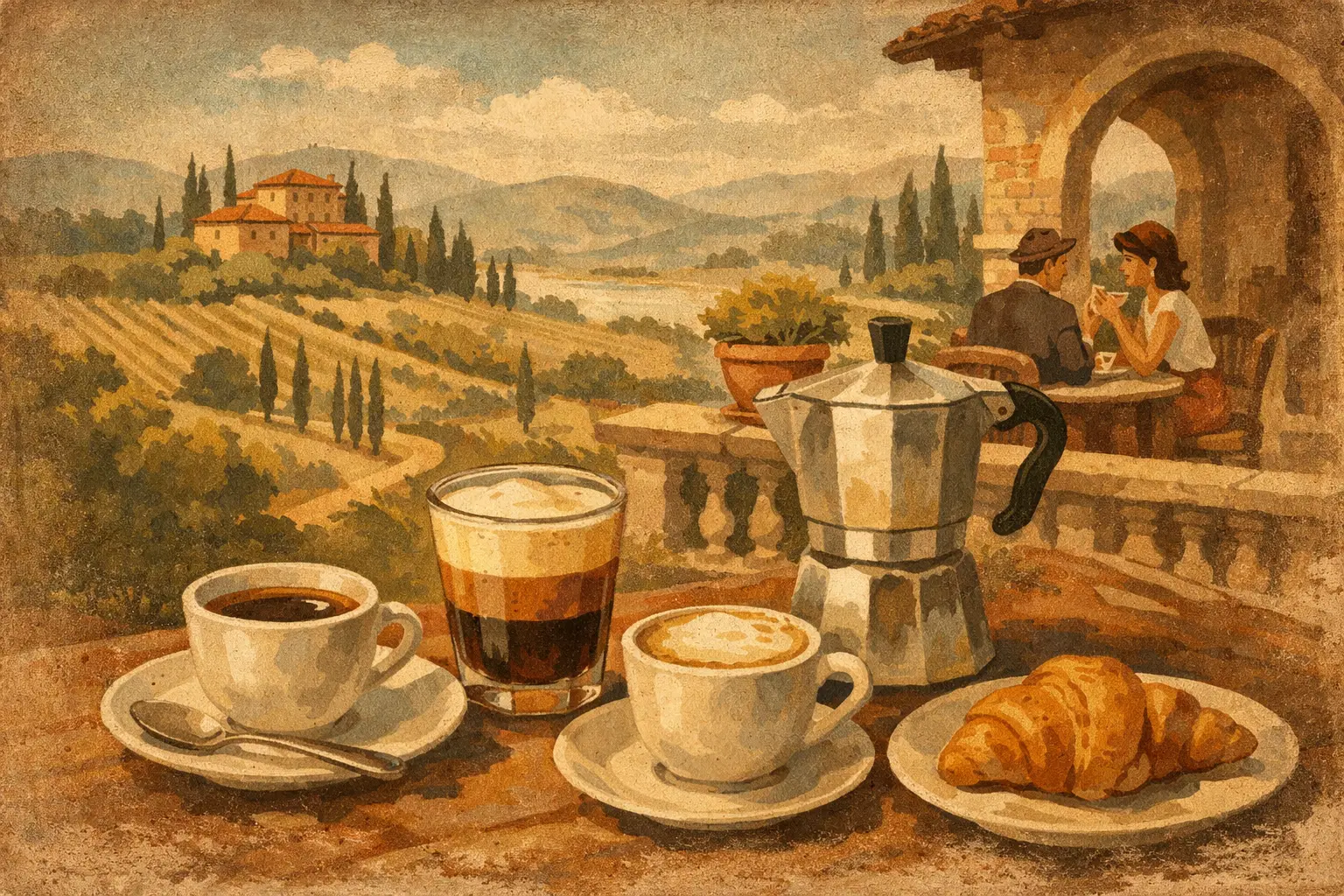
There is also a strong social element. A morning cappuccino on a sunny terrace, an espresso after lunch, or a late-afternoon coffee before the drive through the hills – these moments are small, but they carry the atmosphere of the region. In Tuscany, pleasure often lives in proportion rather than excess.
The essential coffees to know
Espresso – the standard, not the exception
If you ask for a coffee in much of Italy, what arrives is usually an espresso. It is short, concentrated and served without fuss. In Tuscany, a good espresso should taste rounded rather than harsh, with enough body to feel satisfying even in a few sips.
For visitors used to large takeaway cups, espresso can seem almost too brief. But that is precisely its charm. It fits naturally between conversations, meals or short pauses in the day. You are not expected to linger over it for half an hour unless the setting invites it.
Cappuccino – best in the morning
The cappuccino is perhaps the drink most associated with Italian mornings, and with good reason. When prepared properly, it is soft, warming and ideal with breakfast pastries, bread and jam, or a slice of cake baked that morning.
The usual custom is to drink it earlier in the day rather than after lunch or dinner. That is not a rigid rule enforced by anyone at the table, but it is a deeply familiar rhythm. Milk-heavy coffee later on is often seen as too filling, especially after a proper meal. If you order one in the afternoon, you certainly can, but you may feel a little outside the local cadence.
Caffè macchiato – a middle ground
For those who want the strength of espresso softened slightly, a caffè macchiato is often the perfect answer. It is simply an espresso marked with a little milk or foam. You still get the clean character of the coffee, but with a gentler edge.
This is a useful order if plain espresso feels too intense yet a cappuccino seems too substantial. In a region where meals are taken seriously, that balance often makes sense.
Caffè corretto and other variations
You may also come across caffè corretto, espresso corrected with a splash of spirit, often grappa. It is traditional, characterful and not for every moment. On a cold day, or after a long meal, some people love it. Others find it too strong, especially if they still want to enjoy the flavours of the food.
There are iced versions in warmer months too, though Tuscany generally remains more classic than trend-led when it comes to coffee. The point is not endless novelty. It is choosing the right drink for the right moment.
When to order what
Morning coffee in Tuscany
Breakfast is where milk-based coffee shines. Cappuccino, caffè latte and espresso all have their place, depending on your appetite. If breakfast is light – perhaps a pastry and fruit – a cappuccino can feel ideal. If you prefer something smaller before a later meal, espresso keeps things brisk and bright.
In places that treat breakfast with care, coffee becomes part of a wider sensory experience: warm pastries, good bread, sunlight on the table, and no need to rush unless you want to. This is where Tuscany is especially appealing to guests who want more than a quick stop.
After lunch
After lunch, espresso becomes the natural choice. It clears the palate and brings a meal to a neat finish without adding heaviness. If lunch has included pasta, meat or a generous dessert, this makes particular sense.
A macchiato can work too, especially if you like something slightly softer. What matters most is proportion. Coffee after lunch should feel like punctuation, not a second course.
Later in the day
Afternoon coffee depends on your plans. Before a walk, a drive or a slow hour in the garden, espresso is an easy companion. If you are stopping for cake or a small sweet treat, there is more flexibility. By evening, most people return to espresso, especially after dinner.
Again, these are customs rather than strict laws. Tuscany tends to reward sensitivity over performance. If something suits you, order it. It is simply helpful to know the local rhythm before deciding whether to follow it or not.
How to order without overthinking it
One of the pleasures of coffee in Italy is that ordering can be wonderfully simple. In most cases, a few words are enough. Espresso, cappuccino, macchiato. That clarity is part of the culture.
Visitors sometimes worry about making mistakes, particularly around timing or etiquette. There is no need for anxiety. Good hospitality should make people feel welcome, not examined. Even so, a little awareness goes a long way. If you ask for a cappuccino after dinner, it will usually be served without drama. You may simply be choosing comfort over convention.
If you see locals drinking coffee quickly at the bar, that is normal. If you are seated on a terrace with a view and want to take your time, that can be equally right. Tuscany understands both efficiency and indulgence. Context shapes the experience.
Why coffee tastes different here
Part of the difference is technical – roast profiles, blends, machine calibration, water and timing all matter. But for most guests, the greater difference is emotional and sensory. Coffee tastes better when the morning is unhurried, the pastry is still warm, and the landscape opens wide around the table.
Food also changes how coffee is perceived. An espresso after a rich lunch with wild boar ragù will not feel the same as one taken alone at a station bar. The setting, the meal and the pace of the day all influence flavour.
This is why the best coffee experiences in Tuscany are rarely isolated from everything else. They belong to a whole way of being at table – attentive, relaxed and connected to place. At Osteria Etrusca, that sense of coffee as part of a fuller Tuscan day feels especially natural, whether it begins with breakfast in the fresh air or ends after dinner as the light fades over the hills.
Common misconceptions about Italian coffee in Tuscany
One common misunderstanding is that stronger always means better. In fact, a good Tuscan espresso should be balanced, not aggressive. Bitterness on its own is not a sign of quality.
Another is that local coffee culture is inflexible. It is true that traditions exist, especially around milk and timing, but hospitality in good places is generous. The point is not to catch visitors out. It is to offer a way of eating and drinking that has developed for sensible, pleasurable reasons.
Then there is the idea that coffee should always be the main event. Sometimes it is, especially at breakfast. More often, it plays a supporting role beside pastries, desserts, conversation or the close of a meal. That supporting role is part of its elegance.
The pleasure of getting it right
You do not need a long list of coffee terms to enjoy Tuscany well. You only need a little curiosity and a willingness to let the day guide your order. A cappuccino in the cool morning, an espresso after lunch, perhaps another as afternoon softens into evening – these are modest choices, but they shape the memory of a place.
When coffee is served with care, in beautiful surroundings, it becomes more than habit. It becomes part of why people return. So if you are wondering what to order, start simply, pay attention to the moment, and let Tuscany set the pace.