 By
By A Tuscan brunch should never feel hurried. The pleasure is in the slow arrival of everything: warm pastries on the table, sunlight moving across the terrace, the first coffee poured properly, and the quiet sense that nobody needs to be anywhere else for a while. If you are wondering how to plan a Tuscan brunch, start there. Not with a trend, not with an overfilled menu, but with a mood.
In Tuscany, hospitality is rarely about excess for its own sake. It is about generosity, balance and the confidence to let excellent ingredients speak clearly. A good brunch here sits somewhere between breakfast and lunch, but it borrows the best qualities of both. It feels relaxed yet abundant, elegant yet unfussy, and rooted in place.
How to plan a Tuscan brunch that feels authentic
The first decision is timing. A Tuscan brunch works best when it begins late enough to feel leisurely but early enough to keep its bright, daytime character. Somewhere between 10.30 and noon usually suits the occasion. Earlier, and it can still feel like breakfast. Too late, and guests begin expecting a full lunch with heavier dishes and more structure.
Guest count matters more than many hosts realise. A brunch for four can be intimate and spontaneous. A brunch for twelve needs a little more rhythm. You will want enough room on the table for sharing plates, coffee pots, glasses and flowers without everything feeling crowded. Tuscan hospitality often looks effortless, but that ease usually comes from thoughtful planning behind the scenes.
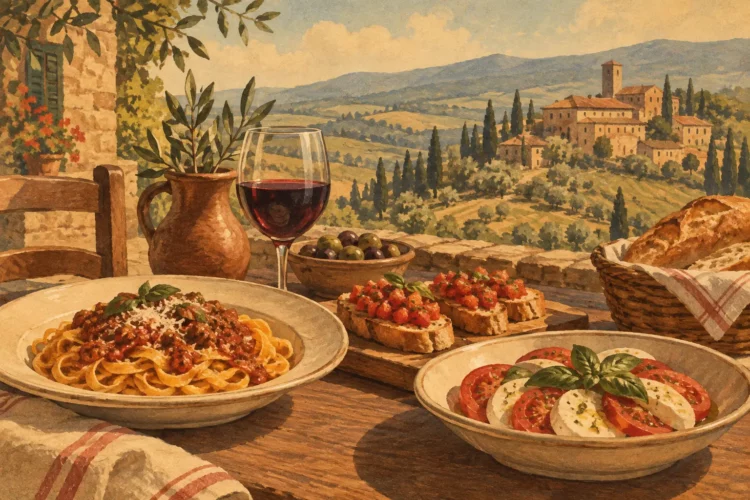
Setting is just as important as the food. If you have access to an outdoor table, use it. A Tuscan meal comes alive in natural light, with olive trees, stone walls or open countryside adding quiet theatre in the background. If you are indoors, keep the room airy and simple. Linen, ceramic plates, clear glass and a few branches or seasonal flowers are enough. The point is not to decorate heavily. The point is to create calm.
A beautiful setting can compensate for a simpler menu. The reverse is less true. Even very good food loses some of its charm if guests feel cramped, rushed or overstimulated.
Build the menu around local rhythm
The easiest mistake is to make brunch too international. Pancakes, elaborate smoothie bowls and oversized stacks of sweet dishes may have their place, but they do not create a Tuscan table. A Tuscan brunch should reflect the region’s natural rhythm: good bread, ripe fruit, fresh bakes, savoury depth, and a few well-chosen dishes rather than endless variety.
Start with bread and baked goods. Fresh focaccia, crusty country bread and simple pastries bring immediate warmth to the table. Add butter, local jam, honey and perhaps a soft ricotta or mascarpone. The sweet element should feel gentle rather than sugary.
Then add savoury dishes with a little substance. Tuscan brunch can include frittata with herbs or courgette flowers, pecorino with figs or pears, cured meats sliced thinly, and ripe tomatoes dressed with olive oil and sea salt. If you want something more filling, a rustic tart, baked eggs, or a bean-based dish can work beautifully. The balance matters. Too many rich items and the meal becomes heavy. Too many light ones and it lacks satisfaction.
Seasonality should guide every choice. In spring, you might lean into asparagus, fresh herbs and strawberries. In high summer, tomatoes, peaches and basil are enough to make the table sing. In autumn, roast grapes, wild mushrooms and chestnut honey create a deeper tone. There is no single fixed Tuscan brunch menu, and that is part of its charm.
What to serve at a Tuscan brunch
A well-planned spread usually includes a few sweet notes, a few savoury favourites and one or two dishes with real presence. Think of the table in layers. There should be something guests can nibble immediately, something they can return to slowly, and something that anchors the meal.
For many hosts, this means starting with pastries and fruit while coffee is poured, then bringing in eggs, cheeses, breads and charcuterie once everyone has settled. This small sequence helps the meal unfold naturally. It also prevents the table from becoming too full too quickly.
If you are serving children or guests with mixed tastes, keep at least one element very simple. Fresh bread, soft scrambled eggs or sliced fruit can save a menu from becoming too niche. Authenticity is not about rigidity. It is about choosing food that feels honest and well suited to the moment.
Drinks deserve as much thought as the food
Coffee is non-negotiable, but quality matters. A proper espresso, cappuccino or caffè latte immediately changes the atmosphere of brunch. If you can serve coffee freshly made rather than from a large flask, do. People notice.
Alongside coffee, offer water and one fresh, bright non-alcoholic option such as orange juice or peach juice. If the occasion is celebratory, a light sparkling wine can work well, especially when paired with fruit and savoury dishes. The key is restraint. Tuscan brunch is not usually about heavy cocktails or sugary mixes. It should feel fresh and daytime-appropriate.
Wine can have a place, but it depends on the group. A long, relaxed brunch with adult guests may welcome a chilled glass poured slowly. A family gathering in the late morning may feel better with coffee, juice and sparkling water. Read the room rather than imposing a formula.
Let the table look abundant, not overworked
A Tuscan table should appear generous, but not fussy. This is where many hosts overcomplicate things. They add too many platters, too many decorative touches and too many recipes, and the result feels more staged than welcoming.
Choose serving pieces with texture and character: ceramic bowls, wooden boards, simple linen napkins. Let breads remain slightly torn, let fruit keep its natural shape, and do not worry if a tart looks homemade rather than perfectly precise. In fact, that usually helps. Beauty in Tuscany often comes from ease and confidence, not perfection.
Colour helps, but only when it comes from ingredients and surroundings. Golden pastry, green herbs, deep red tomatoes, pale cheeses and sunlit glasses already create a lovely palette. You do not need much more.
How to pace the experience
Brunch should feel unforced from start to finish. That means avoiding the common temptation to serve everything at once and then spend the rest of the time clearing plates. A better approach is to let the meal breathe.
Begin with drinks, pastries and fruit. Once guests are settled, bring out the more savoury dishes. If there is one centrepiece, such as baked eggs, a rustic tart or a warm focaccia just out of the oven, let it arrive slightly later. This creates a gentle sense of occasion without making the meal formal.
Music, if you use it, should remain in the background. Conversation, birdsong and the natural sounds of a terrace are usually enough. Tuscan brunch is social, but it is also restful.
The details that guests remember
People rarely leave talking about how many dishes were served. They remember the apricot jam that tasted of summer, the scent of rosemary in the warm bread, the shade over the table when the day turned bright, and the feeling that the morning opened out rather than disappeared.
That is why practical details matter. Shade on a hot day, comfortable seating, enough serving utensils, coffee kept hot, and a clear sense of pace can make more difference than one extra dish. If your guests are travelling, they will appreciate ease even more. The most memorable brunches often feel beautifully simple.
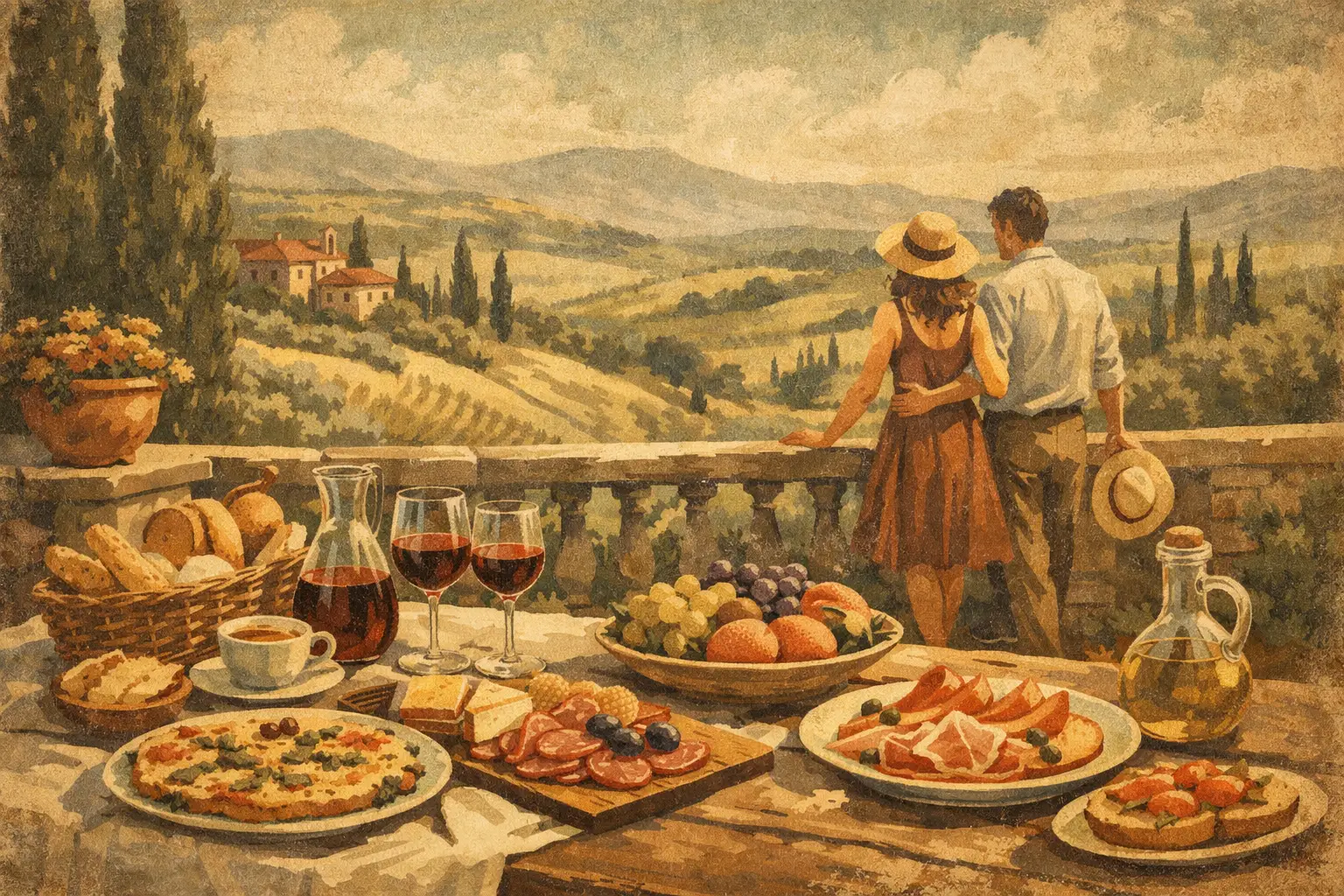
If you are planning brunch in a setting with wide countryside views, use that gift. Let the landscape do some of the hosting. Places such as Osteria Etrusca understand this instinctively: the food matters, of course, but so does the calm that comes from sitting down somewhere that feels deeply rooted in the land around it.
When to keep it simple and when to do more
Not every Tuscan brunch needs to be elaborate. For a quiet morning with close friends or family, excellent pastries, good coffee, fruit, bread, pecorino and one warm savoury dish may be more than enough. For a birthday, engagement weekend or holiday gathering, you may want a slightly fuller menu and a sparkling toast.
The right level of effort depends on the occasion, the season and the setting. If you have a spectacular terrace, keep the menu simpler and let the place shine. If the gathering is indoors on a cooler day, add more warmth through baked dishes and richer flavours. If guests are staying for hours, plan a slower progression and a little more food. If they are joining you before a day of exploring, lighter works better.
The most convincing Tuscan brunches are never copied mechanically. They are shaped around appetite, atmosphere and place.
Planning one well means choosing quality over quantity, rhythm over rush, and beauty that feels natural rather than arranged for effect. Get those things right, and even a modest table can feel quietly magnificent.