 By
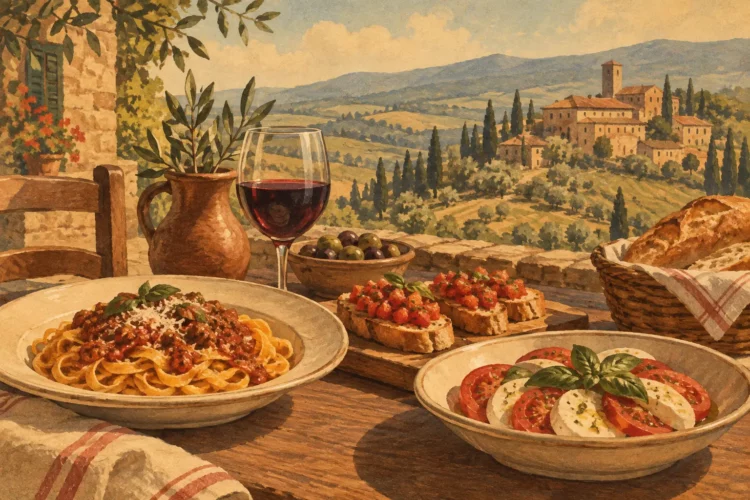
By Lunch in Tuscany has its own pace. The table lingers beneath the shade, olive oil catches the light, and a bottle is opened not for ceremony but because the food, the view and the company deserve it. This guide to Tuscan wine lunch pairings is designed for that kind of meal: generous, unhurried and full of local character.
The best pairing is not always the most famous bottle or the strictest rule. It is the wine that makes the next forkful more enjoyable, leaves room for conversation, and suits the warmth of the afternoon. Start with the dish, consider its richness and seasoning, then choose a wine with enough freshness to keep the meal feeling light.
Start with the weight of the plate
A useful way to choose wine at lunch is to think about weight rather than labels. Delicate dishes need wines that will not overwhelm them. Rich sauces, grilled meat and game call for more structure. Acidity is often the quiet hero: it refreshes the palate after olive oil, cheese or a slow-cooked ragù, and it makes even a generous meal feel balanced.
Tuscany offers a particularly generous range for the table. Its white wines can be bright and savoury, its rosati are made for warm afternoons, and its reds move from fragrant, easy-drinking styles to deep, age-worthy bottles. You do not need to follow a rigid path. A lighter red with pasta can be more satisfying than a powerful wine chosen simply because it is prestigious.
At lunch, serving temperature matters as much as the match itself. Whites should be cool but not icy, so their aroma can open. Rosé is at its best well chilled. Lighter reds, including many Chianti styles, benefit from a short spell in the cooler before pouring, especially on a sunny terrace. The fruit becomes clearer and the tannins feel more graceful.
Tuscan wine lunch pairings for pasta
Pasta is where the sauce should lead the decision. The shape of the pasta matters to the cook; for the wine drinker, it is the richness, acidity and depth of the condiment that set the direction.
Tomato, herbs and pecorino
A plate of pasta with tomato, basil, garlic and a finishing of pecorino has brightness already built in. Choose a youthful Chianti, ideally one with lively cherry fruit and a fresh finish. Sangiovese is naturally at home beside tomatoes: its acidity meets the sauce rather than competing with it, while its savoury edge complements herbs and aged cheese.
If the dish is simple and the day is warm, a fresh Tuscan rosato can be equally lovely. It brings red-fruit character without the weight of a fuller red, and it feels especially right for a leisurely lunch that may begin with antipasti and continue into the afternoon.
Wild boar ragù and slow-cooked sauces
Pappardelle with wild boar ragù asks for a red with more depth, but not necessarily the biggest wine on the list. A Chianti Classico or Rosso di Montalcino is a fine place to begin. Both offer the acidity needed for the tomato and the earthy, savoury tones that sit beautifully with game.
For an especially intense ragù, a Brunello di Montalcino can be a memorable choice, particularly when the bottle has had time to soften. Yet there is a trade-off. A very mature, complex Brunello may ask for more attention than a relaxed lunch requires. If the focus is sharing food and watching the landscape change in the sun, a generous but younger Sangiovese often gives more immediate pleasure.
Creamy sauces, mushrooms and truffle
Mushroom pasta, butter-rich sauces and truffle need a wine with texture but enough energy to avoid becoming heavy. A fuller Tuscan white, such as a well-made Vernaccia di San Gimignano, is a natural choice. Its gentle almond note and mineral finish work wonderfully with mushrooms and aged cheese.
A lighter Sangiovese can also work when the dish includes sausage, porcini or deeper roasted flavours. Avoid a highly oaked red if truffle is the star. Too much vanilla or sweetness can blur its delicate perfume.
Pairing wine with grilled meats and game
Tuscany’s grilled meats deserve reds with character, but the cut and seasoning still make a difference. For simply grilled beef, particularly bistecca, look for Sangiovese with firm but polished tannins. Chianti Classico Riserva has the structure for the charred exterior and juicy centre, while its acidity keeps the richness in check.
If the meat is leaner, such as grilled chicken, rabbit or pork with rosemary and lemon, move towards a younger, fresher red. A straightforward Chianti or a local red served slightly cool will keep the herbs bright and the meal relaxed. With pork, a rosato can be unexpectedly good, especially when the dish includes grilled vegetables or a sweet-sour element.
Game is a different conversation. Venison, wild boar and hare carry deeper, earthier flavours and welcome wines with more concentration. Brunello di Montalcino, Vino Nobile di Montepulciano or a carefully chosen Super Tuscan may be appropriate for a long, celebratory meal. The key is balance: choose a bottle whose tannins have softened enough to support the meat rather than dry the mouth after every bite.
White wines for fish and vegetarian plates
Tuscany is often celebrated for red wine, but lunch is also a chance to enjoy its whites. Vernaccia di San Gimignano is particularly versatile. With grilled fish, lemon, herbs and olive oil, its freshness mirrors the dish while its slight savoury character gives it more presence than a very light white.
For seafood pasta or fish with a delicate sauce, choose a youthful, crisp white and serve it cool. If the fish is grilled over coals or accompanied by beans, tomatoes or capers, a more textural Vernaccia has the weight to follow those fuller flavours.
Vegetarian dishes offer some of the most rewarding pairings at a Tuscan table. Grilled aubergine, courgettes, peppers and tomatoes often suit rosato because it bridges the freshness of vegetables with their smoky, caramelised edges. Bean dishes, including ribollita or a hearty soup enriched with olive oil, can take a light red surprisingly well. A young Chianti brings lift to the beans and works with the dish’s rustic warmth.
For salads with goat’s cheese, citrus or fresh herbs, stay with a bright white. For pecorino, roasted squash or mushrooms, choose a white with more body or a supple red. The cheese and the roasting are what shift the pairing towards something fuller.
Build a lunch that changes gently with the table
When several dishes are shared, one bottle rarely needs to do everything. Begin with a white or rosato for antipasti, vegetables and lighter first courses, then bring a red with the pasta or grilled meat. This creates a natural rhythm without making the lunch feel formal.
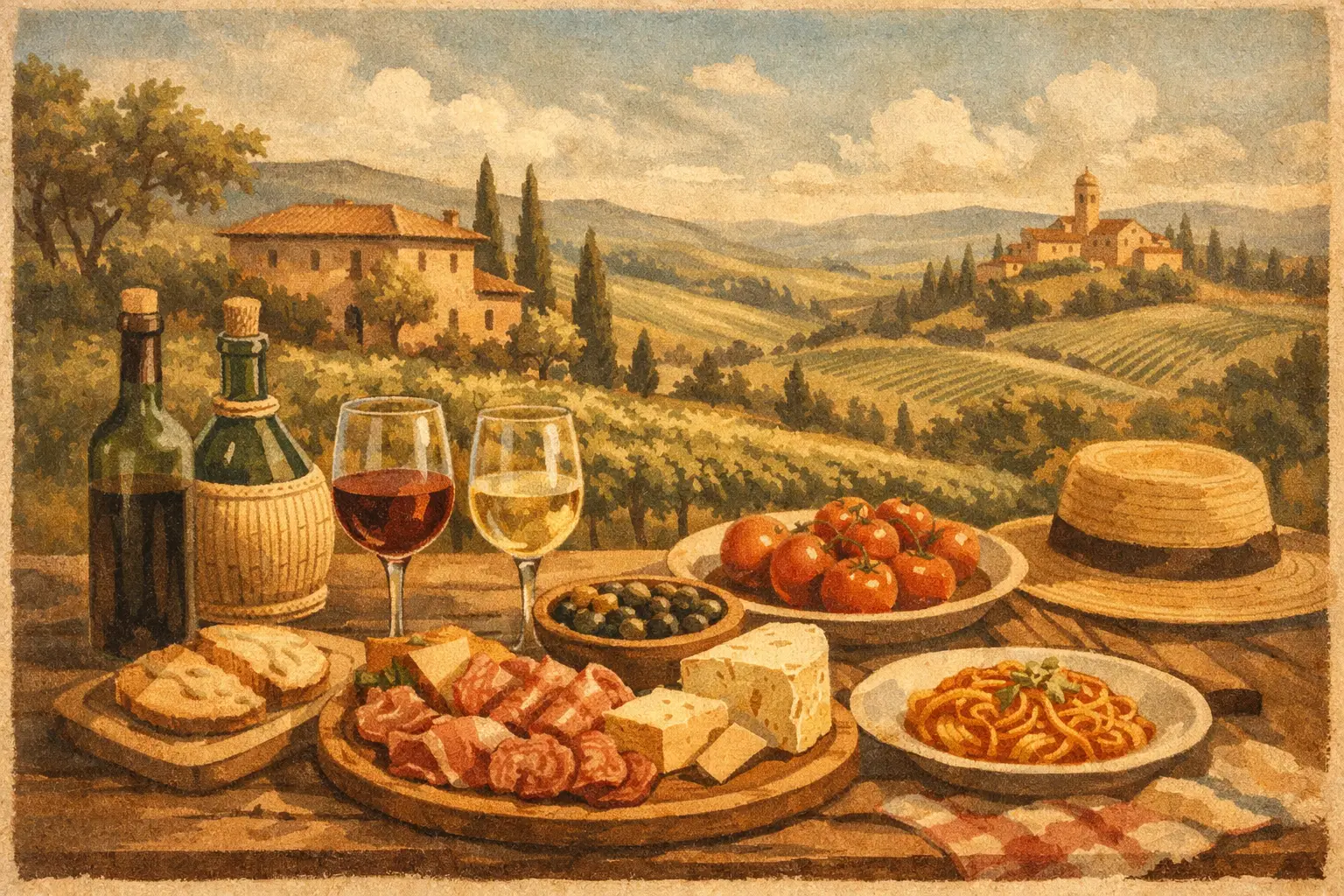
If everyone is eating different plates, choose the wine for the centre of the table rather than trying to satisfy every small detail. A versatile Chianti is often the safest red choice for cured meats, tomato-based pasta, grilled vegetables and pork. A mineral white can cover fish, salads, soft cheeses and vegetable starters with ease.
Do not overlook water, good bread and a pause between courses. Wine pairing is not only about flavour chemistry. It is about allowing each glass to belong to the moment, whether that is a family lunch, a quiet meal for two or a table of friends who have nowhere else to be.
A few choices worth avoiding
Very tannic, heavily oaked reds can make a warm midday meal feel tiring, especially with delicate pasta, fish or vegetables. Equally, a sharply cold white can lose its aroma and taste thin beside a richly dressed dish. Give the wine a few minutes in the glass before deciding what it has to say.
Sweetness is another point to watch. A wine with noticeable ripe fruit or oak sweetness may clash with bitter greens, vinegar-based dressings and artichokes. Artichokes are famously difficult because they can make wine taste metallic or oddly sweet. With them, choose a simple, dry white with lively acidity, or enjoy them with sparkling water and save the wine for the next course.
At Osteria Etrusca, the most satisfying pairings are often the least hurried: a seasonal plate, a bottle chosen with care, and enough time to enjoy both. Let the food lead, trust freshness over excess, and leave room for the wine to become part of the afternoon rather than the reason it ends.