 By
By A Tuscan seafood or meat menu is not a test of good taste. It is an invitation to choose the meal that suits the day in front of you: the brightness of a long lunch, the appetite brought on by country air, the bottle you would like to open, and the people gathered around your table. In Tuscany, both paths can be deeply rooted in place. The pleasure lies in allowing the season and the mood to lead.
For guests staying near Volterra, this choice often feels especially generous. The coast is close enough to bring the sea to the table, while the hills offer game, pasture and a cooking tradition shaped by woods, farms and slow evenings. One menu may begin with the clean salinity of the Mediterranean; the other with the warm perfume of herbs, roasted meat and handmade pasta. Neither needs to win.
Tuscan seafood or meat menu: start with the setting
The first useful question is not simply, “What do I fancy?” Think about when you are dining and how you want the meal to feel. Seafood is often the natural choice for a sunlit lunch, particularly when the table calls for crisp white wine, fresh vegetables and dishes that leave room for a stroll or a quiet afternoon. It can feel lively without being heavy.
Meat tends to suit an evening that is meant to linger. A plate of pasta with wild boar ragù, grilled beef or slow-cooked game has a wonderful sense of arrival after a day spent travelling through the Tuscan countryside. It asks for a little more time, a fuller red and perhaps a shared dessert before the evening ends.
That said, rules are made to be softened by appetite. A cool evening can make grilled fish feel perfect, while a simple plate of cured meat or a gently cooked meat sauce can be exactly right at lunch. The best menu is one that respects the rhythm of the day without becoming too serious about it.
What seafood brings to a Tuscan table
Tuscan seafood is often less ornate than visitors expect. Its character comes from clarity: very fresh fish, olive oil, lemon, tomato, garlic, parsley and the clean heat of chilli used with restraint. The ingredients should still taste like themselves. A good seafood dish is not dressed up to hide its origin; it is prepared to let the sea speak clearly.
A seafood starter might be delicately dressed shellfish, tender octopus with potatoes, or a simple fish antipasto that opens the appetite rather than filling it. For pasta, look for sauces that carry the flavour of the catch without overpowering it. Tomato can add depth, but should not dominate. A plate of seafood pasta is at its best when the sauce clings lightly and the scent arrives before the first forkful.
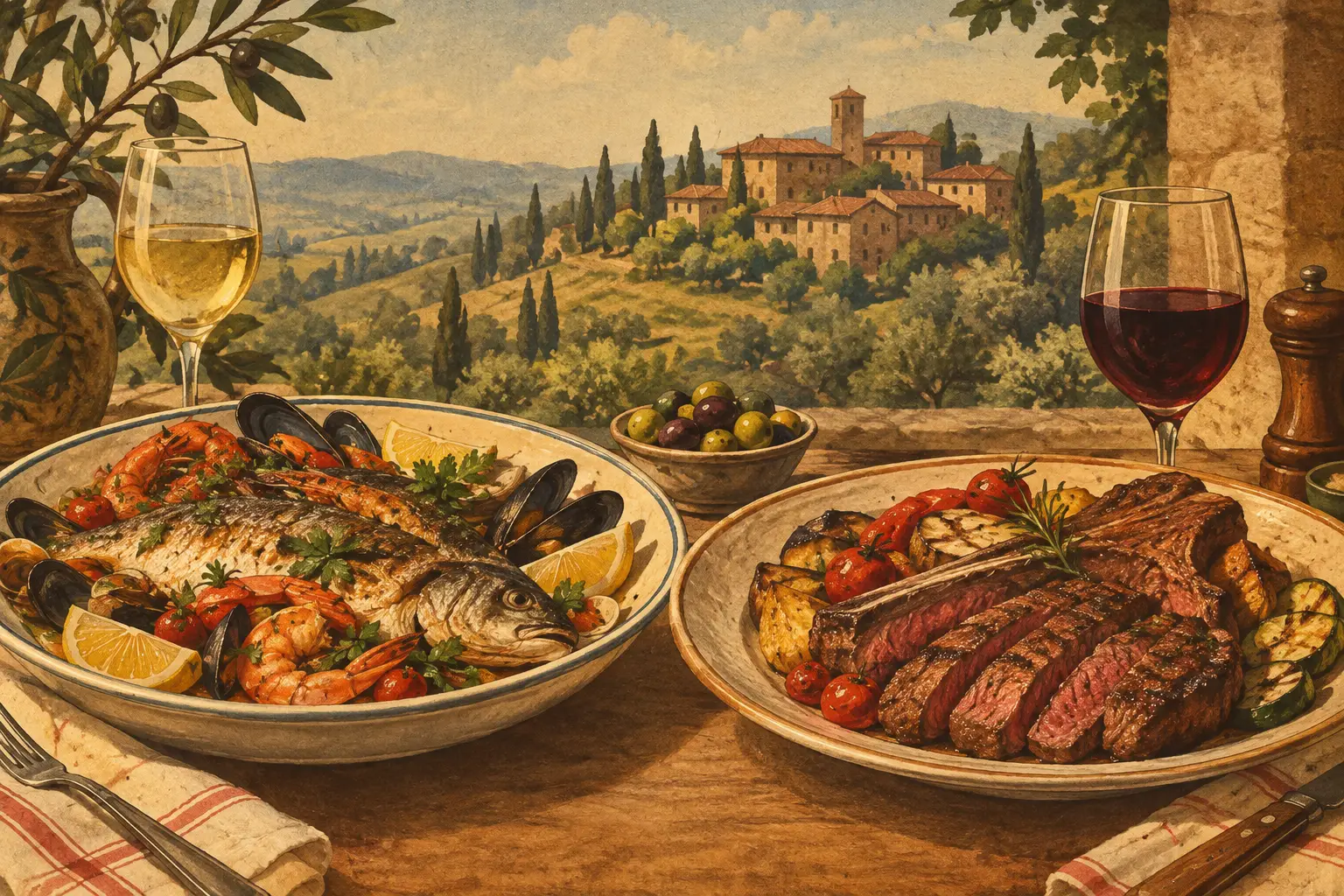
For a main course, grilled fish offers one of the most satisfying expressions of Italian cooking. A little smoke, good oil, salt and perhaps a wedge of lemon are enough. It is a particularly lovely choice when dining outdoors, where the flavour feels at home with warm stone, evening air and a view that encourages everyone to stay at the table a little longer.
Seafood also works beautifully for mixed groups. It gives the menu freshness and contrast, especially if others at the table are ordering richer dishes. If you are sharing several courses, beginning with seafood before moving towards meat can create a natural progression rather than a meal of similar flavours.
Wine with seafood
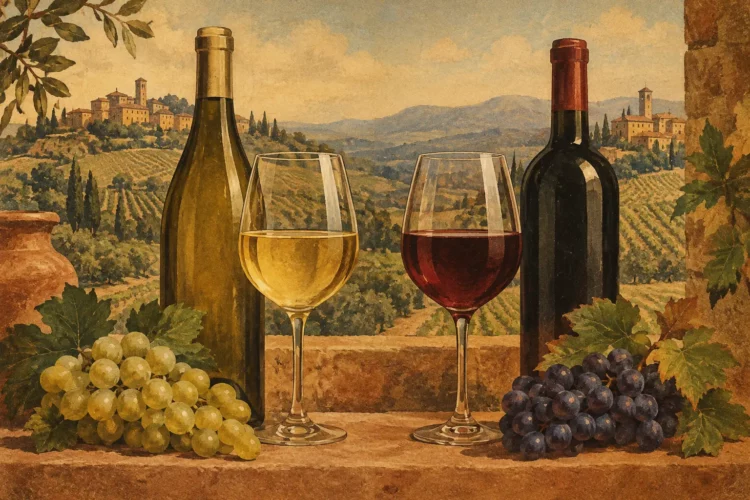
A mineral, dry white is a graceful companion to fish and shellfish. The aim is refreshment, not competition. Choose something with enough character to stand beside olive oil and grilled flavours, but not so much oak or sweetness that it dulls the dish. Sparkling wine can be a joyful beginning, too, especially for an unhurried lunch or an aperitivo that becomes dinner.
Why meat remains central to Tuscan cooking
Inland Tuscany tells its story through meat. Here, cooking has long been shaped by the landscape: grazing animals, family farms, hunting traditions and recipes designed to turn time into flavour. The result can be direct and rustic, or refined and elegant, but it nearly always carries a sense of generosity.
Wild boar is among the region’s most recognisable flavours. Served as a ragù with pasta, it is rich without needing to be heavy, especially when balanced by tomato, red wine and aromatic herbs. The sauce develops slowly, becoming rounded and fragrant. It is the sort of dish that invites conversation to pause for a moment after the first taste.
Grilled meats offer another side of the Tuscan table. Their appeal is wonderfully straightforward: excellent produce, a hot grill, seasoning and confidence. Depending on the cut and preparation, they can be ideal for sharing, making them especially suited to family meals and celebratory evenings. Seasonal vegetables, roasted potatoes or bitter greens provide the balance.
There are trade-offs to consider. A meat-led menu can be more filling, so it may be wise to choose lighter antipasti or share a dessert. On the other hand, it often feels more comforting when the weather turns cooler or when you have spent the day exploring. If you are arriving late and want the evening to slow down rather than rush towards its end, meat can set exactly the right tone.
Wine with Tuscan meat dishes
This is where Tuscan reds come into their own. Sangiovese-based wines, with their savoury cherry fruit and lively acidity, have an effortless affinity with roasted and grilled meats as well as ragù. A younger, brighter wine can keep the meal energetic; a more structured bottle is a fine choice for a long dinner, particularly when the table is sharing substantial dishes.
The most enjoyable pairing is often the one that suits the group. If one person is choosing fish and another wild boar pasta, ask for a versatile recommendation rather than forcing everyone into separate decisions. A thoughtful dining room will help find a bottle that keeps the table together.
How to choose when everyone wants something different
The finest meals rarely demand unanimity. A Tuscan table is made for sharing tastes, passing plates and being curious about what someone else ordered. If your group is divided between seafood and meat, let the structure of the meal do the work.
Begin with a selection of antipasti that offers both freshness and depth. Then allow each guest to follow their own appetite with pasta or a main course. This keeps the meal personal while preserving a feeling of abundance at the centre of the table. It is also a smart approach for families: adventurous eaters can try regional game or seafood, while younger guests can enjoy familiar Italian comfort in a relaxed setting.
Season matters, too. In warmer months, you may be drawn towards seafood, fresh pasta and vegetables. As autumn arrives, mushrooms, game and slow-cooked sauces become harder to resist. Yet Tuscany is not a place where a menu should feel rigid. A restaurant that cooks with care will let the market, the weather and the quality of available ingredients influence the day’s choices.
At Osteria Etrusca, that sense of occasion belongs as much to the surroundings as to the plate. A meal is given room to unfold among the landscape, with space for coffee, conversation and perhaps one more glass of wine. Choosing between sea and land becomes part of the pleasure rather than a decision to rush.
Let appetite have the final word
Choose seafood when you want brightness, delicacy and the easy pleasure of a meal that follows the light. Choose meat when you want depth, warmth and the flavours of the Tuscan hills gathered around the table. Choose both across a leisurely lunch or dinner when the company is good and there is no reason to hurry.
The memorable part will not be whether you ordered fish or meat. It will be the moment the plates arrive, the landscape grows quieter, and everyone at the table realises that there is nowhere else they need to be.