
 By
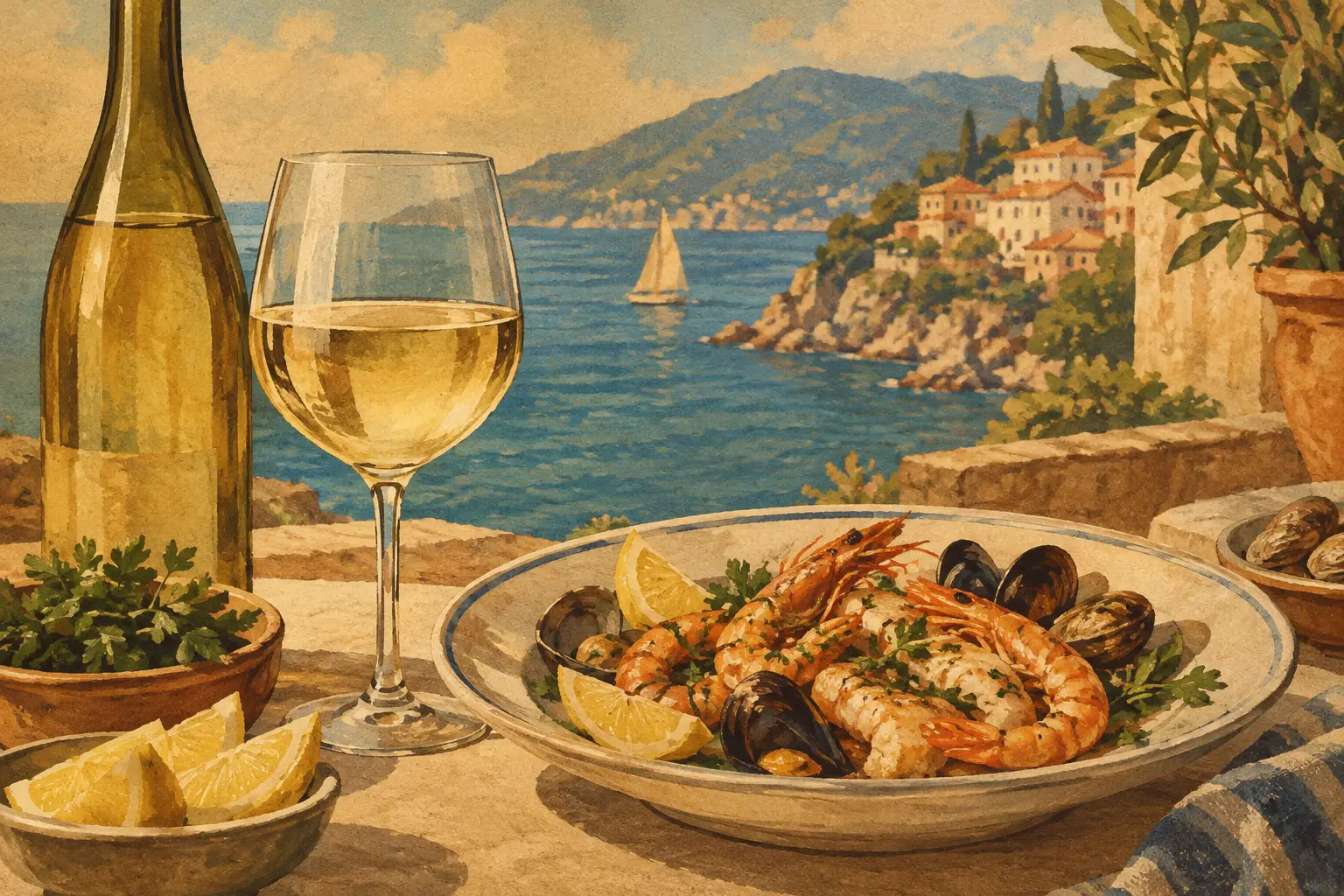
Vernaccia is the bottle to reach for when the table holds the scent of the sea: a bowl of clams steaming with garlic, a platter of prawns, or fish lifted from the grill while the evening is still warm. Knowing how to pair Vernaccia with seafood is less about following strict rules than noticing balance – salt, acidity, texture and the way a dish has been cooked.
In Tuscany, Vernaccia di San Gimignano has long earned its place at the table for precisely this reason. It is dry, bright and quietly distinctive, often carrying citrus, white flowers, herbs and a lightly saline edge. Its freshness refreshes the palate, while its subtle almond-like finish gives it enough character to meet food rather than simply sit beside it.
Start with the style of Vernaccia
Not every bottle will behave in exactly the same way. A young, stainless-steel Vernaccia is usually the most direct expression: crisp, lively and fragrant, with lemon, green apple and a mineral finish. This is the natural choice for delicate seafood, especially dishes served simply or with little more than good olive oil and a squeeze of lemon.
Some producers give Vernaccia more time on its lees or a short period in oak. These wines may feel rounder, with softer acidity and notes of ripe pear, almond, hay or gentle spice. They can be beautiful with fuller fish dishes, but they may overwhelm the finest raw seafood if served too warm or alongside a dish that is very lightly seasoned.
The useful question is not simply, “What fish is this?” Think instead: is the dish raw or cooked, rich or lean, clean-tasting or deeply sauced? The answer will point you towards the right expression of the wine.
How to pair Vernaccia with seafood by preparation
Raw shellfish and delicate crudo
For oysters, raw scallops, sea bass crudo or a plate of delicately dressed langoustines, choose a youthful Vernaccia with pronounced freshness. The wine’s mineral character echoes the briny flavour of the shellfish, while its acidity cleans the palate without masking the natural sweetness of the seafood.
Keep the dressing restrained. Lemon zest, a little Tuscan olive oil, finely chopped herbs or a touch of chilli are enough. Heavy soy-based dressings, very sweet citrus sauces and generous truffle can pull the wine off balance. Here, simplicity is not an absence of effort. It allows the sea and the vineyard to speak clearly together.
Prawns, calamari and fried seafood
Crisp fried calamari, fritto misto and lightly battered prawns call for a wine with real lift. Vernaccia is particularly good because it cuts through the richness of the frying while remaining more graceful than a strongly aromatic white.
Serve the wine well chilled, but not icy: around 9-11°C is a good range. Too cold, and its perfume disappears; too warm, and the alcohol can make fried food seem heavier. A young Vernaccia alongside hot, freshly fried seafood, lemon and a generous pinch of salt is one of those uncomplicated combinations that makes a long lunch feel exactly right.
Grilled fish with herbs and olive oil
A whole grilled sea bream, sea bass or branzino dressed with olive oil, parsley and lemon is among the most natural partners for Vernaccia. The gentle smokiness from the grill brings out the wine’s faintly savoury, almond-like side, while its citrus brightness keeps the dish light.
If the fish is especially meaty, such as swordfish or tuna, select a more textured Vernaccia rather than the lightest bottle available. A wine that has spent time on lees can stand up to the firmer flesh and charred edges. Avoid adding a sweet glaze, however. Tomato, capers, olives and herbs can work beautifully, but a sugary sauce will make a dry Vernaccia feel sharper and less generous.
Pasta with clams, mussels or seafood
Spaghetti alle vongole is a wonderful lesson in why regional food does not need complication. Garlic, olive oil, parsley, white wine and the salty juices of clams create a sauce that is both delicate and full of flavour. A dry Vernaccia meets it with enough acidity to brighten the oil and enough minerality to complement the shellfish.
Mussels work in much the same way, especially when prepared with white wine, herbs and a small amount of tomato. If the sauce becomes very tomato-led, Vernaccia can still work, but choose a riper, more rounded style and do not over-chill it. The pairing depends on proportion: a hint of tomato brings sweetness and depth; a heavy red sauce may call for a different wine altogether.
For creamy seafood pasta, proceed with care. Vernaccia’s acidity is refreshing against cream, but a sauce rich in butter, cheese or lobster bisque needs a fuller-bodied wine. Choose an aged or lees-aged Vernaccia, or keep the pasta sauce lighter, using olive oil, lemon and shellfish stock instead.
Rich fish, sauces and slow cooking
Vernaccia should not be limited to the lightest plates. With baked turbot, monkfish, lobster or a fish stew built around saffron, fennel and tomato, its slightly savoury finish can be especially appealing. The key is to choose a bottle with more body and complexity.
A mature Vernaccia may show more honeyed and nutty notes while staying dry. This makes it a compelling match for roast lobster with herb butter, or monkfish wrapped in pancetta and served with a light bean purée. There is a boundary, though: intensely spicy sauces, thick cream reductions and very sweet elements can dominate the wine’s quieter elegance.
Let the seasoning lead the pairing
Seafood itself is often mild. The real deciding factor is frequently the seasoning around it. Lemon, basil, parsley, fennel, rosemary, garlic, capers and olive oil are all friendly to Vernaccia because they mirror its freshness and Mediterranean character.
Chilli works well when used with restraint. A modest warmth in prawns or clams makes Vernaccia feel even more refreshing, but fierce heat will make a dry white taste thinner and more alcoholic. Likewise, salt is part of the pleasure in seafood cookery, yet very salty cured fish or anchovy-heavy dishes may make the wine seem austere.
Be cautious with vinegar-forward sauces and aggressively pickled accompaniments. Their sharpness can flatten the wine’s fruit. If a dish needs brightness, lemon zest and fresh herbs tend to create a softer, more harmonious result.
Serve Vernaccia with the attention it deserves
Temperature changes the pairing more than many diners expect. For simple shellfish and crudo, pour Vernaccia at around 8-10°C. For grilled fish, pasta and richer dishes, let it sit closer to 10-12°C so its texture and subtle aromas have room to open.
A medium-sized white wine glass is preferable to a narrow, very small glass. Vernaccia is not a loudly aromatic wine, but it has detail: the scent of citrus peel, wild herbs, stone and sometimes almond. Give it a few moments in the glass before serving the first course.
If lunch extends into the afternoon, keep the bottle cool in an ice bucket with water as well as ice. It will chill evenly without becoming painfully cold. This small act of care makes the wine feel more composed from the first pour to the last.
A Tuscan table, close to the sea
Vernaccia comes from inland Tuscany, yet it belongs naturally beside seafood. That contrast is part of its charm. The wine brings the clean air and mineral soils of the Tuscan hills to dishes shaped by the coast, creating a meal that feels rooted in place without being bound by distance.
At Osteria Etrusca, we believe the most memorable pairings leave room for the moment around them: a table of family or friends, warm bread, a view that encourages everyone to stay a little longer. Choose seafood at its freshest, season it with confidence but not excess, and let a chilled bottle of Vernaccia make each bite feel brighter.