 By
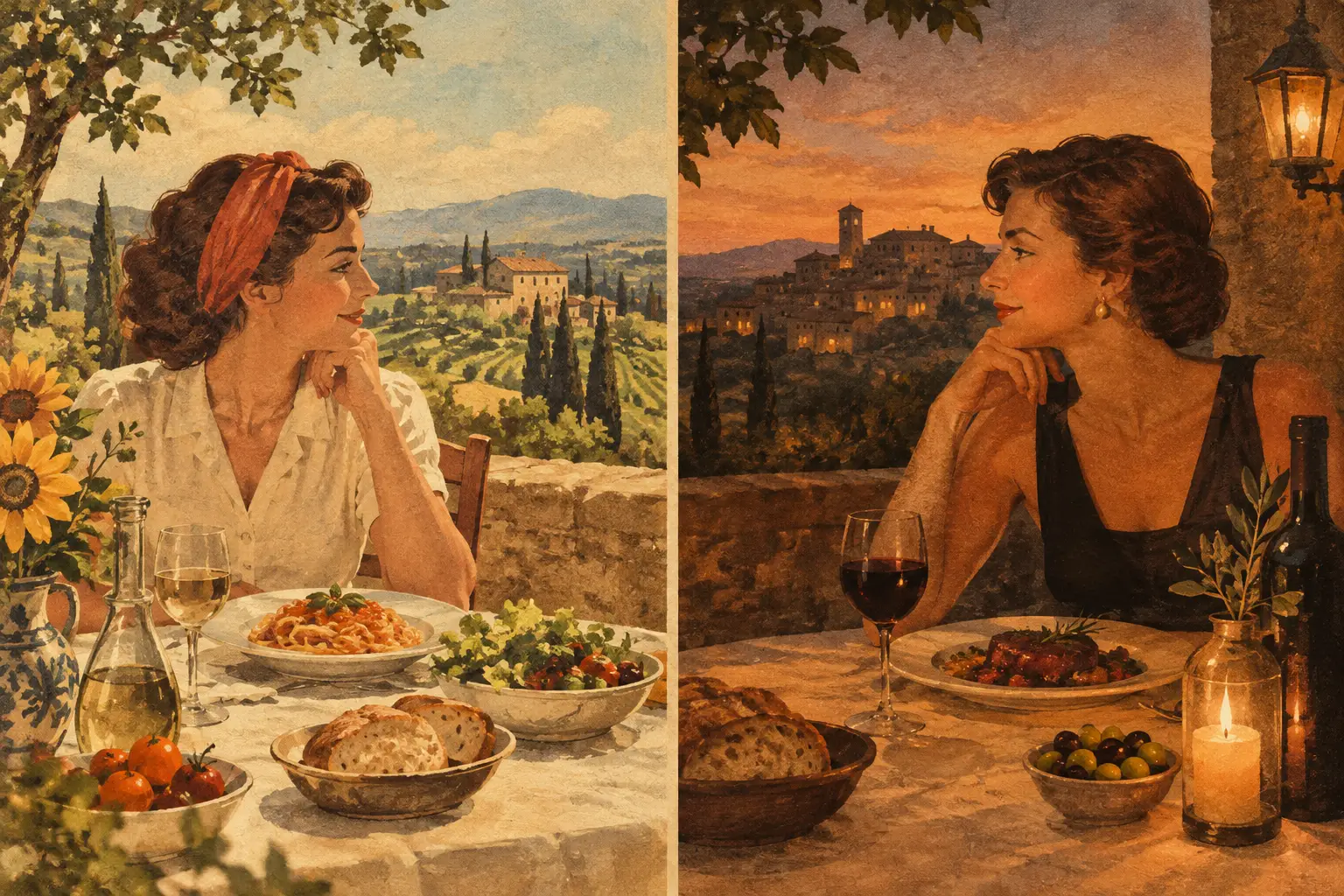
By A table in Tuscany changes character with the light. At noon, the landscape feels open and unhurried, inviting a pause between a morning in Volterra and an afternoon among olive groves. After sunset, candles, wine and the scent of slow-cooked dishes bring a different kind of pleasure. When considering Tuscan lunch vs dinner, there is no single right choice. The better meal is the one that suits the rhythm you want from your day.
For some guests, lunch is the most beautiful way to experience the countryside: relaxed, bright and full of possibility. For others, dinner is where Tuscany reveals its most generous side, with time for another glass, a longer conversation and flavours that deserve to linger. Both can be memorable. They simply ask different things of the day.
Tuscan lunch vs dinner: the feeling of each
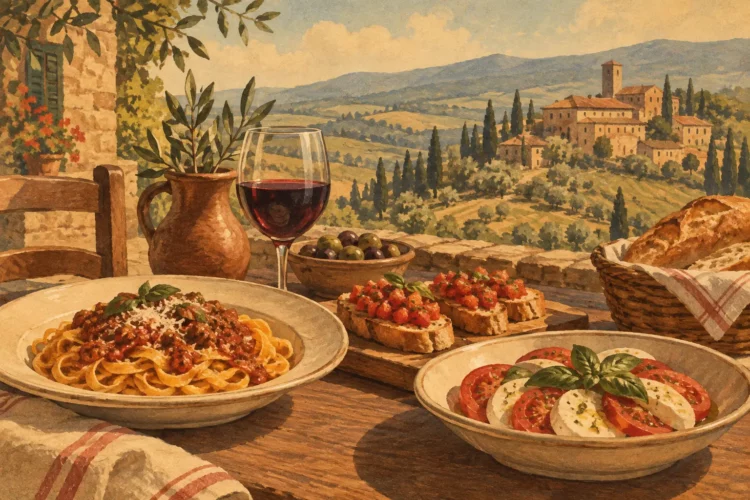
Lunch in Tuscany is often about arriving exactly as you are. Perhaps you have spent the morning walking through a hill town, visiting a vineyard or taking the scenic road without watching the clock too closely. A shaded table, cold water, a glass of local white wine and a plate made with the season’s best ingredients can feel like the most natural next step.
The mood is light, sociable and restorative. You may choose a fresh pasta, a crisp salad beside grilled vegetables, or a dish that carries the warmth of the kitchen without making the afternoon feel too heavy. Lunch leaves room for the rest of the day: a slow drive, a swim, a nap, or simply time to sit and look across the fields.
Dinner has a more ceremonial quality. It is the meal for changing out of the day, gathering the people you love and allowing the evening to unfold at its own pace. As the heat softens, the menu often feels richer and the table feels more intimate. A bowl of handmade pasta with wild boar ragù, beautifully cooked meat, a bottle of Tuscan red and a homemade dessert belong naturally to this hour.
Neither experience is more authentic than the other. Tuscany has always understood that eating well is not only about what is on the plate. It is also about season, company, appetite and time.
Why lunch can be the best choice
A Tuscan lunch is especially rewarding when your holiday plans are full but not rushed. It creates a generous break in the middle of the day, rather than a quick stop made necessary by hunger. You can settle into the table, taste local flavours and return to exploring feeling refreshed instead of hurried.
It also offers a particular relationship with the setting. In daylight, you notice the colours that make this part of Italy so loved: pale stone, deep green cypresses, silver olive leaves and wide skies over the hills. For families, lunch can be the easier occasion too. Children are usually at their best earlier in the day, and a long meal need not run into bedtime.
There is a practical advantage for travellers as well. A satisfying lunch makes it easier to keep dinner simple later on, perhaps with an aperitivo and a lighter bite. This can be ideal after a substantial breakfast or when you want to enjoy several restaurants during your stay without turning every evening into a very late night.
That said, midday dining is not automatically the lighter option. Tuscan cooking is rooted in generosity, and a traditional lunch can be wonderfully abundant. If you are planning a long walk, a tasting or a drive afterwards, choose according to your appetite. A shared starter, one course and a glass of wine may be all you need to make lunch feel complete.
Choose lunch if you want to keep the day open
Lunch suits guests who enjoy a sunlit table, a leisurely pause and the freedom to follow the afternoon wherever it leads. It is also a lovely choice for marking the beginning of a holiday, when everyone has arrived with energy and curiosity.
At Osteria Etrusca, the day’s menu can turn that pause into part of the destination itself: Italian coffee, fresh baking, regional dishes and the quiet pleasure of eating close to nature. When the view is as generous as the table, lunch becomes more than a stop between plans.
Why dinner feels like an occasion
Dinner gives Tuscan hospitality room to breathe. You are no longer checking the map or deciding what to do next. The day has already offered its adventures, and the evening asks only that you sit down and enjoy what is in front of you.
This is when deeper, slower flavours often feel most at home. Wild game, braised meats, rich sauces, aged cheeses and desserts made in-house invite a little more attention. A red wine chosen for the table can develop across the courses, and conversation gains a softness that rarely arrives at a hurried meal.
For couples, dinner is naturally romantic without needing to be formal. The countryside does much of the work: fading light, warm air and the gentle quiet that arrives once the daytime visitors have gone. For groups of friends, it becomes a chance to recount the day’s discoveries and make plans that may never need to happen.
Dinner is also the right choice when food is one of the main reasons for your visit. If you have been looking forward to a particular pasta or local meat dish, give it the time it deserves. Start with an aperitivo, order with care and leave space for dessert. The pleasure is not only in finishing the meal, but in having nowhere else to be.
Choose dinner if the meal is the evening’s main event
Dinner works beautifully after a relaxed day, particularly if you want a fuller expression of regional cooking and local wine. It is best reserved for evenings when you can arrive without pressure and let the table set the pace.
The trade-off is simple: a long dinner can make an early start the next morning less appealing, especially with young children or a full itinerary. If you are travelling with a family, an earlier reservation often gives you the best of both worlds: the atmosphere of evening, with enough time to return comfortably.
What to order at each meal
The boundary between lunch and dinner is gentler in Tuscany than many visitors expect. A plate of pasta is welcome at either meal, as are seasonal vegetables, antipasti and good bread. The difference is less about rules than appetite and occasion.
At lunch, dishes with brightness and ease often shine. Think fresh pasta with a simple sauce, grilled vegetables, tomatoes in season, salads with local olive oil, or a lightly chilled white or rosé. This is not a demand for restraint. It is an invitation to eat in a way that leaves you comfortable under the afternoon sun.
At dinner, the menu can lean into depth. Pasta with game, roasted or grilled meat, slow-cooked sauces and fuller-bodied reds feel particularly satisfying as the temperature drops. A shared dessert is a fine way to close the evening, especially when it comes with coffee and the happy realisation that nobody at the table is ready to leave quite yet.
Of course, weather changes the calculation. A cool spring afternoon may call for a warming ragù at lunch, while a hot summer evening may make a plate of vegetables, pasta and chilled wine feel exactly right. Follow the season rather than a fixed idea of what lunch or dinner should be.
How to plan around your Tuscan day
If your day centres on sightseeing, book lunch when you want a proper pause and dinner when you would rather stay flexible until sunset. If you are visiting wineries, be mindful of the pace: a generous vineyard lunch followed by a substantial dinner may be more than you truly want. In that case, make one meal the occasion and let the other be simple.
For a special anniversary, a birthday or the final night of a holiday, dinner usually carries more theatre. For a multigenerational family gathering, lunch can be easier and every bit as joyful. And if you have the time, the finest answer to Tuscan lunch vs dinner may be to experience both on different days. Each reveals a different face of the same generous culture.
Let hunger guide you, but let the landscape have a say too. A midday table under a bright Tuscan sky and an evening table as the hills grow quiet are not competing experiences. They are two beautiful reasons to stay a little longer.