 By
By The best Tuscan evenings rarely begin when dinner is served. They begin earlier, when the heat eases from the stone, the first glasses arrive at the table, and nobody feels the need to hurry. If you are wondering how to enjoy aperitivo before dinner, think of it less as a drink and more as a gentle change of pace: a moment to arrive, talk, taste and let the landscape set the rhythm.
Aperitivo is one of Italy’s simplest pleasures, yet it carries a quiet etiquette. It is not meant to replace dinner, nor is it an excuse to drink without attention. It is the small, sociable space between the day you have had and the meal you are about to enjoy.
What aperitivo is really for
Traditionally, aperitivo is taken before dinner to awaken the appetite. The word comes from the Italian aprire, meaning “to open”, and that is precisely its purpose. A lightly bitter, sparkling or herbaceous drink prepares the palate, while a few small bites keep hunger pleasant rather than pressing.
In Tuscany, the ritual feels particularly at home. Dinner is often enjoyed later than visitors expect, especially in summer, when the evening air becomes more inviting after seven. Aperitivo gives friends, couples and families a reason to gather before the table is laid in earnest. It makes waiting part of the pleasure.
The key is proportion. You want enough to feel cared for, not so much that a plate of handmade pasta, grilled meat or a warm dessert loses its appeal. A good aperitivo leaves you looking forward to dinner.
How to enjoy aperitivo before dinner without overdoing it
Start about an hour before your dinner reservation, or a little earlier if you are somewhere you genuinely want to linger. On a warm evening, choose a shaded table first, then move with the light if the setting allows. The point is not to race through a familiar order. Take a few minutes to notice the temperature, the view, the scent of rosemary or olive trees, and the company beside you.
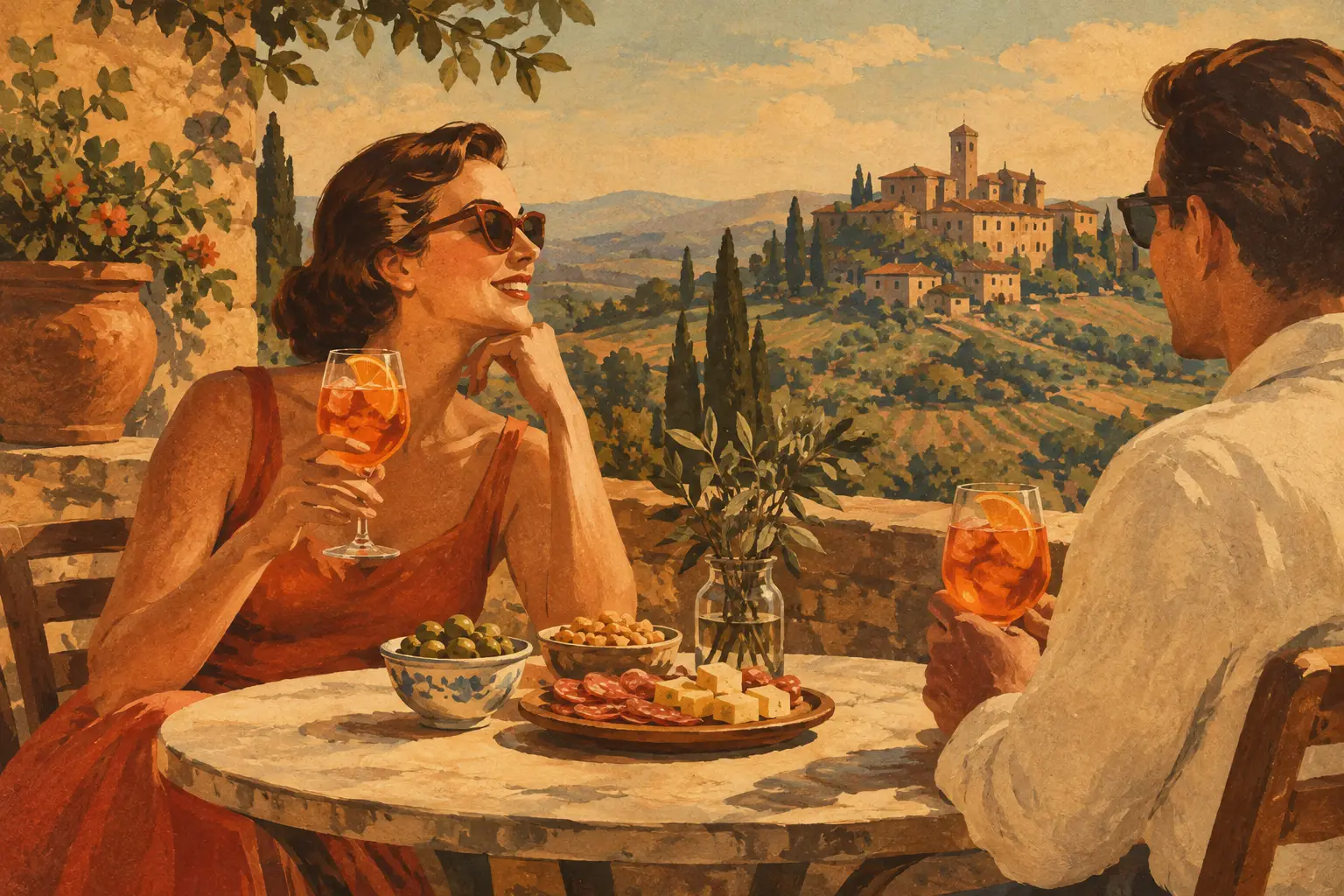
Choose one drink and let it last. A classic spritz is popular for good reason: its gentle bitterness, bubbles and citrus work beautifully before food. But it is not the only right choice. A glass of chilled local white wine can be elegant with lighter snacks, while a vermouth-based drink suits those who enjoy botanical, more savoury notes. If you prefer little or no alcohol, sparkling water with citrus, a house-made cordial or a bitter non-alcoholic aperitivo can still give the occasion its proper shape.
What matters is balance. Very sweet cocktails can make the first courses seem less vivid, while strong spirits may feel heavy before a long dinner. If you have spent the afternoon walking through Volterra, driving country roads or sitting in the sun, begin with water as well. Hydration is not a dull practical detail in Tuscany – it is what lets you enjoy the evening properly.
Let the small bites stay small
Aperitivo food should invite another sip, not make you full. Think of toasted bread with good olive oil, pecorino, olives, thin slices of cured meat, roasted vegetables or a small bowl of salted almonds. Each element should have a clear flavour and a reason to be there.
There is a difference between an aperitivo and a buffet that becomes dinner by accident. If your evening meal will be generous, ask for a modest selection to share. Two people may be perfectly happy with one or two plates alongside their drinks. A family with children might choose a little more, particularly if the younger guests need something before a later supper.
This is also where local ingredients make the ritual memorable. The peppery warmth of Tuscan olive oil, the salt of pecorino, a ripe tomato on grilled bread, or salumi cut just before serving can say more about a place than a complicated cocktail ever could. Let the ingredients do the talking.
Choose the setting as carefully as the drink
Aperitivo tastes different when it belongs to the place. A busy city bar can be lively and fun, but Tuscany offers another kind of pleasure: room to breathe, a slower horizon and the soft sounds of an evening settling into the countryside.
If you are choosing where to stop, look for somewhere with an unforced atmosphere. The best table is not necessarily the most formal one. It may be at the edge of a terrace, where you can watch the colour shift across the hills, or beneath a pergola where the air stays cool. A beautiful setting should not feel like a backdrop for a photograph alone. It should make conversation easier and time less noticeable.
At Osteria Etrusca, a large Tuscan patio gives aperitivo the space it deserves: a chance to sit back before dinner, rather than waiting restlessly for it. That sense of openness is especially welcome after a day of sightseeing, when you want the evening to feel like a continuation of the landscape rather than a sharp break from it.
Match your aperitivo to the dinner ahead
A little planning makes the whole meal more satisfying. If you know you will order rich ragù, wild boar pasta or roasted meats, keep your aperitivo fresh and restrained. A dry sparkling drink, light vermouth or crisp white wine will refresh the palate without competing with what follows.
If dinner will be based around vegetables, fish or lighter pasta, you can be slightly more playful. A citrus-led spritz or a chilled rosé may sit comfortably with the meal to come. There are no rigid rules, though. Personal taste matters, and a favourite drink shared in the right company is often better than a theoretically perfect pairing.
For wine lovers, aperitivo is also a good time to ask a simple question rather than trying to decode a long list alone: what is drinking well locally today? A thoughtful recommendation can introduce you to a lesser-known Tuscan white, a fresh sparkling wine or a distinctive vermouth that reflects the region’s herbs and fruit.
Make room for conversation
The real luxury of aperitivo is not the glass. It is permission to be unproductive for a while. Put phones aside after the first photograph, if you take one at all. Ask about the day. Watch children choose their favourite olive. Let a silence happen without filling it.
For couples, aperitivo can be the most intimate part of the evening because there is no rush to order courses or make decisions. For friends, it creates a natural gathering point before dinner. For families, it gives everyone a softer landing after a day out, especially when children are offered something simple and familiar alongside the grown-ups’ drinks.
That relaxed feeling depends on not treating the ritual as a task to complete. Avoid ordering in a panic because you are starving. Avoid arriving so late that you must finish in ten minutes. And resist the temptation to turn every aperitivo into a procession of cocktails. One considered drink, good water, a few regional bites and unhurried company are enough.
The timing that makes an evening feel Italian
In high summer, aperitivo often feels best between roughly 18:30 and 20:00, before dinner begins later in the evening. In cooler months, the hour may come earlier, perhaps by a fire, beneath covered seating or in a warmly lit dining room. The tradition is flexible because it follows the day, the weather and the people at the table.
If you are travelling, allow an aperitivo to become part of your plans rather than an optional extra. Schedule less for the hour before dinner. Leave the museum shop, the final scenic drive or the return to your accommodation for another time. A rushed aperitivo is still pleasant, but it misses the small transformation that makes the ritual special: the moment when you stop being a visitor ticking off a day and become a guest settling into the evening.
There is no need to perform Italian habits perfectly. Order what you enjoy, taste what is local, and follow the pace of the table. As the last light rests on the hills and dinner draws near, let your aperitivo do what it has always done best: make the next course feel worth waiting for.