 By
By The first decision of an Italian morning is not simply what to eat. It is how you would like the day to begin: standing at a bar with a fragrant espresso, lingering over warm pastry in the sun, or gathering around a table where local bread, fruit and savoury flavours make breakfast feel like part of the holiday itself. Knowing how to choose a regional Italian breakfast helps you move beyond the familiar image of coffee and a cornetto, and towards a meal that belongs to the place you are visiting.
Italy does not have one fixed breakfast tradition. Its regions bring their own ingredients, rhythms and small rituals to the table. In Tuscany, that often means restraint, good produce and the pleasure of eating slowly when there is time. The best choice is not always the largest breakfast. It is the one that suits your appetite, your plans and the landscape around you.
Start with the rhythm of your morning
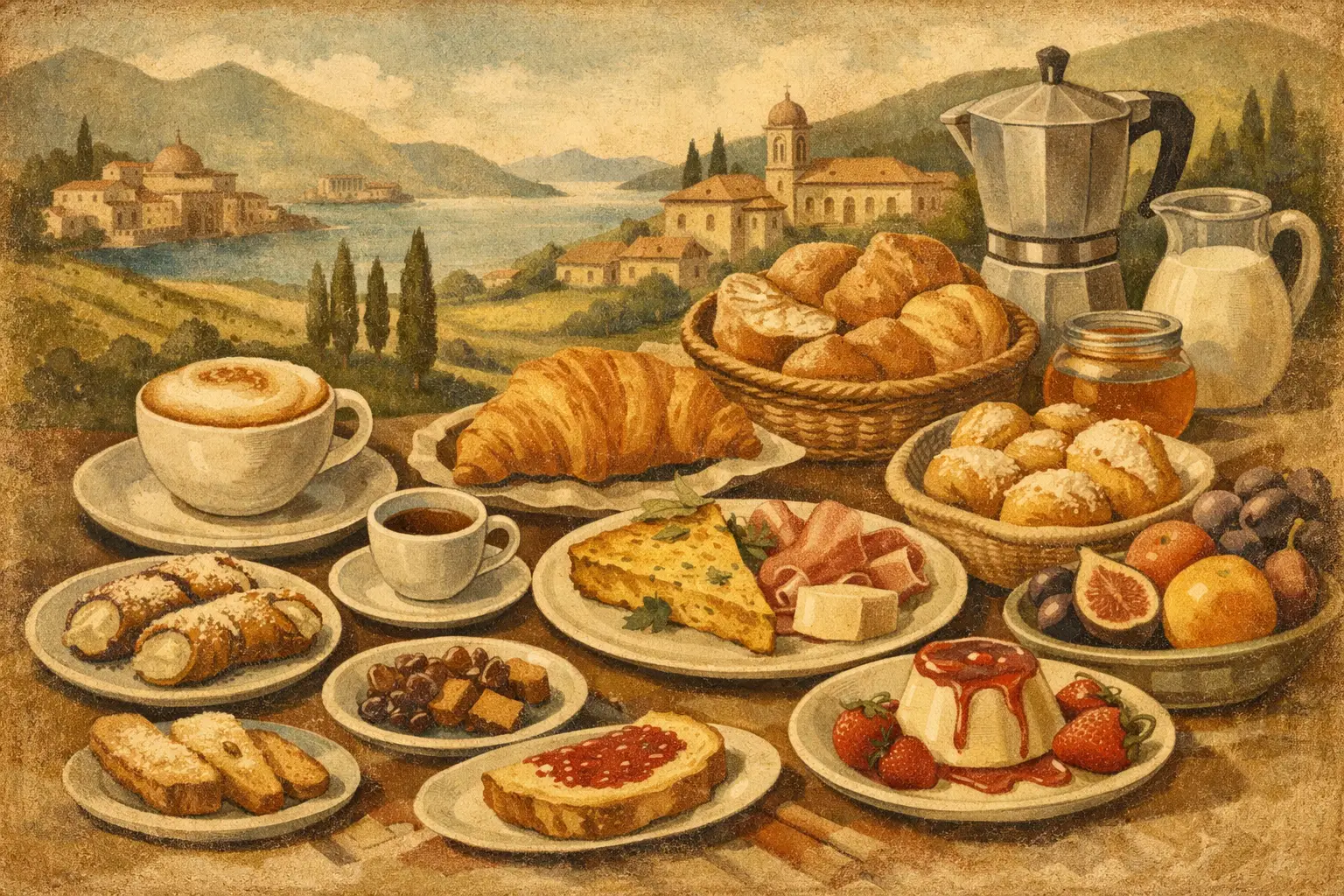
A quick breakfast is a genuine Italian custom, not a compromise. If you are leaving early for a drive through the hills, a walk, or a morning in Volterra, an espresso or cappuccino with a freshly baked cornetto can be exactly right. The pastry may be plain, filled with custard, jam or chocolate, and it should feel light enough to leave room for lunch.
Choose this style when you want to eat as locals often do: simply, standing or sitting briefly, with the focus on excellent coffee and a pastry still warm from the oven. It is especially satisfying after an unhurried evening meal, when a full breakfast would feel excessive.
A slower morning calls for a different approach. If the view is wide, the air is still cool and there is nowhere urgent to be, choose a table breakfast built around several small pleasures. Fresh bread, local preserves, yoghurt, seasonal fruit, eggs or cheese can turn a practical meal into a gentle beginning to the day. For families, this is often the more comfortable choice, giving everyone time to wake up in their own way.
How to choose a regional Italian breakfast by place
Regional breakfast is less about following a strict menu than recognising what grows, bakes and tastes natural in the area. Look first for products that tell you where you are. A breakfast that could be served anywhere is convenient; one made with local ingredients is more memorable.
In Tuscany, favour simplicity with character
Tuscan food is often at its best when it does not ask to be overexplained. Seek out crusty bread, good olive oil, honey, fruit in season and cakes or biscuits made for dipping into coffee. A slice of homemade tart with jam, known in many Italian homes as crostata, offers a quieter sweetness than a towering continental buffet.
Savoury choices also have a place, particularly when breakfast stretches towards brunch. Pecorino, cured meats in modest portions, eggs and tomato can suit guests who prefer a more substantial start. The trade-off is simple: a savoury breakfast will carry you further into a day of exploring, but it may make a long Tuscan lunch less tempting. Let the pace of your day decide.
Coffee deserves equal attention. A cappuccino in the morning is entirely natural in Italy, while espresso is the concise choice at any hour. If you prefer a softer, longer drink, ask for caffè latte or latte macchiato rather than assuming the menu follows British coffee-shop habits. The pleasure lies in taking it as it comes, alongside food made with care.
Let the season choose with you
The most regional ingredient is often the one available only for a short while. In summer, ripe peaches, melons, figs and berries bring freshness to the table. Autumn may bring grapes, apples, pears and the first nuts of the season. Spring calls for strawberries and lighter cakes, while winter invites citrus fruit, richer bakes and a slower second coffee.
This is why fruit matters more than decoration. A bowl of fruit that has travelled little and ripened properly can be the most luxurious part of breakfast. When choosing between an elaborate imported option and a modest local one, the local choice usually carries more flavour and more sense of place.
Read the breakfast menu with confidence
A menu full of Italian words need not be intimidating. Cornetto is the classic breakfast pastry, similar in shape to a croissant but often softer and sweeter. Brioche can describe a richer, pillowy baked item, depending on the region. Focaccia is a savoury flatbread that may appear plain, with herbs, or filled for those wanting something more substantial.
Do not expect every morning menu to include a large cooked breakfast. That is not an omission. Italian breakfast culture traditionally values quality over quantity, and many restaurants now offer broader choices for guests who enjoy a leisurely start. The most appealing menus balance both worlds: a simple coffee-and-pastry option for early risers, alongside fresh and satisfying plates for those staying awhile.
When in doubt, choose one baked item, one fresh element and one drink. A cornetto, seasonal fruit and cappuccino is light but complete. Bread with local honey, yoghurt and coffee feels calm and nourishing. Eggs with bread, fruit and espresso gives you more energy without turning breakfast into a heavy occasion.
Match the breakfast to your appetite, not a rule
There is no prize for eating breakfast exactly as an Italian might, especially when you are on holiday. If you need a substantial meal before a long walk, choose it. If you prefer something sweet, enjoy it without trying to turn it into a lesson in authenticity. The aim is to find the balance between local character and your own comfort.
Those travelling with children may find that variety matters more than tradition alone. Fresh pastries, fruit, yoghurt, bread and eggs offer familiar choices without losing the Italian spirit. For a couple enjoying a quiet escape, a shared table of small dishes can feel more romantic than two identical plates, particularly when there is time to sit outside and watch the countryside wake.
Dietary needs deserve the same ease. Gluten-free, vegetarian or dairy-free preferences can be accommodated more thoughtfully when you communicate them clearly. Rather than trying to recreate a standard breakfast from home, ask for the best available combination of regional ingredients. Fruit, eggs, vegetables, olive oil, local jams and naturally gluten-free dishes can make a beautiful meal without forcing the kitchen into a poor imitation.
Look for signs of a breakfast worth lingering over
The most promising breakfast is usually revealed in small details. Pastries are baked close to service rather than displayed all morning. Coffee is prepared attentively. Bread has a proper crust and flavour. Jams taste of fruit rather than only sugar. The menu changes a little with the season, because the kitchen has something real to respond to.
Atmosphere matters, too. A regional breakfast is not only a list of ingredients. It is the sound of cups being set down, the scent of coffee, a table warmed by early sunlight and the space to speak without being rushed. At Osteria Etrusca, a morning on Tuscany’s largest patio, with its open views, can make even a simple pastry and coffee feel like a proper pause from ordinary life.
Price can be a useful clue, but it is not the whole story. A very cheap breakfast may suit a hurried day, while a higher-priced table may reflect handmade baking, local produce and a setting designed for lingering. Consider what you are buying: not just calories before noon, but a moment of the journey you may remember long after it ends.
Choose the breakfast that leaves room for pleasure
The finest regional Italian breakfast does not need to be extravagant. It should taste fresh, feel appropriate to the morning and offer a small connection to the region beneath your feet. Let a warm cornetto be enough on one day. On another, choose bread, fruit, cheese and coffee slowly enjoyed beneath a Tuscan sky. Leave a little appetite for what comes next, but never rush past the pleasure already on the table.