 By
By The sweet course in Tuscany is rarely about excess. It is more often a final, unhurried gesture: a small slice shared at the table, a biscuit dipped in wine, the perfume of citrus and almonds lingering as evening settles over the hills. This traditional Tuscan desserts guide introduces the recipes worth seeking out, and the simple rituals that make them taste even better on holiday.
Tuscan sweets reflect the region itself. They are shaped by chestnut forests, olive groves, vineyards, convent kitchens and family tables where good ingredients need little decoration. Expect nuts, dried fruit, honey, vin santo, ricotta and seasonal fruit rather than towering layers of cream. That restraint is part of their charm.
Traditional Tuscan Desserts Guide: What Makes Them Different?
A dessert from Tuscany often begins with something humble. Chestnut flour was once a vital pantry staple in the Apennines. Stale bread found a second life in puddings and cakes. Grapes became wine, then vin santo, and almonds became the crisp biscuits made for dipping into it. These are dishes born from thrift, seasonality and a quiet confidence in local produce.
There is also a difference between what visitors expect and what Tuscan families may actually eat. Tiramisu and panna cotta are familiar Italian favourites, but neither tells the specific story of this region in quite the same way as cantucci, castagnaccio or schiacciata alla fiorentina. Choosing a regional sweet is a small way to get closer to the place you have come to see.
The best moment to order one depends on the dessert. A chilled ricotta tart is lovely after a summer lunch. Dense panforte belongs naturally to cooler days and festive tables. Cantucci with vin santo can be dessert, a late-night conversation companion, or both.
Cantucci and Vin Santo: Tuscany’s Classic Pairing
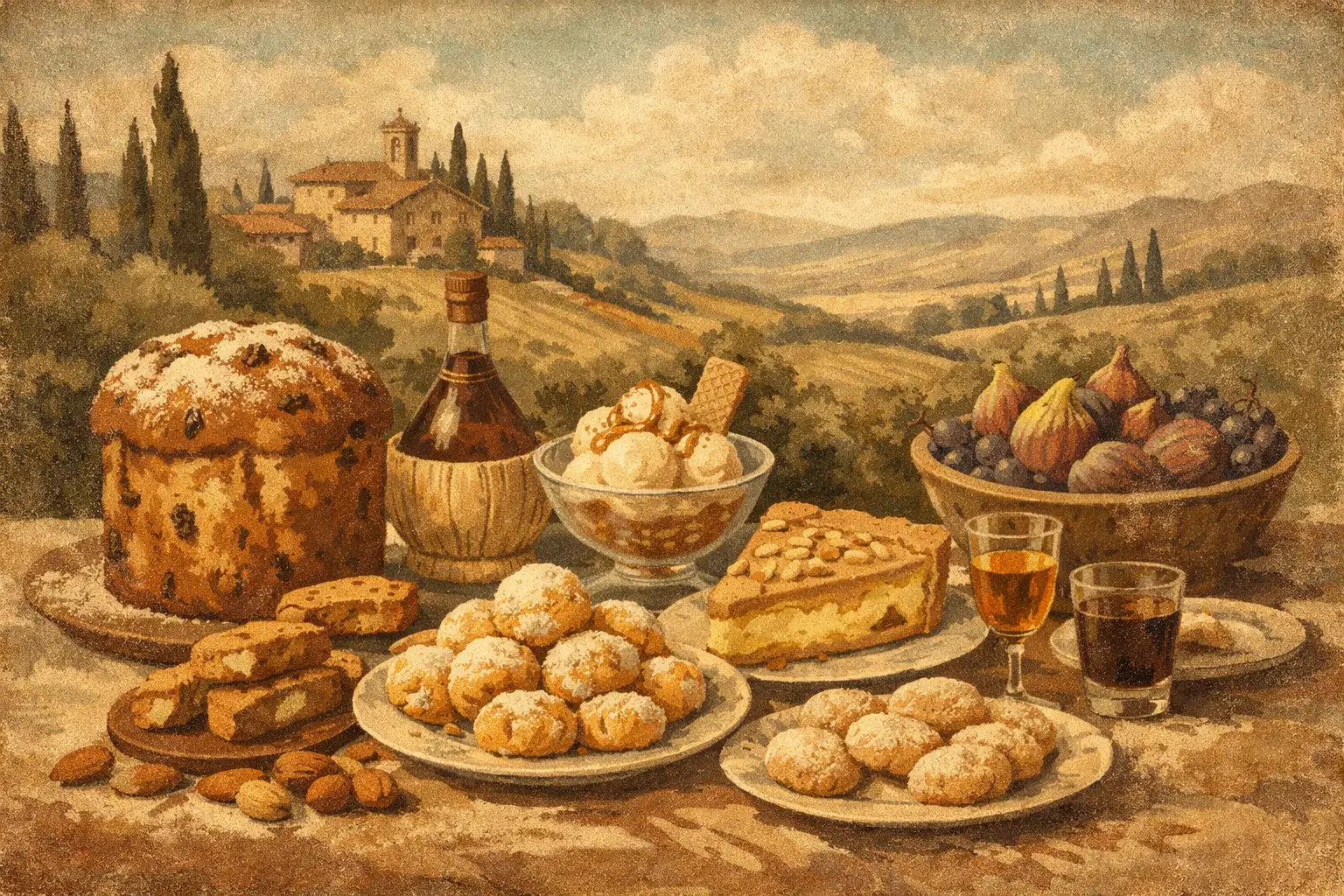
Cantucci are perhaps Tuscany’s most recognisable biscuits: twice-baked, firm and generously studded with whole almonds. Around Florence and Prato, where they are especially associated, they are traditionally served with a small glass of vin santo, the region’s golden, gently sweet dessert wine.
The pleasure lies in the contrast. The biscuit is dry and crunchy; the wine is fragrant, rounded and warming. Dip a cantuccio briefly, rather than leaving it to collapse in the glass. It should soften at the edges while retaining enough bite to enjoy the almonds.
Recipes vary, and that is worth celebrating. Some cantucci are more delicate and buttery, while others are rustic, deeply toasted and packed with nuts. You may also come across versions with hazelnuts, pistachios or chocolate, but almond remains the reference point. After a long Tuscan supper, this pairing feels beautifully complete without being heavy.
Panforte: Siena’s Dark, Spiced Celebration
Panforte is a dense, chewy confection from Siena, made with nuts, candied citrus peel, spices and honey. Its name means “strong bread”, though its texture and flavour are closer to a luxurious fruit-and-nut sweet than a loaf. A thin slice is usually enough, particularly after a generous meal.
Traditionally associated with Christmas, panforte is sold throughout the year and makes a thoughtful edible reminder of Tuscany. The classic dark style has a rich, almost peppery depth, while panforte margherita is lighter in colour, often dusted with icing sugar and scented with gentler spices.
It rewards a slow tasting. Notice the citrus first, then the honey, almonds and warm spice. Serve it with coffee if you prefer a clear contrast, or with a small pour of vin santo for a more indulgent finish. If you dislike candied peel, panforte may not be your first choice. For many others, that bright, bittersweet note is exactly what makes it memorable.
Ricciarelli: The Softer Side of Siena
Also from Siena, ricciarelli are soft almond biscuits with a crackled coat of icing sugar. Their interior is tender and slightly chewy, with a floral almond flavour that feels refined without being fussy. The traditional shape is gently oval, and the surface often breaks into delicate creases as the biscuits bake.
They are especially popular at Christmas, but a good ricciarello is welcome at any time of year alongside espresso or tea. They are a fine choice for guests who want something sweet but modest after lunch, or for children who might find vin santo and dense fruit desserts less appealing.
Castagnaccio: The Taste of Tuscan Autumn
Castagnaccio is one of Tuscany’s most distinctive desserts, though it does not taste like a conventional cake. Made primarily from chestnut flour, water, olive oil, pine nuts and raisins, it is low, dark and gently savoury-sweet. Rosemary is often scattered over the top, bringing a fragrant, woodland quality to every slice.
Its texture can surprise first-time visitors. It is moist and dense rather than light and airy, with the earthy sweetness of chestnuts at the centre. That is precisely why it belongs to the Tuscan table. It tastes of mountain villages, cool weather and ingredients gathered close to home.
Seek out castagnaccio in autumn and winter, when chestnut flour is at its most evocative. It is often served plain, though some cooks add orange zest or walnuts. A spoonful of fresh ricotta beside it can soften the intensity, while a glass of new wine makes a more rustic pairing than vin santo.
Schiacciata alla Fiorentina: A Light, Citrus-Scented Treat
Despite the name, schiacciata alla fiorentina is not the savoury flatbread that many travellers know. This is Florence’s sweet Carnival cake: a soft, square sponge scented with orange, lightly flavoured with saffron and finished with a generous dusting of icing sugar. Traditionally, the fleur-de-lis of Florence is stencilled on top in cocoa.
It is a joyful dessert, airy rather than rich, and particularly good in late winter when citrus brings brightness to the table. Some versions are filled with whipped cream or custard, although a simple slice has its own appeal. The plain style allows the orange and saffron to speak clearly.
If you see it in a bakery during Carnival season, buy it for an afternoon pause rather than saving it for after dinner. Tuscany has a strong culture of enjoying sweet things with coffee, and not every dessert needs to wait for the final course.
Torta della Nonna and the Comfort of Home Baking
Torta della nonna, or grandmother’s cake, appears across much of central Italy but has a cherished place in Tuscan pastry counters and family kitchens. Beneath its crisp pastry lid sits a lemon-scented custard, topped with pine nuts and icing sugar. It is familiar, comforting and easy to love.
The quality depends on balance. The pastry should be delicate rather than thick, the custard creamy without becoming overly sweet, and the pine nuts toasted enough to offer their buttery flavour. It is often served as a generous wedge, making it ideal for sharing at a leisurely table.
This is a dessert for all seasons, though it is especially lovely in spring, when its lemon notes feel fresh and its pale, golden appearance suits a table set in the sunshine. Pair it with espresso, or simply enjoy it as it is.
Other Tuscan Sweets Worth Ordering
A few regional specialities deserve attention whenever they appear on a menu or bakery counter. Buccellato, a ring-shaped sweet bread from Lucca, is enriched with raisins and aniseed and is excellent for breakfast or an afternoon coffee. Zuccotto, associated with Florence, is a domed chilled dessert made with sponge, ricotta or cream, and often cocoa, chocolate or candied fruit. It is more celebratory than many rustic Tuscan sweets, but still rooted in local tradition.
In grape harvest season, look for schiacciata con l’uva. This sweet focaccia is baked with wine grapes, olive oil, sugar and sometimes rosemary. The grapes burst in the heat and stain the dough purple, creating a dessert that tastes unmistakably of September. It may be served warm, at room temperature or packed for a picnic.
Then there is cenci, the crisp, ribbon-like fried pastry enjoyed during Carnival. Lightly dusted with sugar, they are best eaten on the day they are made, ideally while still faintly warm. They are a reminder that Tuscany’s sweetest pleasures are often fleeting and seasonal.
How to Enjoy Tuscan Desserts Like a Guest, Not a Tourist
There is no need to order the largest or richest dessert on the menu. A traditional Tuscan meal often ends more gracefully with one sweet shared between two people, especially after pasta, meat or a long lunch. Ask whether a dessert is made in-house and whether it reflects the season. Those two questions usually lead to the most rewarding choice.
At Osteria Etrusca, a homemade dessert after dinner can be part of the evening’s gentlest pause: coffee on the table, local wine in the glass, and the landscape beyond the patio beginning to soften into dusk. The setting matters because Tuscan food has always been about more than the plate.
Leave room for the sweet course, but do not rush towards it. A crisp cantuccio, a slice of chestnut cake or a spoonful of lemon custard tastes different when it arrives at the end of a table full of conversation. That is the real Tuscan recipe: good ingredients, the right season and time enough to enjoy both.