 By
By A plate of pappardelle with wild boar ragù tells you more about Tuscany than a postcard ever could. The region’s most memorable meals are often built around patience, fire, countryside ingredients and recipes that were never designed to impress at first glance, only to satisfy deeply. That is the heart of traditional Tuscan meat dishes – honest food with intensity, restraint and a strong sense of place.
Tuscany’s meat cookery is shaped by land rather than fashion. Hills, woods, farms and hunting traditions all play their part, which is why the menu changes subtly from one area to the next. Near Volterra and across the wider region, you find dishes that respect the animal, use simple seasoning, and rely on time to do the work.
What makes traditional Tuscan meat dishes distinct
Tuscan cooking has a reputation for simplicity, but simple does not mean plain. In meat dishes especially, the approach is deliberate. Herbs such as rosemary, sage and bay are used with confidence, yet rarely in a way that masks the flavour of the meat itself. Olive oil, wine, juniper, black pepper and soffritto appear often, but the balance remains grounded.
Another defining trait is texture. Many traditional Tuscan meat dishes are slow-cooked until richly yielding, whether that means a ragù clinging to broad ribbons of pasta or a braised cut softened over several hours. Grilled meats also have a place, of course, but even then the preparation tends to be minimal, allowing quality and provenance to carry the dish.
There is also a practical elegance to the cuisine. Tuscany has long made beautiful use of what was available locally, including lesser-known cuts and game. That resourcefulness is part of the charm. The result is food that feels generous rather than showy.
The traditional Tuscan meat dishes visitors remember most
Pappardelle al cinghiale
If one dish captures the wooded soul of inland Tuscany, it is pappardelle al cinghiale. Wild boar ragù is deep, earthy and slightly sweet from the long-cooked soffritto and wine, while the wide pasta is made to carry every bit of the sauce. This is not a delicate dish, nor should it be. It is warming, fragrant and full of the landscape.
The flavour can vary depending on the kitchen. Some versions lean more heavily on tomato, while others allow the wine, herbs and game to dominate. Neither is wrong. It depends on whether the aim is softness and roundness or a more rustic, woodland edge.
Peposo
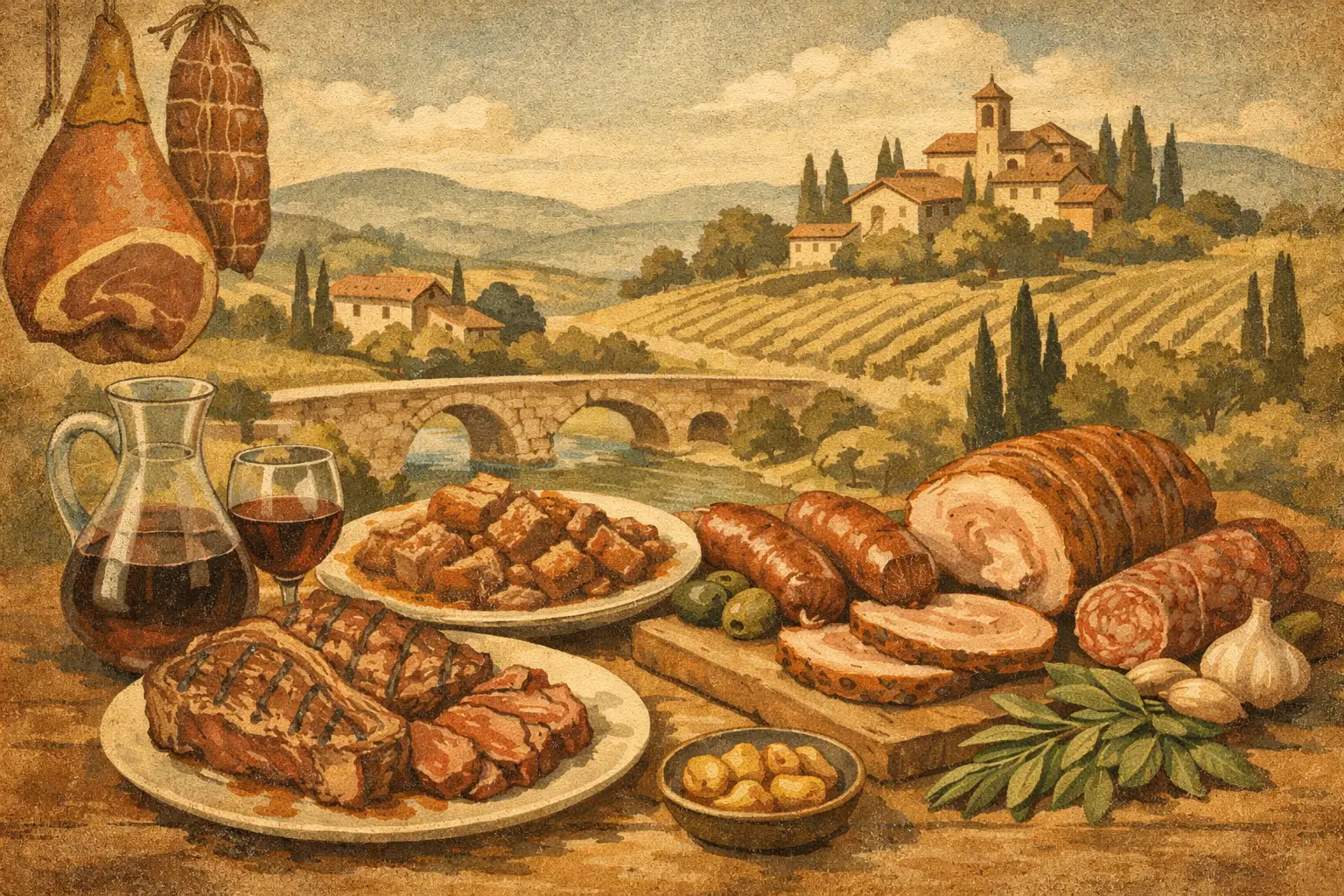
Peposo is one of those Tuscan dishes that proves how a few ingredients can become something unforgettable. Traditionally made with beef, black pepper, garlic and red wine, it is cooked slowly until the meat collapses into a dark, spoonable stew. The pepper is not there for heat alone. It creates warmth and depth, especially when rounded by the wine.
This is a dish for cooler evenings, long lunches and tables where nobody is in a hurry. Served with bread or soft polenta, it feels at once humble and ceremonial.
Bistecca alla Fiorentina
No discussion of Tuscan meat can avoid the bistecca alla Fiorentina. Cut thick, cooked briefly over high heat and served rare, it depends on excellent beef and confidence in the process. There is nowhere to hide here. The seasoning is usually little more than salt, pepper and olive oil after cooking.
That simplicity is exactly the point. When done well, the crust is smoky and savoury while the centre remains tender and full of character. It is best shared, not only because of its size but because it suits the Tuscan habit of eating slowly, talking often and passing dishes across the table.
Arista di maiale
Arista is roasted pork loin, often scented with garlic, rosemary and fennel. It may sound straightforward, but that is part of its appeal. In a region where ingredients are trusted, a well-cooked pork roast can be every bit as expressive as a more elaborate preparation.
Served warm or at room temperature, arista works beautifully in a relaxed lunch setting. The meat should stay moist, the herbs should perfume rather than overwhelm, and the slices should invite another pour of wine and a second helping of contorni.
Coniglio in porchetta
Rabbit appears often in central Italian cooking, and in Tuscany it is sometimes prepared in porchetta style with fennel, garlic and herbs. The result is aromatic and surprisingly refined. Compared with beef stews or grilled steak, rabbit offers a gentler expression of Tuscan meat cookery, though it still carries that unmistakable rustic confidence.
For some visitors, rabbit is less familiar, which can make it either exciting or a little uncertain. That hesitation usually disappears after the first bite. When properly cooked, it is delicate, savoury and beautifully suited to the region’s herbal flavours.
Fegatelli and other traditional specialities
Tuscan cuisine does not avoid strong flavours. Fegatelli, small parcels of liver often wrapped or cooked with aromatic seasoning, belong to an older culinary tradition that values the whole animal. These dishes may not be every visitor’s first choice, but they matter because they speak clearly of local identity.
This is where Tuscany can be wonderfully uncompromising. Not every classic is designed for broad appeal. Some are there to preserve memory, family custom and regional pride.
Why game matters so much in Tuscan cooking
In many parts of Tuscany, wild game is not a novelty. It is woven into local food culture. Boar, hare and other countryside meats appear because the landscape has always provided them, and because generations of cooks learned how to transform bold flavours into balanced dishes.
Game brings a different rhythm to the table. It tends to pair naturally with slow cooking, darker sauces and fuller red wines. It also creates a stronger sense of season. A plate of wild boar in autumn or winter feels entirely different from a grilled meat dish on a summer afternoon.
For travellers seeking authenticity, this matters. Traditional Tuscan meat dishes are not interchangeable with generic Italian restaurant fare. Their identity comes from season, terrain and local habit. That is why the most memorable versions often appear in quieter places, away from hurried tourist menus.
How to choose the right dish for your appetite
Not every Tuscan meat dish suits every moment. If you are stopping for lunch and want something comforting without feeling too formal, pappardelle al cinghiale or arista can be ideal. If the evening calls for a more celebratory meal, bistecca alla Fiorentina has the theatre and generosity to anchor the table.
Peposo suits those who enjoy deep, slow-built flavour, while rabbit offers something lighter and more aromatic. Game dishes are often the right choice if you want to taste a more distinctly rural side of the region. If you prefer cleaner, more immediate flavours, grilled beef or roast pork may be the better fit.
It also depends on company. A large steak invites sharing and conversation. A ragù pasta can feel more personal and comforting. The pleasure of eating in Tuscany is that there is room for both.
The role of place in the experience
Food like this is inseparable from setting. Traditional Tuscan meat dishes taste different when eaten slowly, with open views, warm light and the kind of calm that lets the table linger. The countryside has a way of sharpening appetite and softening pace at the same time.
That is one reason these meals stay with people long after the journey ends. You may remember the pepper in the peposo or the richness of the boar ragù, but you also remember the air, the quiet, the stone, the cypress line in the distance. In a place such as Osteria Etrusca, where regional cooking meets the beauty of the surrounding landscape, that connection feels especially natural.
What to expect from an authentic version
Authenticity in Tuscany is rarely about decoration. A true dish may look modest at first. The depth reveals itself in the aroma, the cooking time, the quality of the meat and the sense that the recipe belongs exactly where you are eating it.
You should expect clarity of flavour rather than excess. Sauces are usually purposeful, not heavy for the sake of heaviness. Herbs should smell fresh and familiar. Meat should feel respected, whether served rare from the grill or slowly braised into tenderness.
The best approach is simple. Choose one or two dishes that suit the moment, order wine that belongs to the region, and give the meal time to unfold. In Tuscany, meat is rarely just the centre of the plate. It is part of a wider pleasure – of landscape, season and the quiet luxury of eating well without rushing.