 By
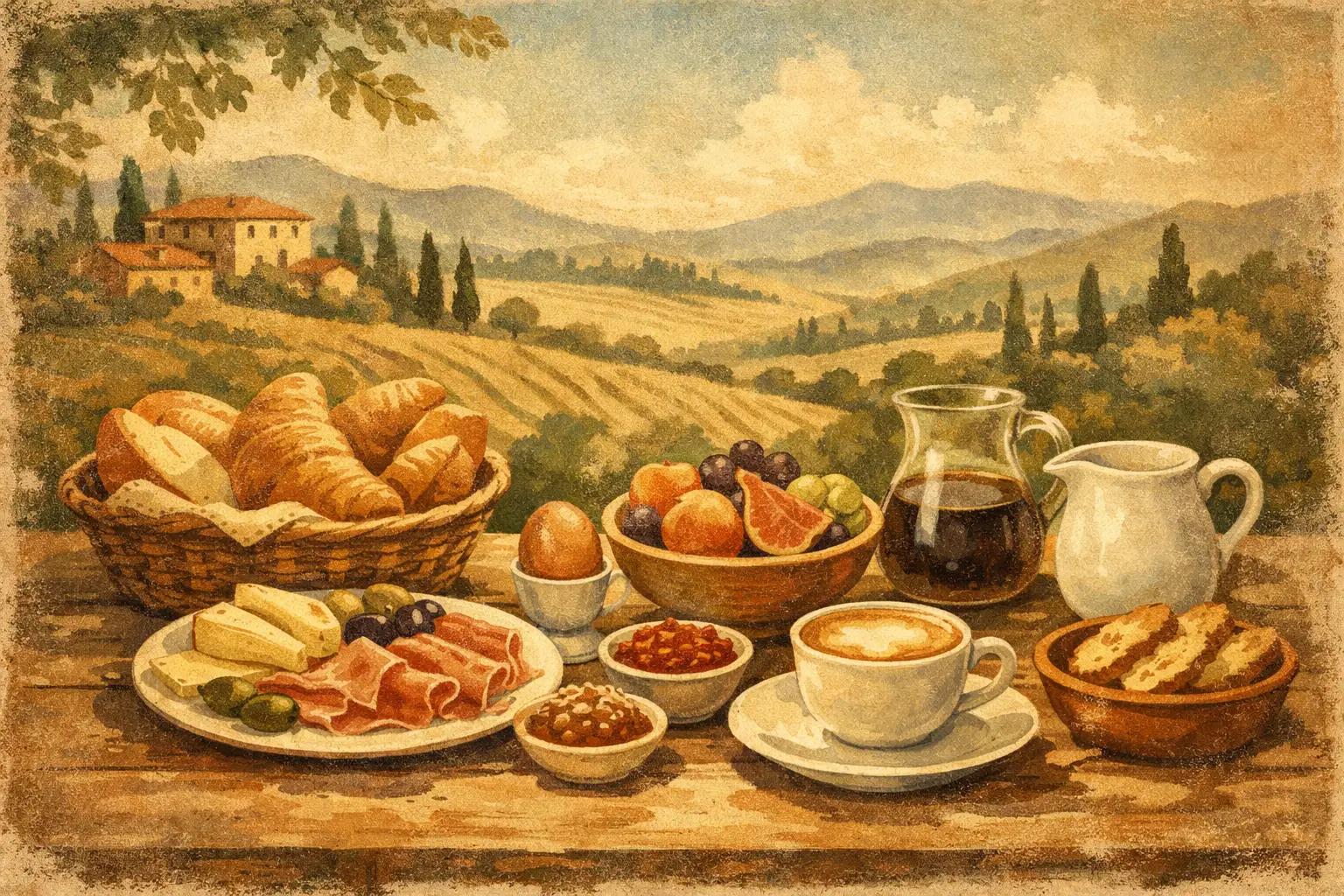
By The first sound of a Tuscan morning is often the hiss of the coffee machine, followed by the scent of warm pastry drifting across a quiet terrace. So, what is served in a Tuscan breakfast? Traditionally, it is a simple, sweet and deeply satisfying ritual: good coffee, a freshly baked cornetto, bread, cake or biscuits, and time enough to enjoy them.
For visitors expecting a large cooked hotel breakfast, the Italian approach can come as a surprise. In Tuscany, breakfast is rarely about abundance for its own sake. It is about quality, freshness and the pleasure of beginning the day gently, perhaps with cypress-covered hills in view and a plan to wander at an unhurried pace.
What is served in a Tuscan breakfast?
A classic Tuscan breakfast, or colazione, centres on coffee and something sweet. At a village bar, locals may stand at the counter for a quick espresso and pastry before work. At a countryside osteria or a relaxed holiday stay, the same ingredients are often served with more space, more choice and the luxury of sitting down together.
The essentials are fragrant Italian coffee, freshly baked pastries, bread with preserves or honey, and simple cakes or biscuits. Fruit, yoghurt, juices and savoury additions may also appear, especially where breakfast is designed for guests settling into a slower morning. The exact table changes with the season, the setting and the kitchen, but the spirit remains reassuringly uncomplicated.
Coffee is the centre of the ritual
Coffee is not merely a drink at breakfast in Tuscany. It sets the rhythm of the morning. An espresso is the traditional choice: short, intense and often taken quickly. A cappuccino, with its soft foam and milkier character, is a more leisurely option and particularly welcome alongside a pastry.
You may also find caffè macchiato, espresso softened with a little milk, or caffè latte for those who prefer a larger cup. Italians generally drink milk-based coffee in the morning, so a cappuccino at breakfast feels entirely at home. Later in the day, an espresso is more customary.
The difference is in the details. A properly made coffee, served hot and with care, needs little ceremony. It is the aroma that wakes the table, the small pause before the first conversation, and the perfect companion to a buttery bite of pastry.
Cornetti and fresh pastries
The cornetto is the pastry most closely associated with an Italian breakfast. It resembles a croissant, but it is usually sweeter, softer and less buttery than its French cousin. It may be plain, dusted with sugar, or filled with apricot jam, custard, chocolate or pistachio cream.
A good cornetto should feel light rather than heavy. Its delicate layers are made for tearing apart with your fingers, then following with a sip of coffee. In a place that values fresh baking, pastries are at their best early in the day, still carrying warmth from the oven.
Tuscany also has room for regional character. Depending on the season and the baker, a breakfast table may include a slice of fruit tart, a simple sponge cake, brioche or small biscuits. These are not extravagant desserts. They are familiar, comforting sweets made to make a morning feel generous.
Bread, preserves and local honey
Bread plays a quieter but important part in many Tuscan breakfasts. Tuscan bread is famously made without salt, a tradition that makes it an especially good partner for sweet spreads, rich olive oil and savoury ingredients. Toasted slices may be served with butter and jam, local honey or a seasonal fruit compote.
Honey brings the landscape to the table. Its flavour can shift with the flowers surrounding the hives, from light and floral to darker, more aromatic notes. A preserve made from figs, peaches, berries or citrus fruit offers another taste of the season, particularly when spread over rustic bread still warm from toasting.
If your breakfast includes extra-virgin olive oil, do not be surprised. In Tuscany, excellent olive oil is not reserved for lunch and dinner. A little poured over bread, perhaps with a pinch of salt or a ripe tomato in warmer months, is a beautiful savoury counterpoint to pastry and coffee.
The sweet Tuscan breakfast and its savoury side
The traditional answer to what is served in a Tuscan breakfast is mostly sweet. Still, breakfast in a hospitality setting can be broader than the quick cornetto-and-coffee stop made by a local on the way to work. Guests spending the morning outdoors, travelling with children or planning a long walk may appreciate more sustaining choices.
Fresh fruit is a natural addition, especially in summer when peaches, melons, grapes and berries are full of flavour. Natural yoghurt, granola, nuts and seeds can provide a lighter, balanced start without losing the relaxed Italian character. Eggs, cheese, cured meats and savoury focaccia may also be offered, though these are less traditional than the sweet staples.
There is no need to treat one version as more authentic than the other. A standing espresso at a local bar is authentically Tuscan. So is a long breakfast on a sunlit patio, with local produce, fresh bread and several courses shared among family or friends. The difference lies in the occasion.
Cakes and biscuits made for lingering
Homemade cake has a special place at a country breakfast. A slice of lemon cake, apple cake, crostata with jam, or a soft ciambella can turn coffee into an occasion worth extending. Unlike a rich celebration cake, these bakes tend to be modest, fragrant and easy to return to for a second small piece.
Biscotti and other dry biscuits are equally welcome. They can be dipped into coffee or enjoyed slowly while the table wakes up. In Tuscany, where meals are often rooted in practicality as much as pleasure, these simple baked goods reflect a longstanding habit of making the most of good pantry ingredients: flour, eggs, sugar, almonds, citrus zest and fruit preserves.
Juice, water and a little freshness
Orange juice is common, although freshly squeezed juice is particularly lovely when available. Still or sparkling water is normally set on the table, and tea may be offered for guests who prefer it. These details matter when breakfast stretches beyond a quick stop and becomes part of the day’s experience.
A bowl of fruit, a chilled yoghurt or a bright juice can bring freshness to a table of pastry and bread. The goal is not to copy a standard international buffet. It is to create balance while letting Tuscan ingredients and a sense of place lead.
How to enjoy breakfast like a guest, not a timetable
The most memorable Tuscan breakfasts are rarely rushed. Start with coffee while it is hot, then choose a pastry or bread with honey and allow the morning to unfold. If you are planning a day of museums, hill towns or countryside walks, add fruit, yoghurt or a savoury plate that will carry you through until lunch.
Families may find that a relaxed table works especially well: children can enjoy cake, fruit and juice while adults savour a second coffee. Couples often prefer the opposite pace, sharing pastries and lingering over the view before the day begins. Neither choice needs to be hurried.
At Osteria Etrusca, breakfast is best imagined as part of the wider Tuscan pleasure of being together: fresh baking on the table, Italian coffee in hand and open countryside inviting you to stay a little longer. Choose what sounds good, eat at your own rhythm, and let the first meal of the day set a gentler tone for everything that follows.